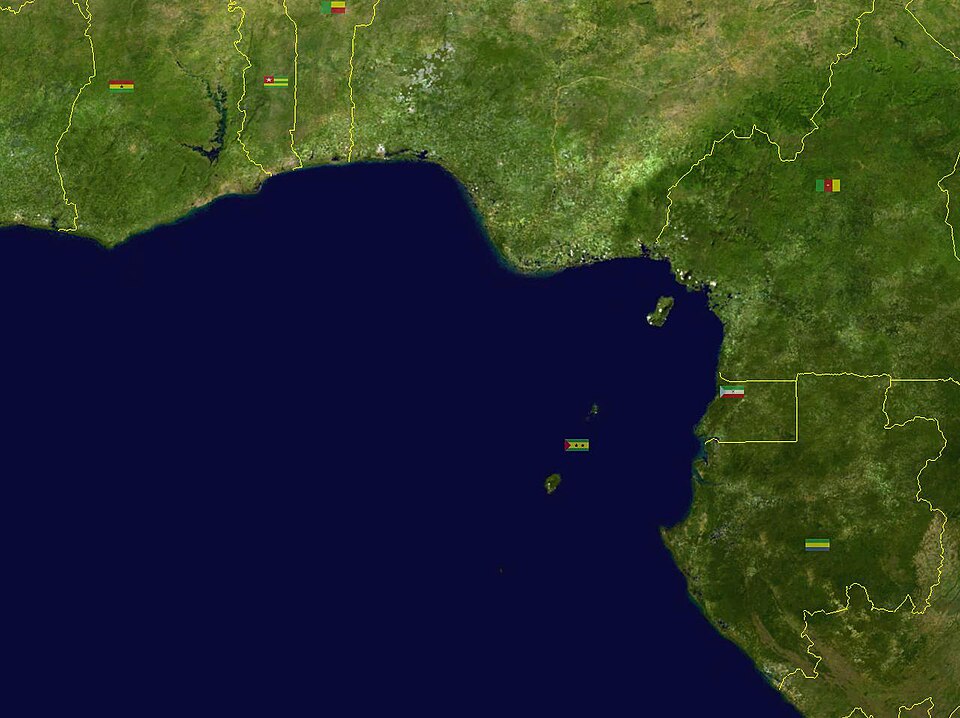
Gulf of Guinea
gulf on the west coast of Africa
Press Enter · cited answer in seconds
0 sources
Summary
Gulf of Guinea is a bay[1]. It ranks in the top 1% of bay entities by monthly Wikipedia readership (4,617 views/month).[2]
Key Facts
- Country: Liberia[3], Ivory Coast[4], Ghana[5], Togo[6], Benin[7], Nigeria[8], Cameroon[9], Equatorial Guinea[10], Gabon[11], São Tomé and Príncipe[12]
- Located in or next to body of water: South Atlantic Ocean[13]
- Shares border with: Port Harcourt[14], Osu[15]
- Inflows: Cross River[16], Pra River[17], Volta River[18], Tano River[19], Forcados River[20], Ankobra River[21], Ouémé River[22], Komoé River[23], Cavalla River[24], Densu River[25], Bia River[26], Ogooué River[27], Bandama River[28], Sassandra River[29]
- Part of: North Atlantic Ocean[30]
- Commons category: Gulf of Guinea[31]
- Has part(s): Bight of Benin[32], Bight of Biafra[33]
- Topic's main category: Category:Gulf of Guinea[34]
- Category for the water basin: Q6370844[35]
- Described by source: Pauly–Wissowa[36], Limits of Oceans and Seas, 3rd edition[37], Great Soviet Encyclopedia (1926–1947)[38], Armenian Soviet Encyclopedia, vol. 3[39]
- Elevation above sea level: 0 m[40]
- Vertical depth: 5000 m[41]
- On focus list of Wikimedia project: Wikipedia:Vital articles/Level/4[42]
Body
Cultural Significance
Things named for Gulf of Guinea include Equatorial Guinea[43], a country[44], in Equatorial Guinea[45], founded in 1968[46].
Why It Matters
Gulf of Guinea has Wikipedia articles in 30 language editions, a strong signal of global cultural recognition.[47] It is known by 39 alternative names across languages and contexts.[48]
Entities named for it include Equatorial Guinea[43], a country[44], in Equatorial Guinea[45], founded in 1968[46].