
Gotthold Eisenstein
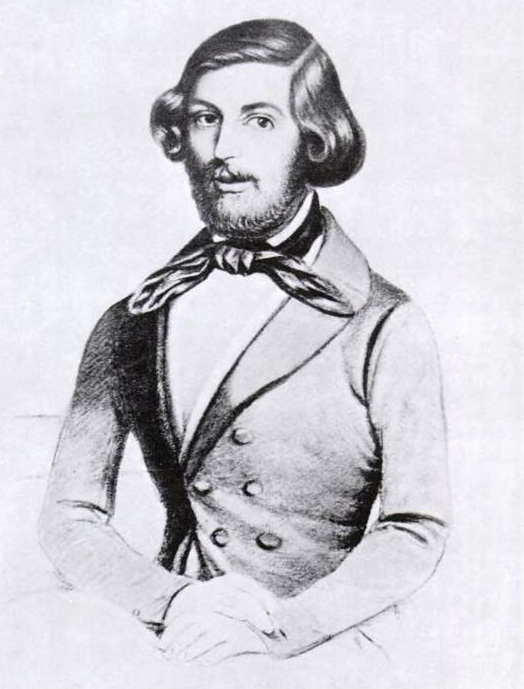
0 sources
Gotthold Eisenstein
Summary
Gotthold Eisenstein is a human[1]. Born in Berlin[2], he… he was born on April 16, 1823[3]. He died in Berlin[4]. He died on October 11, 1852[5]. He worked as a mathematician[6], scientist[7], and university teacher[8]. He ranks in the top 0.72% of human entities by monthly Wikipedia readership (206 views/month, #7,218 of 1,000,298).[9]
Key Facts
- Born in Berlin[2], Gotthold Eisenstein…
- Gotthold Eisenstein died in Berlin[4].
- Gotthold Eisenstein was born on April 16, 1823[3].
- Gotthold Eisenstein died on October 11, 1852[5].
- Gotthold Eisenstein is buried at Dreifaltigkeitskirchhof I[10].
- Gotthold Eisenstein's father was Johann Constantin Eisenstein[11].
- Gotthold Eisenstein's mother was Q94767500[12].
- Gotthold Eisenstein held citizenship in Kingdom of Prussia[13].
- Gotthold Eisenstein is identified as part of the Jewish people ethnic group[14].
- Gotthold Eisenstein's professions included mathematician[6].
- Gotthold Eisenstein's professions included scientist[7].
- Gotthold Eisenstein worked as a university teacher[8].
- Gotthold Eisenstein's field of work was number theory[15].
- Gotthold Eisenstein's field of work was mathematics[16].
- Gotthold Eisenstein's field of work was arithmetic[17].
- Gotthold Eisenstein's field of work was mathematical analysis[18].
- Gotthold Eisenstein's field of work was function[19].
- Gotthold Eisenstein's field of work was elliptic function[20].
- Among Gotthold Eisenstein's employers was Frederick William University Berlin[21].
- Gotthold Eisenstein's education included a stint at Frederick William University Berlin[22].
- Gotthold Eisenstein was educated at University of Wrocław[23].
- Gotthold Eisenstein was educated at Ludwig Cauer primary school[24].
- Gotthold Eisenstein's education included a stint at Friedrich-Wilhelms-Gymnasium[25].
- Gotthold Eisenstein's education included a stint at Friedrichswerder Gymnasium[26].
- Gotthold Eisenstein's doctoral advisor was Ernst Kummer[27].
Body
Origins and Family
Gotthold Eisenstein was born in Berlin[2]. He was born on April 16, 1823[3]. His father was Johann Constantin Eisenstein[11]. His mother was Q94767500[12]. He is identified as part of the Jewish people ethnic group[14].
Education
Educated at Frederick William University Berlin[22], a university[28], in Prussia[29], founded in 1828[30]; University of Wrocław[23], a university[31], in Poland[32], founded in 1702[33]; Ludwig Cauer primary school[24], a Gymnasium[34], in Germany[35], founded in 1818[36]; Friedrich-Wilhelms-Gymnasium[25], a school[37], in Germany[38]; and Friedrichswerder Gymnasium[26], a school[39], in Germany[40], headquartered in Q107369188[41]. Doctoral advisors include Ernst Kummer[27], a mathematician[42], 1810–1893[43], of Kingdom of Prussia[44], awarded the Bavarian Maximilian Order for Science and Art[45], specialised in number theory[46] and Nikolaus Wolfgang Fischer[47], a chemist[48], 1782–1850[49], of Germany[50].
Career and Affiliations
Recorded occupations include mathematician[6], scientist[7], and university teacher[8]. Fields of work include number theory[15], a branch of mathematics[51]; mathematics[16], an academic discipline[52]; arithmetic[17], a branch of mathematics[53]; mathematical analysis[18], an academic discipline[54]; function[19], a mathematical concept[55]; and elliptic function[20]. Among Gotthold Eisenstein's employers was Frederick William University Berlin[21]. A notable student of him was Bernhard Riemann[56].
Works and Contributions
Notable works include Eisenstein integer[57], Eisenstein prime[58], Eisenstein's criterion[59], Eisenstein series[60], Eisenstein ideal[61], and Eisenstein reciprocity[62]. Things named for Gotthold Eisenstein include Eisenstein's criterion[63], a theorem[64]; Eisenstein integer[65], a mathematical concept[66]; Eisenstein series[67], a modular form[68]; Eisenstein prime[69], a mathematical concept[70]; Eisenstein triple[71], a mathematical concept[72]; and 20174 Eisenstein[73], an asteroid[74].
Recognition
Gotthold Eisenstein received the honorary doctor of the University of Wrocław[75].
Personal Life
Gotthold Eisenstein's religion is recorded as Protestantism[76].
Death and Burial
Gotthold Eisenstein died on October 11, 1852[5]. He passed away in Berlin[4]. The cause of death was tuberculosis[77]. He is buried at Dreifaltigkeitskirchhof I[10].
Why It Matters
Gotthold Eisenstein ranks in the top 0.72% of human entities by monthly Wikipedia readership (206 views/month, #7,218 of 1,000,298).[9] He has Wikipedia articles in 22 language editions, a strong signal of global cultural recognition.[78] He is known by 33 alternative names across languages and contexts.[79]
Entities named for him include Eisenstein's criterion[63], a theorem[64]; Eisenstein integer[65], a mathematical concept[66]; Eisenstein series[67], a modular form[68]; Eisenstein prime[69], a mathematical concept[70]; Eisenstein triple[71], a mathematical concept[72]; and 20174 Eisenstein[73], an asteroid[74].
FAQs
Where was Gotthold Eisenstein born?
Gotthold Eisenstein's place of birth was Berlin[2].
Where did Gotthold Eisenstein die?
Gotthold Eisenstein passed away in Berlin[4].
Who were Gotthold Eisenstein's parents?
Gotthold Eisenstein's father was Johann Constantin Eisenstein[11]. Gotthold Eisenstein's mother was Q94767500[12].
What did Gotthold Eisenstein do for work?
Gotthold Eisenstein worked as mathematician[6], scientist[7], and university teacher[8].
Where did Gotthold Eisenstein go to school?
Gotthold Eisenstein was educated at Frederick William University Berlin[22], University of Wrocław[23], Ludwig Cauer primary school[24], and Friedrich-Wilhelms-Gymnasium[25].
What awards did Gotthold Eisenstein receive?
Honors received include honorary doctor of the University of Wrocław[75].