
Chiang Kai-shek
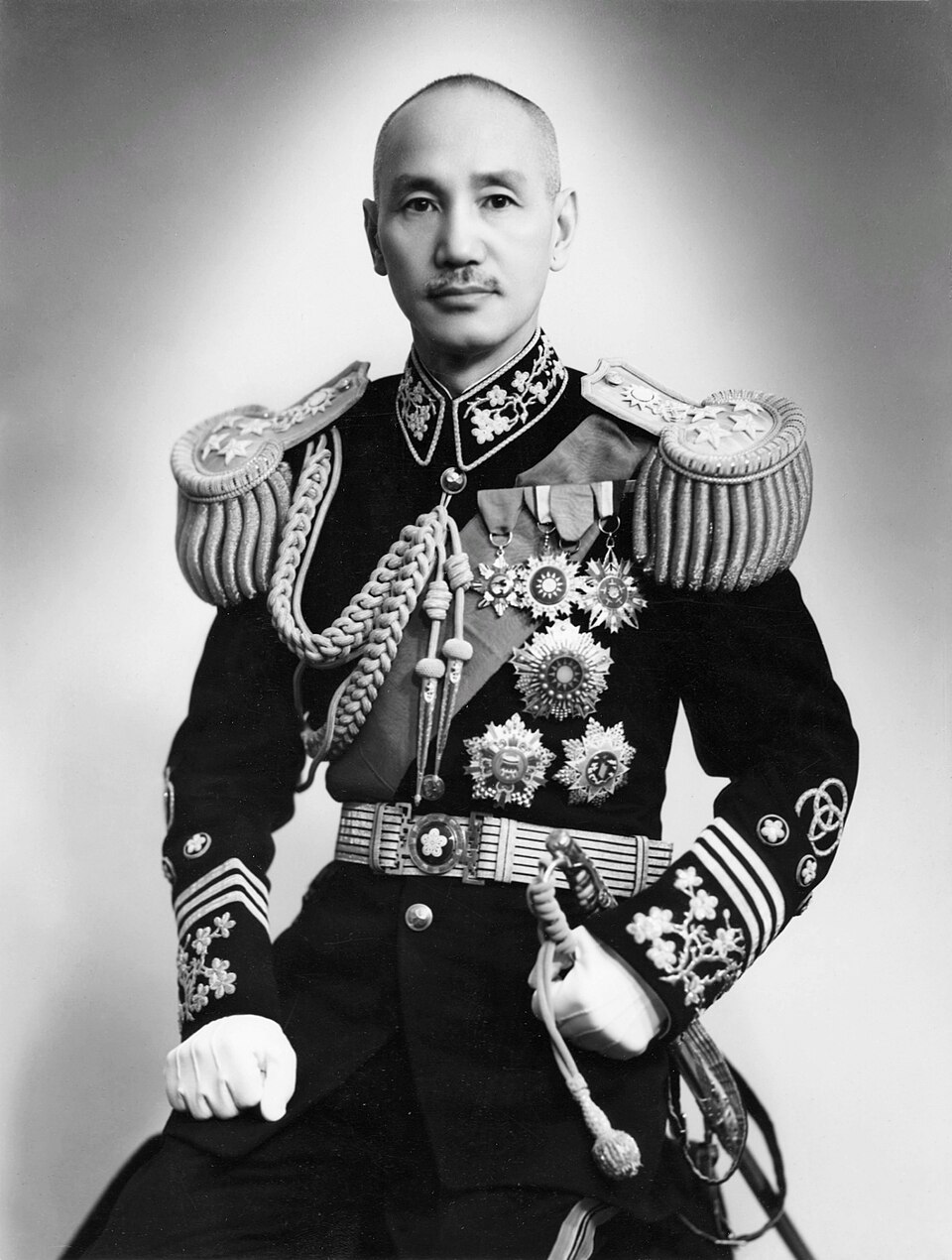
0 sources
Summary
Chiang Kai-shek was born in Xikou[1]. He died in Taipei[2]. He worked as a politician[3] and military personnel[4]. He ranks in the top 0.18% of human entities by monthly Wikipedia readership (81,216 views/month, #1,767 of 1,000,298).[5]
Key Facts
- Place of burial: Cihu Mausoleum[6]
- Father: Chiang Chao-tsung[7]
- Mother: Wang Caiyu[8]
- Spouse: Máo Fúméi[9], Yao Yecheng[10], Chen Jieru[11], Sòng Měilíng[12]
- Child: Chiang Ching-kuo[13], Chiang Wei-kuo[14]
- Country of citizenship: Taiwan[15], Qing dynasty[16]
- Native language: Wu Chinese[17], Chinese[18]
- Position held: President of the Republic of China[19], President of the National Government of the Republic of China[20], Premier of the Republic of China[21], chairperson[22], member of the 1st National Assembly of the Republic of China[23], member of the Constituent National Assembly[24]
- Educated at: Baoding Military Academy[25]
- Award received: Grand Cross of the Legion of Honour[26], Honorary Knight Grand Cross of the Order of the Bath[27], Order of the White Lion[28], Legionnaire of Legion of Merit[29], Time Person of the Year[30], Collar of the Spanish Order of the Civil Merit[31], Royal Order of the Seraphim[32], Order of the Rajamitrabhorn[33], Order of Leopold[34], Philippine Legion of Honor[35], Order of Propitious Clouds[36], Silver Cross of the Virtuti Militari[37], Order of National Glory[38], Order of Blue Sky and White Sun[39]
- Religion or worldview: Buddhism[40], Methodism[41]
- Sex or gender: male[42]
- Family: family of Chiang Kai-shek[43]
- Ancestral home: Yixing[44], Xuchang[45]
- Member of political party: Kuomintang[46], Chinese Revolutionary Party[47]
Body
Works and Contributions
Things named for Chiang Kai-shek include Chiang Kai-shek Memorial Hall[48], a monument[49], in Taiwan[50], founded in 1980[51]; Chiangism[52], a political ideology[53], in Republic of China[54]; National Chung Cheng University[55], a national university[56], in Taiwan[57], founded in 1989[58], headquartered in Minsyong Township[59]; and Order of Chiang Chung-Cheng[60], an order[61], in Taiwan[62], founded in 1980[63].
Why It Matters
Chiang Kai-shek has Wikipedia articles in 30 language editions, a strong signal of global cultural recognition.[64] He is known by 85 alternative names across languages and contexts.[65]
Entities named for him include Chiang Kai-shek Memorial Hall[48], a monument[49], in Taiwan[50], founded in 1980[51]; Chiangism[52], a political ideology[53], in Republic of China[54]; National Chung Cheng University[55], a national university[56], in Taiwan[57], founded in 1989[58], headquartered in Minsyong Township[59]; and Order of Chiang Chung-Cheng[60], an order[61], in Taiwan[62], founded in 1980[63].
FAQs
Where was Chiang Kai-shek born?
Chiang Kai-shek was born in Xikou[1].
Where did Chiang Kai-shek die?
Chiang Kai-shek died in Taipei[2].
Who were Chiang Kai-shek's parents?
Chiang Kai-shek's father was Chiang Chao-tsung[7]. Chiang Kai-shek's mother was Wang Caiyu[8].
Who was Chiang Kai-shek married to?
Chiang Kai-shek's spouses include Máo Fúméi[9], Yao Yecheng[10], Chen Jieru[11], and Sòng Měilíng[12].
What did Chiang Kai-shek do for work?
Chiang Kai-shek worked as a politician[3] and military personnel[4].
Where did Chiang Kai-shek go to school?
Chiang Kai-shek was educated at Baoding Military Academy[25].
What awards did Chiang Kai-shek receive?
Honors received include Grand Cross of the Legion of Honour[26], Honorary Knight Grand Cross of the Order of the Bath[27], Order of the White Lion[28], and Legionnaire of Legion of Merit[29].