
Wu Chinese
Sinitic language
Press Enter · cited answer in seconds
0 sources
Summary
Wu Chinese is a natural language[1]. It draws 4,089 Wikipedia views per month (natural language category, ranking #81 of 734).[2]
Key Facts
- Country: People's Republic of China[3]
- Instance of: modern language[4]
- Subclass of: Chinese[5], Sinitic[6]
- Writing system: Chinese characters[7]
- Wikimedia language code: wuu[8]
- Has part(s): Taihu Wu[9], Taizhou Wu[10], Wenzhounese[11], Wuzhou Wu[12], Chuqu Wu[13], Xuanzhou Wu[14]
- Topic's main category: Category:Wu Chinese[15]
- Number of speakers, writers, or signers: 81,400,000[16], 80,700,000[17], 80,102,480[18], 79,520,000[19], 77,170,000[20]
- Replaces: Middle Chinese[21]
- Has effect: go-on[22]
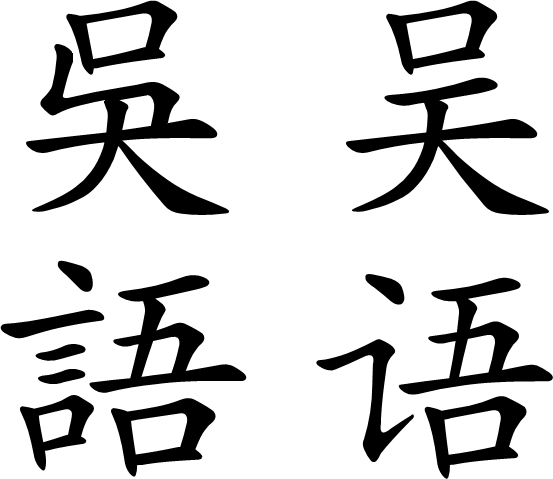
- Native label: 吴语[23], 吳語[24]
- Different from: Q89317791[25]
- Indigenous to: Anhui[26], Fujian[27], Jiangsu[28], Jiangxi[29], Shanghai[30], Zhejiang[31], Speakers of Wu Chinese[32]
- Exact match: http://publications.europa.eu/resource/authority/language/WUU[33]
- Permanent duplicated item: Q29904797[34]
- Ethnologue language status: 5 Developing[35]
- Linguistic typology: subject–verb–object[36]
- On focus list of Wikimedia project: Wikipedia:Vital articles/Level/4[37]
- Related category: Category:Wu pronunciation[38]
- P14541: 1Qkv5N[39]
Why It Matters
Wu Chinese has Wikipedia articles in 27 language editions, a strong signal of global cultural recognition.[40] It is known by 67 alternative names across languages and contexts.[41]