
Auguste Rodin
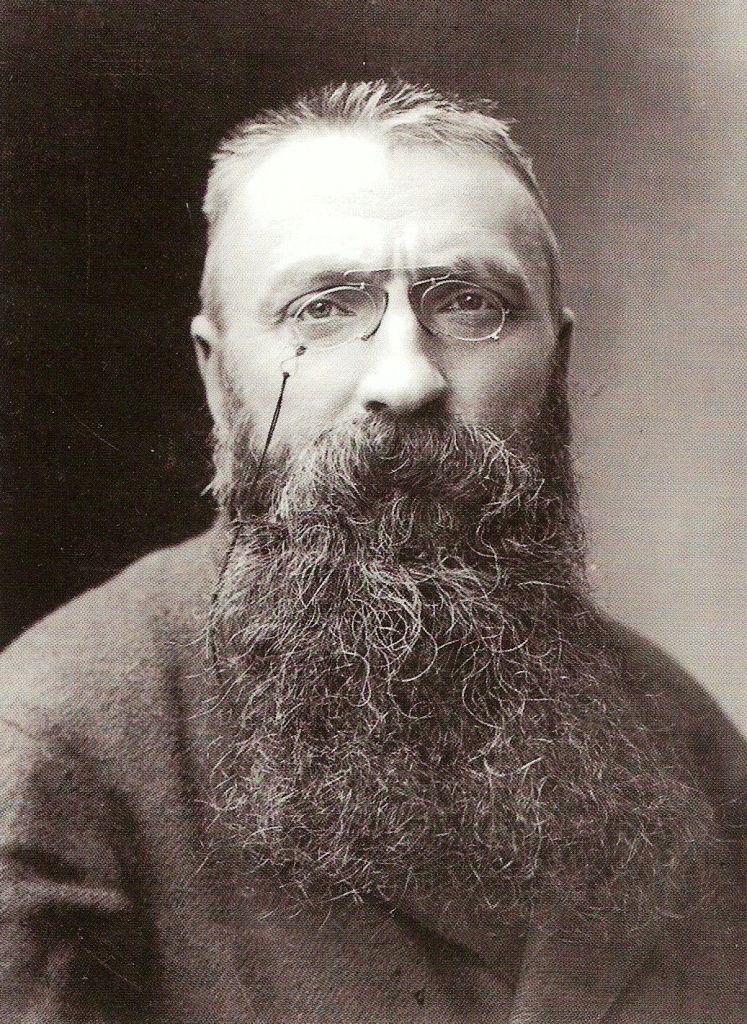
0 sources
Rodin's work spanned multiple genres, including portrait, allegory, figure, nude, public art, and erotic art [5][30][34][35]. He is renowned for notable works such as The Thinker, The Age of Bronze, The Burghers of Calais, The Gates of Hell, Amor and Psyche, and The Kiss . Throughout his career, Rodin received numerous awards, including Grand Officer of the Legion of Honour, Order of Leopold, Knight of the Legion of Honour, Officer of the Legion of Honour, Commander of the Legion of Honour, and an honorary doctorate of the University of Glasgow [36].
Auguste Rodin passed away on November 17, 1917, in Meudon [1][2][3][5][7][8][9][10][11][12][13][37][14][15][18][19][20][21][22][23][24][25]. He is buried at Villa des Brillants .
Auguste Rodin
Summary
Auguste Rodin is a human[1]. Born in Paris[2], he… he was born on November 12, 1840[3]. He died in Meudon[4]. He died on November 17, 1917[5]. He worked as a sculptor[6], graphic artist[7], draftsperson[8], photographer[9], and painter[10]. He ranks in the top 0.61% of human entities by monthly Wikipedia readership (31,449 views/month, #6,137 of 1,000,298).[11]
Key Facts
- Auguste Rodin's place of birth was Paris[2].
- Auguste Rodin passed away in Meudon[4].
- Auguste Rodin was born on November 12, 1840[3].
- Auguste Rodin died on November 17, 1917[5].
- Burial took place at Villa des Brillants[12].
- Auguste Rodin is buried at Meudon[13].
- Auguste Rodin's father was Jean Baptiste Rodin[14].
- Auguste Rodin's mother was Marie Cheffer[15].
- Among Auguste Rodin's spouses was Rose Beuret Mignon[16].
- Auguste Rodin held citizenship in France[17].
- Auguste Rodin is identified as part of the French ethnic group[18].
- Auguste Rodin's professions included sculptor[6].
- Auguste Rodin's professions included graphic artist[7].
- Auguste Rodin's professions included draftsperson[8].
- Auguste Rodin worked as a photographer[9].
- Auguste Rodin worked as a painter[10].
- Auguste Rodin's professions included printmaker[19].
- Auguste Rodin's education included a stint at École nationale supérieure des arts décoratifs[20].
- A notable work attributed to Auguste Rodin is The Thinker[21].
- A notable work attributed to Auguste Rodin is The Age of Bronze[22].
- A notable work attributed to Auguste Rodin is The Burghers of Calais[23].
- A notable work attributed to Auguste Rodin is The Gates of Hell[24].
- A notable work attributed to Auguste Rodin is Amor and Psyche[25].
- A notable work attributed to Auguste Rodin is The Kiss[26].
- Auguste Rodin received the Grand Officer of the Legion of Honour[27].
Product Details
The following facts are restated verbatim from public-domain and CC0 open-data sources — every line is independently verifiable against the named source's catalog.
MusicBrainz — CC0 open music encyclopedia
-
Type: Person[28]
-
Country: FR[29]
-
Began / founded: 1840-11-12[30]
-
Ended / dissolved: 1917-11-17[31]
-
MusicBrainz ID: f8772b52-c197-4cb1-9d49-509fb3a5cae3[32]
Body
Origins and Family
Auguste Rodin's place of birth was Paris[2]. He was born on November 12, 1840[3]. His father was Jean Baptiste Rodin[14]. His mother was Marie Cheffer[15]. He is identified as part of the French ethnic group[18].
Education
Auguste Rodin's education included a stint at École nationale supérieure des arts décoratifs[20].
Career and Affiliations
Recorded occupations include sculptor[6], graphic artist[7], draftsperson[8], photographer[9], painter[10], and printmaker[19].
Works and Contributions
Notable works include The Thinker[21], a group of casts[33], in Argentina[34], founded in 1882[35]; The Age of Bronze[22], a group of casts[36], founded in 1877[37]; The Burghers of Calais[23], a group of casts[38], founded in 1888[39]; The Gates of Hell[24], a group of casts[40], in Spain[41], founded in 1880[42]; Amor and Psyche[25], a sculpture[43], founded in 1907[44]; and The Kiss[26].
Recognition
Awards received include Grand Officer of the Legion of Honour[27], a grade of an order[45], in France[46]; Order of Leopold[47], a state order[48], in Belgium[49], founded in 1832[50]; Knight of the Legion of Honour[51], a Q1499804[52], in France[53]; Officer of the Legion of Honour[54], a Q1499804[55], in France[56], founded in 1802[57]; Commander of the Legion of Honour[58], a grade of an order[59], in France[60]; and honorary doctorate of the University of Glasgow[61], an award[62], in United Kingdom[63].
Personal Life
Among Auguste Rodin's spouses was Rose Beuret Mignon[16].
Death and Burial
Auguste Rodin died on November 17, 1917[5]. He died in Meudon[4]. Recorded place of burial include Villa des Brillants[12] and Meudon[13].
Why It Matters
Auguste Rodin ranks in the top 0.61% of human entities by monthly Wikipedia readership (31,449 views/month, #6,137 of 1,000,298).[11] He has Wikipedia articles in 30 language editions, a strong signal of global cultural recognition.[64] He is known by 95 alternative names across languages and contexts.[65]
He has been cited as an influence by Josef Thorak[66], a sculptor[67], 1889–1952[68], of Austria[69]; François Pompon[70], a sculptor[71], 1855–1933[72], of France[73], awarded the Officer of the Legion of Honour[74], specialised in art of sculpture[75]; Meta Vaux Warrick Fuller[76], a sculptor[77], 1877–1968[78], of United States[79]; Pau Gargallo[80], a painter[81], 1881–1934[82], of Spain[83], specialised in art of sculpture[84]; Antun Augustinčić[85], a sculptor[86], 1900–1979[87], of Hungary[88]; and George Minne[89], a sculptor[90], 1866–1941[91], of Belgium[92], specialised in art of sculpture[93].
FAQs
Where was Auguste Rodin born?
Auguste Rodin's place of birth was Paris[2].
Where did Auguste Rodin die?
Auguste Rodin died in Meudon[4].
Who were Auguste Rodin's parents?
Auguste Rodin's father was Jean Baptiste Rodin[14]. Auguste Rodin's mother was Marie Cheffer[15].
Who was Auguste Rodin married to?
Auguste Rodin's spouses include Rose Beuret Mignon[16].
What did Auguste Rodin do for work?
Auguste Rodin worked as sculptor[6], graphic artist[7], draftsperson[8], photographer[9], and painter[10].
Where did Auguste Rodin go to school?
Auguste Rodin was educated at École nationale supérieure des arts décoratifs[20].
What awards did Auguste Rodin receive?
Honors received include Grand Officer of the Legion of Honour[27], Order of Leopold[47], Knight of the Legion of Honour[51], and Officer of the Legion of Honour[54].
Who did Auguste Rodin influence?
Auguste Rodin has been cited as an influence by Josef Thorak[66], François Pompon[70], Meta Vaux Warrick Fuller[76], and Pau Gargallo[80].