
The Thinker
type of sculpture by Auguste Rodin
Press Enter · cited answer in seconds
0 sources
The Thinker
Summary
The Thinker is a group of casts[1]. It draws 3,046 Wikipedia views per month (group_of_casts category, ranking #1 of 7).[2]
Key Facts
- The Thinker is the creator of Auguste Rodin[3].
- The Thinker is the creator of Fonderie Hébrard[4].
- The Thinker is in the country of Argentina[5].
- The Thinker's instance of is recorded as group of casts[6].
- The Thinker's genre is nude[7].
- The Thinker's based on is recorded as The Divine Comedy[8].
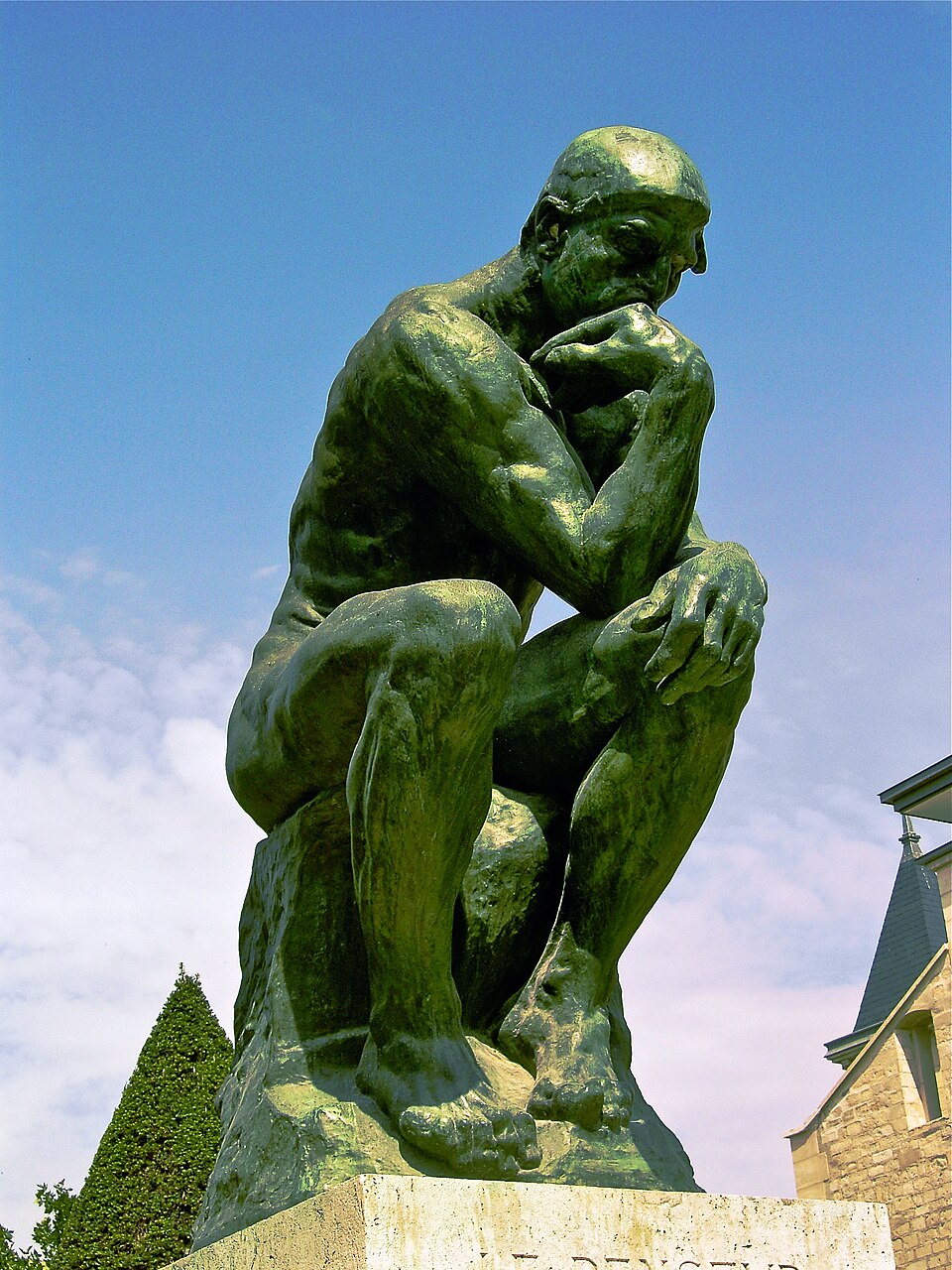
- The Thinker's depicts is recorded as man[9].
- The Thinker's depicts is recorded as nudity[10].
- The Thinker's depicts is recorded as sitting[11].
- The Thinker's depicts is recorded as meditation[12].
- The Thinker's depicts is recorded as Q1067[13].
- The Thinker's depicts is recorded as thought[14].
- The Thinker is made of bronze[15].
- The Thinker is made of gypsum[16].
- The Thinker's collection is recorded as Musée Rodin[17].
- The Thinker's collection is recorded as Alte Nationalgalerie[18].
- The location of The Thinker was Musée Rodin[19].
- The location of The Thinker was Strasbourg Museum of Modern and Contemporary Art[20].
- The Thinker took place at Buenos Aires[21].
- The Thinker's Commons category is recorded as Le Penseur[22].
- The Thinker comprises Le Penseur (Kyoto National Museum)[23].
- 1882 marks the founding of The Thinker[24].
- The Thinker's has edition or translation is recorded as Le Penseur (Kyoto National Museum)[25].
- The Thinker's has edition or translation is recorded as Q111696473[26].
- The Thinker's has edition or translation is recorded as The Thinker[27].
Body
Geography
The Thinker is in the country of Argentina[5].
Designation and Status
The Thinker's instance of is recorded as group of casts[6].
History and Context
1882 marks the founding of The Thinker[24].
Why It Matters
The Thinker draws 3,046 Wikipedia views per month (group_of_casts category, ranking #1 of 7).[2] It has Wikipedia articles in 27 language editions, a strong signal of global cultural recognition.[28] It is known by 33 alternative names across languages and contexts.[29]