
Thomas De Quincey
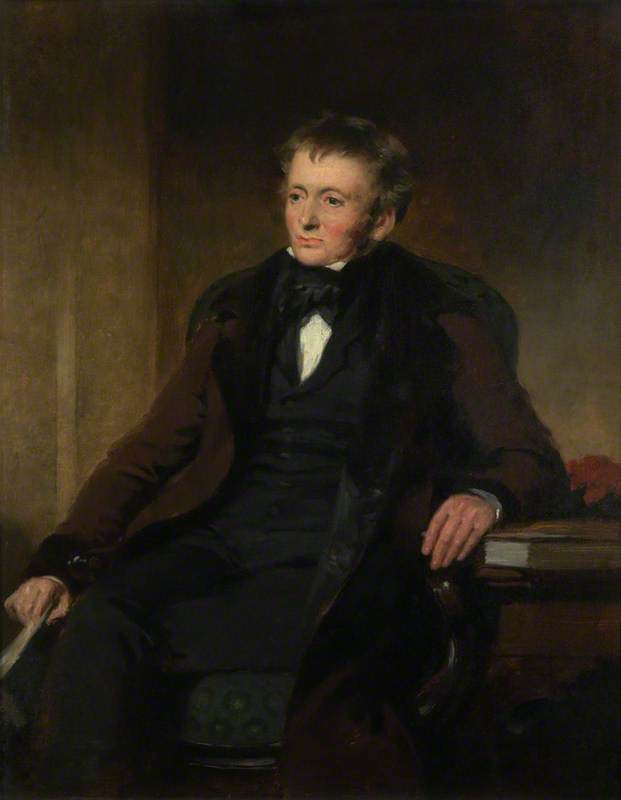
0 sources
Summary
Thomas De Quincey was born on August 15, 1785[1], in Manchester[2]. He died on December 8, 1859[3], in Edinburgh[4]. He worked as a linguist[5], journalist[6], writer[7], novelist[8], and translator[9]. He ranks in the top 0.7% of human entities by monthly Wikipedia readership (5,087 views/month, #7,029 of 1,000,298).[10]
Key Facts
- Date of birth: 1785[11]
- Date of death: 1859[12]
- Place of burial: St Cuthbert's Church, Edinburgh[13]
- Father: Thomas Quincey[14]
- Mother: Elizabeth Penson[15]
- Child: Paul Frederick de Quincey[16], Q108881970[17]
- Country of citizenship: United Kingdom of Great Britain and Ireland[18], United Kingdom[19]
- Occupation: autobiographer[20], prose writer[21], essayist[22], literary critic[23], philosopher[24]
- Educated at: Brasenose College[25], Worcester College[26], The Manchester Grammar School[27], King Edward's School[28]
- Sex or gender: male[29]
- Commons category: Thomas De Quincey[30]
- Archives at: University of Leeds Libraries[31]
- Family name: Quincey[32]
- Given name: Thomas[33]
- Topic's main category: Category:Thomas De Quincey[34]
- Commons gallery: Thomas De Quincey[35]
- Depicted by: Thomas de Quincey[36], Thomas de Quincey, 1785 - 1859. Author and essayist[37]
- Described by source: Nordisk familjebok[38], Dictionary of National Biography, 1885–1900[39], BEIC Digital Library[40], Otto's encyclopedia[41], Brockhaus and Efron Encyclopedic Dictionary[42], Alumni Oxonienses: The Members of the University of Oxford, 1715–1886[43]
Why It Matters
Thomas De Quincey has Wikipedia articles in 26 language editions, a strong signal of global cultural recognition.[44] He is known by 28 alternative names across languages and contexts.[45]
He has been cited as an influence by Virginia Woolf[46], a novelist[47], 1882–1941[48], of United Kingdom[49], specialised in essay[50]; Nikolai Gogol[51], a novelist[52], 1809–1852[53], of Russian Empire[54], specialised in prose[55]; and Charles Baudelaire[56], a poet[57], 1821–1867[58], of France[59], awarded the Concours général[60], specialised in poetry[61].
Works attributed to him include Confessions of an English Opium-Eater[62], a literary work[63], founded in 1821[64]; Suspiria de Profundis[65], a literary work[66]; and On Murder Considered as one of the Fine Arts[67], a written work[68].
FAQs
Where was Thomas De Quincey born?
Thomas De Quincey was born in Manchester[2].
Where did Thomas De Quincey die?
Thomas De Quincey died in Edinburgh[4].
Who were Thomas De Quincey's parents?
Thomas De Quincey's father was Thomas Quincey[14]. Thomas De Quincey's mother was Elizabeth Penson[15].
What did Thomas De Quincey do for work?
Thomas De Quincey worked as a linguist[5], journalist[6], writer[7], novelist[8], and translator[9].
Where did Thomas De Quincey go to school?
Thomas De Quincey was educated at Brasenose College[25], Worcester College[26], The Manchester Grammar School[27], and King Edward's School[28].
Who did Thomas De Quincey influence?
Thomas De Quincey has been cited as an influence by Virginia Woolf[46], Nikolai Gogol[51], and Charles Baudelaire[56].