
Suleiman the Magnificent
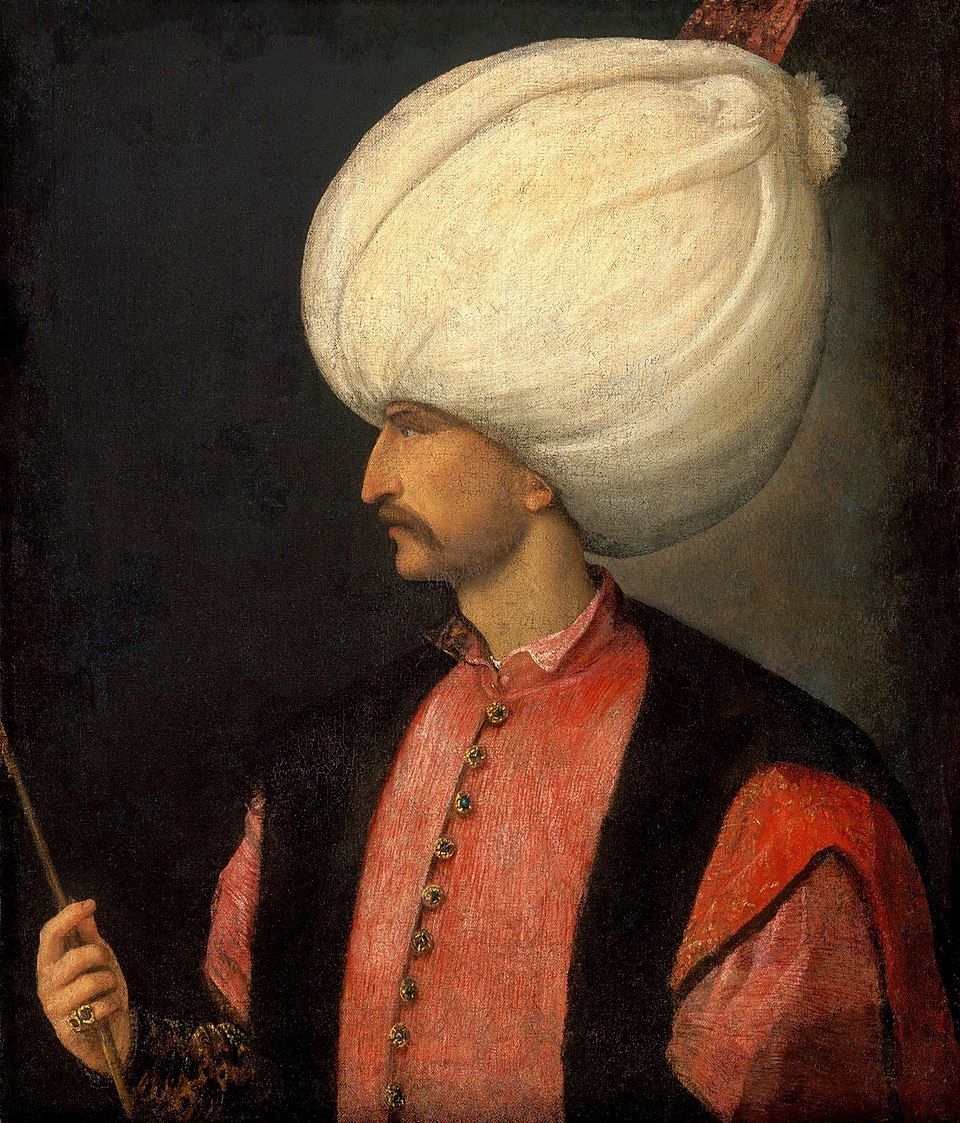
0 sources
Suleiman the Magnificent
Summary
Suleiman the Magnificent is a human[1]. He was born in Trabzon[2]. He was born on November 6, 1494[3]. He died in Szigetvár[4]. He died on September 6, 1566[5]. He worked as a ruler[6], legislator[7], military leader[8], politician[9], and sultan[10]. He ranks in the top 0.28% of human entities by monthly Wikipedia readership (16,453 views/month, #2,816 of 1,000,298).[11]
Key Facts
- Born in Trabzon[2], Suleiman the Magnificent…
- Suleiman the Magnificent died in Szigetvár[4].
- Suleiman the Magnificent was born on November 6, 1494[3].
- Suleiman the Magnificent died on September 6, 1566[5].
- Burial took place at Tomb of Suleiman the Magnificent[12].
- Suleiman the Magnificent's father was Selim I[13].
- Suleiman the Magnificent's mother was Hafsa Sultan[14].
- Suleiman the Magnificent was married to Hürrem Sultan[15].
- Among Suleiman the Magnificent's spouses was Mahidevran Hatun[16].
- Among Suleiman the Magnificent's spouses was Fülane Hatun[17].
- Suleiman the Magnificent was married to Gülfem Hatun[18].
- A child of Suleiman the Magnificent was Şehzade Mustafa[19].
- A child of Suleiman the Magnificent was Şehzade Mehmed[20].
- A child of Suleiman the Magnificent was Mihrimah Sultan[21].
- A child of Suleiman the Magnificent was Selim II[22].
- A child of Suleiman the Magnificent was Şehzade Bayezid[23].
- A child of Suleiman the Magnificent was Şehzade Murad[24].
- Suleiman the Magnificent held citizenship in Ottoman Empire[25].
- Ottoman Turkish was Suleiman the Magnificent's native language[26].
- Suleiman the Magnificent's professions included ruler[6].
- Suleiman the Magnificent's professions included legislator[7].
- Suleiman the Magnificent's professions included military leader[8].
- Suleiman the Magnificent's professions included politician[9].
- Suleiman the Magnificent worked as a sultan[10].
- Suleiman the Magnificent's field of work was military affairs[27].
Body
Origins and Family
Born in Trabzon[2], Suleiman the Magnificent… he was born on November 6, 1494[3]. His father was Selim I[13]. His mother was Hafsa Sultan[14]. Ottoman Turkish was his native language[26].
Career and Affiliations
Recorded occupations include ruler[6], legislator[7], military leader[8], politician[9], and sultan[10]. Fields of work include military affairs[27] and politics[28]. Positions held include sultan of the Ottoman Empire[29], a historical position[30], in Ottoman Empire[31] and caliph[32], a position[33], founded in 0632[34].
Personal Life
Spouses include Hürrem Sultan[15], a writer[35], 1520–1558[36], of Ottoman Empire[37]; Mahidevran Hatun[16], 1500–1581[38], of Ottoman Empire[39]; Fülane Hatun[17], 1498–1550[40], of Ottoman Empire[41]; and Gülfem Hatun[18], of Ottoman Empire[42]. Children include Şehzade Mustafa[19], a governor[43], 1515–1553[44], of Ottoman Empire[45]; Şehzade Mehmed[20], 1521–1543[46], of Ottoman Empire[47]; Mihrimah Sultan[21], a patron of the arts[48], 1522–1578[49], of Ottoman Empire[50], specialised in politics[51]; Selim II[22], a ruler[52], 1524–1574[53], of Ottoman Empire[54]; Şehzade Bayezid[23], a poet[55], 1525–1561[56], of Ottoman Empire[57]; and Şehzade Murad[24], 1519–1521[58], of Ottoman Empire[59]. Suleiman the Magnificent's religion is recorded as Islam[60].
Death and Burial
Suleiman the Magnificent died on September 6, 1566[5]. He died in Szigetvár[4]. Burial took place at Tomb of him[12].
Works and Contributions
Things named for Suleiman the Magnificent include Süleymaniye Mosque[61], a mosque[62], in Turkey[63], founded in 1550[64]; Sulaymaniyya Takiyya[65], an Ottoman tekke[66], in Syria[67], founded in 1554[68]; Suleymaniye Mosque, Rhodes[69], a mosque[70], in Greece[71], founded in 1522[72]; Kanuni Sultan Suleiman bridge[73], a road bridge[74], in Turkey[75]; Sultan Suleiman Mosque[76], a mosque[77], in Ukraine[78], founded in 2007[79]; St. Mary’s Church with St. Luke’s Belltower[80], a ruins[81], in Bosnia and Herzegovina[82]; Süleymaniye Hamam[83], a hammam[84], in Turkey[85]; and Kanuni Bridge[86], a bridge[87], in Turkey[88].
Why It Matters
Suleiman the Magnificent ranks in the top 0.28% of human entities by monthly Wikipedia readership (16,453 views/month, #2,816 of 1,000,298).[11] He has Wikipedia articles in 30 language editions, a strong signal of global cultural recognition.[89] He is known by 87 alternative names across languages and contexts.[90]
Entities named for him include Süleymaniye Mosque[61], a mosque[62], in Turkey[63], founded in 1550[64]; Sulaymaniyya Takiyya[65], an Ottoman tekke[66], in Syria[67], founded in 1554[68]; Suleymaniye Mosque, Rhodes[69], a mosque[70], in Greece[71], founded in 1522[72]; Kanuni Sultan Suleiman bridge[73], a road bridge[74], in Turkey[75]; Sultan Suleiman Mosque[76], a mosque[77], in Ukraine[78], founded in 2007[79]; and St. Mary’s Church with St. Luke’s Belltower[80], a ruins[81], in Bosnia and Herzegovina[82].
FAQs
Where was Suleiman the Magnificent born?
Suleiman the Magnificent was born in Trabzon[2].
Where did Suleiman the Magnificent die?
Suleiman the Magnificent died in Szigetvár[4].
Who were Suleiman the Magnificent's parents?
Suleiman the Magnificent's father was Selim I[13]. Suleiman the Magnificent's mother was Hafsa Sultan[14].
Who was Suleiman the Magnificent married to?
Suleiman the Magnificent's spouses include Hürrem Sultan[15], Mahidevran Hatun[16], Fülane Hatun[17], and Gülfem Hatun[18].
What did Suleiman the Magnificent do for work?
Suleiman the Magnificent worked as ruler[6], legislator[7], military leader[8], politician[9], and sultan[10].