
René Guénon
0 sources
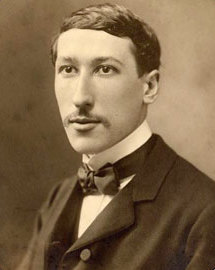
René Guénon was born on November 15, 1886, in Blois[1][2] and died on January 7, 1951, in Cairo[1][2], where he was also buried[3]. He worked as a writer, metaphysician, philosopher, and orientalist[4][5][6]. His primary field of study was philosophy and metaphysics.
He was an adherent of Islam and became associated with the movement known as The Primordial Tradition[7]. During his life, he received the Concours général award[8].
Key Facts
- Place of burial: Cairo[10]
- Country of citizenship: France[11], Egypt[12]
- Field of work: philosophy[13], metaphysics[14]
- Educated at: Collège-lycée Jacques-Decour[15], Robert-Badinter School Complex[16], University of Paris[17]
- Award received: Concours général[18]
- Religion or worldview: Islam[19]
- Sex or gender: male[20]
- Movement: The Primordial Tradition[21]
- Commons category: René Guénon[22]
- Unmarried partner: Mary Wallace-Shillito[23]
- Family name: Guénon[24]
- Given name: René[25]
- Pseudonym: Abdel Wahed Yahia[26], Sheikh Abdel Wahed Yahia[27]
- Topic's main category: Category:René Guénon[28]
- Languages spoken, written or signed: French[29]
- Name in native language: René Jean-Marie-Joseph Guénon[30], René Guénon[31]
- Lifestyle: mysticism[32]
- Different from: René Guénot[33]
Why It Matters
René Guénon has Wikipedia articles in 25 language editions, a strong signal of global cultural recognition.[34] He is known by 65 alternative names across languages and contexts.[35]
He has been cited as an influence by Steve Bannon[36], a film producer[37], b. 1953[38], of United States[39], specialised in politics[40]; Alexander Dugin[41], a propagandist[42], b. 1962[43], of Russia[44], specialised in propaganda[45]; Mircea Eliade[46], an anthropologist[47], 1907–1986[48], of Kingdom of Romania[49], awarded the Gordon J. Laing Award[50], specialised in religious studies[51]; Ivan Illich[52], a Catholic priest[53], 1926–2002[54], of Austria[55], awarded the Kultur- und Friedenspreis der Villa Ichon[56], specialised in political ecology[57]; Olavo de Carvalho[58], an essayist[59], 1947–2022[60], of Brazil[61], awarded the Santos-Dumont Merit Medal[62], specialised in epistemology[63]; and Hossein Nasr[64], a philosopher[65], b. 1933[66], of Iran[67], awarded the Gittler Prize[68].
FAQs
Where was René Guénon born?
René Guénon's place of birth was Blois[2].
Where did René Guénon die?
René Guénon died in Cairo[4].
What did René Guénon do for work?
René Guénon worked as a writer[5], metaphysician[6], philosopher[7], and orientalist[8].
Where did René Guénon go to school?
René Guénon was educated at Collège-lycée Jacques-Decour[15], Robert-Badinter School Complex[16], and University of Paris[17].
What awards did René Guénon receive?
Honors received include Concours général[18].
Who did René Guénon influence?
René Guénon has been cited as an influence by Steve Bannon[36], Alexander Dugin[41], Mircea Eliade[46], and Ivan Illich[52].