
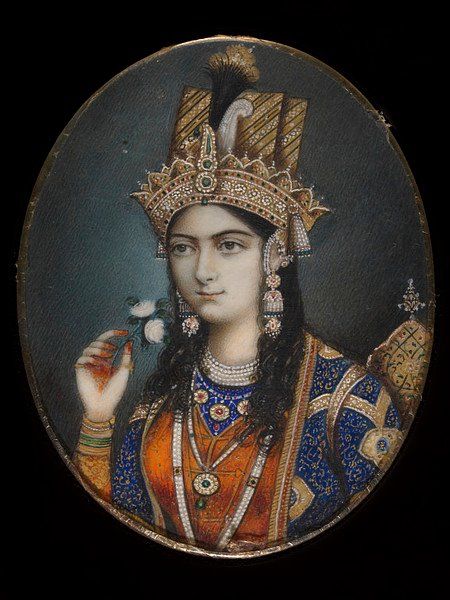
Mumtaz Mahal
0 sources
Summary
Mumtaz Mahal was born on April 27, 1593[1], in Agra[2]. She died on June 17, 1631[3], in Burhanpur[4]. She worked as an empress consort[5] and poet[6]. She ranks in the top 0.54% of human entities by monthly Wikipedia readership (11,562 views/month, #5,410 of 1,000,298).[7]
Key Facts
- Place of burial: Taj Mahal[8]
- Father: Abul-Hasan ibn Mirza Ghiyas Beg[9]
- Spouse: Shah Jahan[10]
- Child: Aurangzeb[11], Dara Shikoh[12], Murad Bakhsh[13], Shah Shuja[14], Jahanara Begum[15], Roshanara Begum[16], Gauhar Ara Begum[17]
- Position held: empress consort[18]
- Religion or worldview: Shia Islam[19]
- Sex or gender: female[20]
- Family: Timurid dynasty[21], Mughal dynasty[22]
- Noble title: queen consort[23], Padshah Begum[24]
- Commons category: Mumtaz Mahal[25]
- Cause of death: puerperal disorders[26], puerperal infection[27]
- Family name: Mahal[28]
- Relative: Nur Jahan[29], Pari Bibi[30]
- Manner of death: natural causes[31]
- Languages spoken, written or signed: Arabic[32], Persian[33]
- Name in native language: ممتاز محل[34]
- Sibling: Shaista Khan[35]
- Social classification: noble[36]
Body
Works and Contributions
Things named for Mumtaz Mahal include Taj Mahal[37], a mausoleum[38], in India[39].
Why It Matters
Mumtaz Mahal has Wikipedia articles in 29 language editions, a strong signal of global cultural recognition.[40] She is known by 55 alternative names across languages and contexts.[41]
Entities named for her include Taj Mahal[37], a mausoleum[38], in India[39].
FAQs
Where was Mumtaz Mahal born?
Mumtaz Mahal's place of birth was Agra[2].
Where did Mumtaz Mahal die?
Mumtaz Mahal died in Burhanpur[4].
Who were Mumtaz Mahal's parents?
Mumtaz Mahal's father was Abul-Hasan ibn Mirza Ghiyas Beg[9].
Who was Mumtaz Mahal married to?
Mumtaz Mahal's spouses include Shah Jahan[10].