
Muhammad Abduh
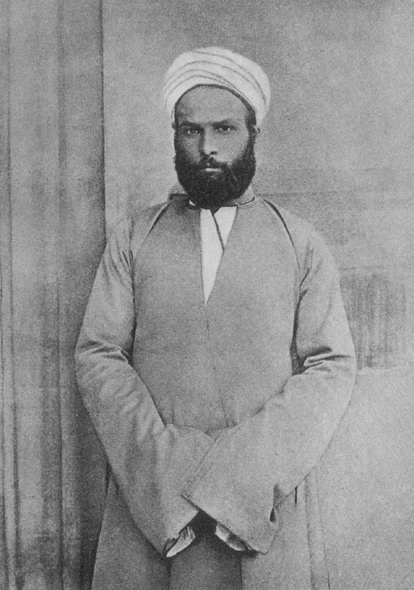
0 sources
Muhammad Abduh
Summary
Muhammad Abduh is a human[1]. Born in Shubra Khit[2], he… he was born on January 1, 1849[3]. He died in Alexandria[4]. He died on July 11, 1905[5]. He worked as a jurist[6], theologian[7], judge[8], opinion journalist[9], and politician[10]. He ranks in the top 0.71% of human entities by monthly Wikipedia readership (1,286 views/month, #7,089 of 1,000,298).[11]
Key Facts
- Muhammad Abduh's place of birth was Shubra Khit[2].
- Born in Beheira Governorate[12], Muhammad Abduh…
- Muhammad Abduh's place of birth was Egypt eyalet[13].
- Muhammad Abduh's place of birth was Ottoman Empire[14].
- Muhammad Abduh died in Alexandria[4].
- Muhammad Abduh was born on January 1, 1849[3].
- Muhammad Abduh was born on January 1, 1849[15].
- Muhammad Abduh died on July 11, 1905[5].
- Muhammad Abduh held citizenship in Ottoman Empire[16].
- Muhammad Abduh worked as a jurist[6].
- Muhammad Abduh worked as a theologian[7].
- Muhammad Abduh's professions included judge[8].
- Muhammad Abduh worked as an opinion journalist[9].
- Muhammad Abduh worked as a politician[10].
- Muhammad Abduh's professions included lawyer[17].
- Muhammad Abduh's field of work was fiqh[18].
- Muhammad Abduh's field of work was politics[19].
- Muhammad Abduh held the position of judge[20].
- Muhammad Abduh held the position of Grand Mufti of Egypt[21].
- Muhammad Abduh was employed by Al-Azhar University[22].
- Muhammad Abduh's education included a stint at Al-Azhar University[23].
- A notable student of Muhammad Abduh was Ibrahim al-Dabbagh[24].
- A notable student of Muhammad Abduh was Umar Taqi al-Din al-Rafi'i[25].
- A notable student of Muhammad Abduh was Ahmad Miftah al-Ommari[26].
- A notable student of Muhammad Abduh was Rida Muhammad Rashid[27].
Body
Origins and Family
Recorded place of birth include Shubra Khit[2], a human settlement[28], in Egypt[29]; Beheira Governorate[12], a governorate of Egypt[30], in Egypt[31]; Egypt eyalet[13], an administrative territorial entity of the Ottoman Empire[32], in Ottoman Empire[33], founded in 1517[34]; and Ottoman Empire[14], an empire[35], in Ottoman Empire[36], founded in 1299[37]. Recorded date of birth include January 1, 1849[3].
Education
Muhammad Abduh's education included a stint at Al-Azhar University[23]. He studied under Jamal al-Din al-Afghani[38].
Career and Affiliations
Recorded occupations include jurist[6], theologian[7], judge[8], opinion journalist[9], politician[10], and lawyer[17]. Fields of work include fiqh[18], a field of study[39] and politics[19], an academic discipline[40]. Muhammad Abduh was employed by Al-Azhar University[22]. Positions held include judge[20], a legal profession[41] and Grand Mufti of Egypt[21]. Notable students include Ibrahim al-Dabbagh[24], a poet[42], 1880–1946[43], of Ottoman Empire[44]; Umar Taqi al-Din al-Rafi'i[25], an Islamic jurist[45], 1882–1964[46], of Ottoman Empire[47]; Ahmad Miftah al-Ommari[26], a poet[48], 1858–1911[49], of Ottoman Empire[50]; Rida Muhammad Rashid[27], a mufassir[51], 1865–1935[52], specialised in Islamic theology[53]; and As'ad al-Shuqayri[54], a politician[55], 1860–1940[56], of Ottoman Empire[57], awarded the Liakat Medal[58].
Works and Contributions
A notable work attributed to Muhammad Abduh is Tafsīr al-Manār[59].
Personal Life
Religious affiliations include Islam[60], a major religious group[61], founded in 0631[62] and Sunni Islam[63], an Islamic denomination[64], founded in 0601[65].
Death and Burial
Muhammad Abduh died on July 11, 1905[5]. He passed away in Alexandria[4]. The cause of death was kidney cancer[66].
Why It Matters
Muhammad Abduh ranks in the top 0.71% of human entities by monthly Wikipedia readership (1,286 views/month, #7,089 of 1,000,298).[11] He has Wikipedia articles in 24 language editions, a strong signal of global cultural recognition.[67] He is known by 35 alternative names across languages and contexts.[68]
He has been cited as an influence by Mustafa Lutfi al-Manfaluti[69], a poet[70], 1876–1924[71], of Ottoman Empire[72]; Qasim Amin[73], a writer[74], 1863–1908[75], of Ottoman Empire[76], specialised in law[77]; Abbas el-Akkad[78], a writer[79], 1889–1964[80], of Ottoman Empire[81], awarded the State Appreciation Award[82], specialised in author[83]; ʿAbd al-Qādir Maghribī[84], a writer[85], 1867–1956[86], of Ottoman Empire[87]; Hassan al-Banna[88], a preacher[89], 1906–1949[90], of Ottoman Empire[91]; and Ahmad Lutfi al-Sayyid[92], a journalist[93], 1872–1963[94], of Egypt[95].
FAQs
Where was Muhammad Abduh born?
Muhammad Abduh's place of birth was Shubra Khit[2].
Where did Muhammad Abduh die?
Muhammad Abduh died in Alexandria[4].
What did Muhammad Abduh do for work?
Muhammad Abduh worked as jurist[6], theologian[7], judge[8], opinion journalist[9], and politician[10].
Where did Muhammad Abduh go to school?
Muhammad Abduh was educated at Al-Azhar University[23].
Who did Muhammad Abduh influence?
Muhammad Abduh has been cited as an influence by Mustafa Lutfi al-Manfaluti[69], Qasim Amin[73], Abbas el-Akkad[78], and ʿAbd al-Qādir Maghribī[84].