
Mateiu Caragiale
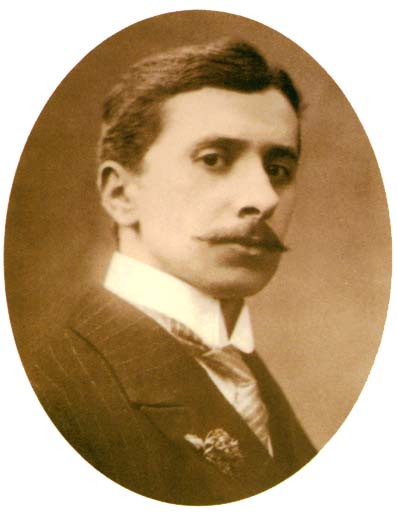
0 sources
Mateiu Caragiale
Summary
Mateiu Caragiale is a human[1]. Born in Bucharest[2], he… he was born on March 25, 1885[3]. He passed away in Bucharest[4]. He died on January 17, 1936[5]. He worked as a poet[6], journalist[7], writer[8], painter[9], and author[10]. He has Wikipedia articles in 10 language editions, a strong signal of global cultural recognition.[11]
Key Facts
- Mateiu Caragiale's place of birth was Bucharest[2].
- Mateiu Caragiale was born in Romania[12].
- Mateiu Caragiale passed away in Bucharest[4].
- Mateiu Caragiale was born on March 25, 1885[3].
- Mateiu Caragiale died on January 17, 1936[5].
- Mateiu Caragiale's father was Ion Luca Caragiale[13].
- Mateiu Caragiale held citizenship in Romania[14].
- Mateiu Caragiale worked as a poet[6].
- Mateiu Caragiale's professions included journalist[7].
- Mateiu Caragiale's professions included writer[8].
- Mateiu Caragiale's professions included painter[9].
- Mateiu Caragiale's professions included author[10].
- Mateiu Caragiale's field of work was poetry[15].
- Mateiu Caragiale's field of work was prose[16].
- Mateiu Caragiale's field of work was Romanian literature[17].
- A notable work attributed to Mateiu Caragiale is Craii de Curtea-Veche[18].
- Mateiu Caragiale received the Order of Saint Anna, 2nd class[19].
- Mateiu Caragiale received the Knight of the Legion of Honour[20].
- Mateiu Caragiale was influenced by Honoré de Balzac[21].
- Mateiu Caragiale is recorded as male[22].
- Mateiu Caragiale's instance of is recorded as human[23].
- Mateiu Caragiale was affiliated with the Conservative-Democratic Party[24].
- Mateiu Caragiale's genre is prose[25].
- Mateiu Caragiale's genre is poetry[26].
- Mateiu Caragiale's Commons category is recorded as Mateiu Caragiale[27].
Body
Origins and Family
Recorded place of birth include Bucharest[2], a municipality of Romania[28], in Principality of Wallachia[29], founded in 1459[30] and Romania[12], a sovereign state[31], in Romania[32], founded in 1859[33]. Mateiu Caragiale was born on March 25, 1885[3]. His father was Ion Luca Caragiale[13].
Career and Affiliations
Recorded occupations include poet[6], journalist[7], writer[8], painter[9], and author[10]. Fields of work include poetry[15], a literary form[34]; prose[16], a literary form[35]; and Romanian literature[17], a sub-set of literature[36].
Works and Contributions
A notable work attributed to Mateiu Caragiale is Craii de Curtea-Veche[18].
Recognition
Awards received include Order of Saint Anna, 2nd class[19], a grade of an order[37], in Russian Empire[38] and Knight of the Legion of Honour[20], a grade of an order[39], in France[40].
Personal Life
Mateiu Caragiale was affiliated with the Conservative-Democratic Party[24].
Death and Burial
Mateiu Caragiale died on January 17, 1936[5]. He died in Bucharest[4]. The cause of death was stroke[41].
Why It Matters
Mateiu Caragiale has Wikipedia articles in 10 language editions, a strong signal of global cultural recognition.[11] He is known by 19 alternative names across languages and contexts.[42]
He has been cited as an influence by Eugen Barbu[43], a writer[44], 1924–1993[45], of Romania[46], awarded the Herder Prize[47] and Paul Georgescu[48], a writer[49], 1923–1989[50], of Romania[51].
Works attributed to him include Craii de Curtea-Veche[52], a literary work[53].
FAQs
Where was Mateiu Caragiale born?
Mateiu Caragiale was born in Bucharest[2].
Where did Mateiu Caragiale die?
Mateiu Caragiale passed away in Bucharest[4].
Who were Mateiu Caragiale's parents?
Mateiu Caragiale's father was Ion Luca Caragiale[13].
What did Mateiu Caragiale do for work?
Mateiu Caragiale worked as poet[6], journalist[7], writer[8], painter[9], and author[10].
What awards did Mateiu Caragiale receive?
Honors received include Order of Saint Anna, 2nd class[19] and Knight of the Legion of Honour[20].
Who did Mateiu Caragiale influence?
Mateiu Caragiale has been cited as an influence by Eugen Barbu[43] and Paul Georgescu[48].