
Maria Göppert Mayer
0 sources
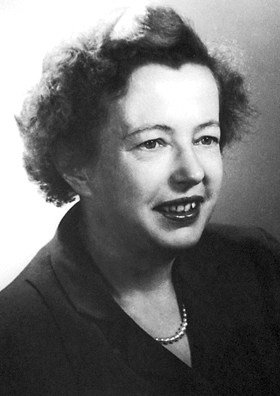
Maria Goeppert Mayer was a physicist, nuclear physicist, university teacher, and scientist[1][2][3] born on June 28, 1906, in Katowice[2][4][5][6][7][8][9][10][11][12] and died on February 20, 1972, in San Diego[2][4][5][6][7][8][9][10][11] from circulatory collapse[1]; she was buried in San Diego. She held citizenship in both Germany and the United States[1]. Her father was Friedrich Göppert[1], and she married Joseph Edward Mayer in 1930[1][13]. She received her education at the University of Göttingen[1] and was influenced by Max Born and James Franck[1].
Her professional work focused on physics, nuclear physics, radioactivity, and quantum mechanics[1][3]. She was employed by Johns Hopkins University from 1930 to 1939, the University of California, San Diego from 1960 to 1972, Columbia University, and Sarah Lawrence College from 1941 to 1942[14]. Her notable work includes the nuclear shell model[14]. She was a member of the Heidelberg Academy of Sciences and Humanities, the American Academy of Arts and Sciences, the American Philosophical Society, and the American Physical Society[15][16].
She received several awards, including the Nobel Prize in Physics, the National Women's Hall of Fame, Fellow of the American Physical Society, Fellow of the American Academy of Arts and Sciences, and the Golden Plate Award[17][18][19][20].
Key Facts
- Date of birth: January 1, 1906[10]
- Date of death: January 1, 1972[11]
- Place of burial: San Diego[12], El Camino Memorial Park[13]
- Father: Friedrich Göppert[14]
- Spouse: Joseph Edward Mayer[15]
- Child: Maria Mayer[16]
- Country of citizenship: Germany[17], United States[18]
- Field of work: physics[19], nuclear physics[20], radioactivity[21], quantum mechanics[22], theoretical physics[23], physical chemistry[24], photochemistry[25], statistical mechanics[26]
- Employer: Johns Hopkins University[27], University of California, San Diego[28], Columbia University[29], Sarah Lawrence College[30], Los Alamos National Laboratory[31], Argonne National Laboratory[32]
- Educated at: University of Göttingen[33]
- Doctoral advisor: Max Born[34]
- Notable work: nuclear shell model[35]
- Award received: Nobel Prize in Physics[36], National Women's Hall of Fame[37], Fellow of the American Physical Society[38], Fellow of the American Academy of Arts and Sciences[39], Golden Plate Award[40]
- Member of: Heidelberg Academy of Sciences and Humanities[41], American Academy of Arts and Sciences[42], American Philosophical Society[43], American Physical Society[44], National Academy of Sciences[45]
- Influenced by: Max Born[46], James Franck[47]
- Sex or gender: female[48]
- Doctoral student: Robert G. Sachs[49], Steven Moszkowski[50]
- Commons category: Maria Goeppert-Mayer[51]
- Archives at: ETH Zurich University Archives[52]
- Cause of death: circulatory collapse[53]
- Family name: Göppert[54], Goeppert[55], Mayer[56]
- Given name: Maria[57], Gertrud[58], Käte[59]
- Work location: San Diego[60]
- Described at URL: https://www.aip.org/history-programs/niels-bohr-library/oral-histories/28323-1[61]
Body
Works and Contributions
Things named for Maria Göppert Mayer include Maria Goeppert-Mayer Award[62], a science award[63], in United States[64], founded in 1986[65] and Goeppert-Mayer[66], an impact crater[67].
Why It Matters
Maria Göppert Mayer has Wikipedia articles in 29 language editions, a strong signal of global cultural recognition.[68] She is known by 68 alternative names across languages and contexts.[69]
Entities named for her include Maria Goeppert-Mayer Award[62], a science award[63], in United States[64], founded in 1986[65] and Goeppert-Mayer[66], an impact crater[67].
Her notable doctoral advisees include Robert G. Sachs[70], a physicist[71], 1916–1999[72], of United States[73], awarded the Guggenheim Fellowship[74].
FAQs
Where was Maria Göppert Mayer born?
Maria Göppert Mayer was born in Katowice[2].
Where did Maria Göppert Mayer die?
Maria Göppert Mayer passed away in San Diego[4].
Who were Maria Göppert Mayer's parents?
Maria Göppert Mayer's father was Friedrich Göppert[14].
Who was Maria Göppert Mayer married to?
Maria Göppert Mayer's spouses include Joseph Edward Mayer[15].
What did Maria Göppert Mayer do for work?
Maria Göppert Mayer worked as a physicist[5], nuclear physicist[6], university teacher[7], and scientist[8].
Where did Maria Göppert Mayer go to school?
Maria Göppert Mayer was educated at University of Göttingen[33].
What awards did Maria Göppert Mayer receive?
Honors received include Nobel Prize in Physics[36], National Women's Hall of Fame[37], Fellow of the American Physical Society[38], and Fellow of the American Academy of Arts and Sciences[39].