
Makarios III
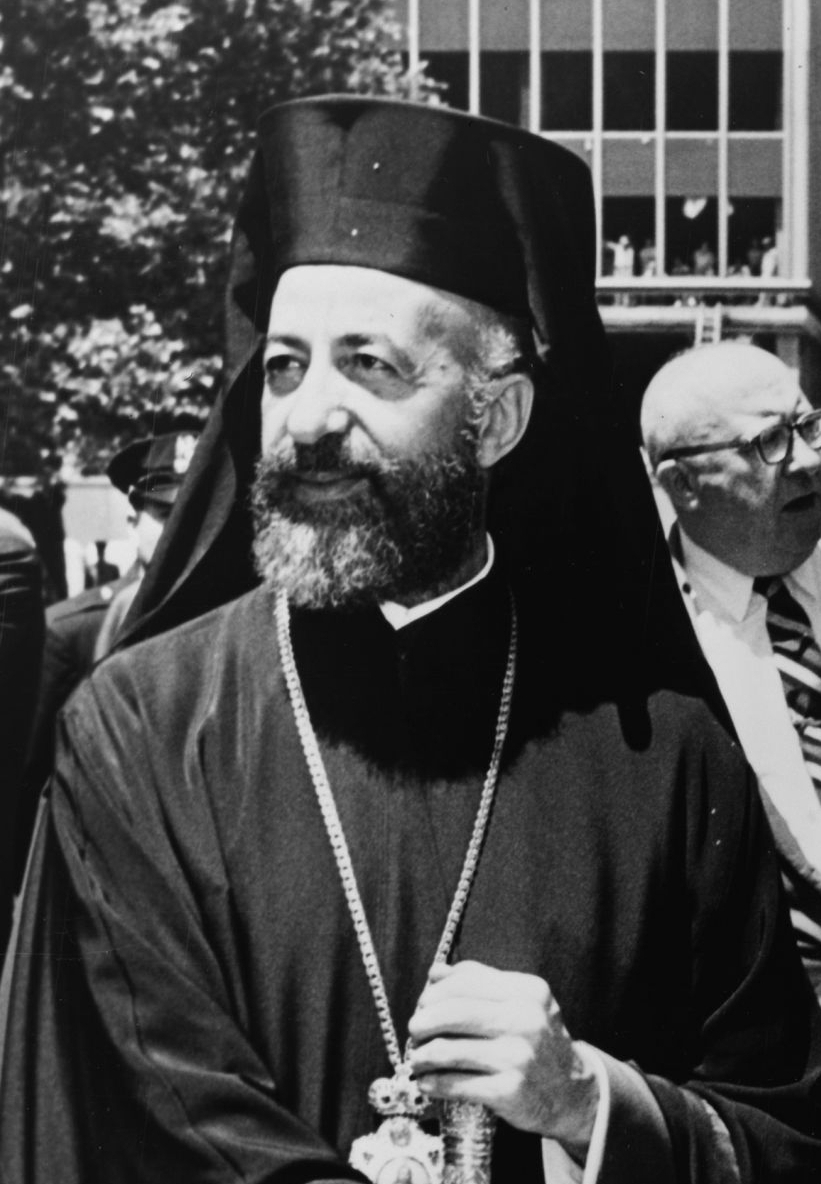
0 sources
Summary
Makarios III was born on August 13, 1913[1], in Pano Panagia[2]. He died on August 3, 1977[3], in Nicosia[4]. He worked as a politician[5], cleric[6], and deacon[7]. He ranks in the top 0.68% of human entities by monthly Wikipedia readership (4,883 views/month, #6,845 of 1,000,298).[8]
Key Facts
- Place of burial: Kykkos Monastery[9]
- Country of citizenship: Cyprus[10]
- Position held: Arzobispo de Nova Justiniana y Todo Chipre[11], bishop[12], President of Cyprus[13]
- Educated at: National and Kapodistrian University of Athens[14], Boston University[15], Pancyprian Gymnasium[16]
- Award received: Order of the Nile[17], Grand Cross Special Class of the Order of Merit of the Federal Republic of Germany[18], Order of St. Prince Vladimir[19], Order of St. Vladimir the Equal-to-the-Apostles (first class)[20]
- Religion or worldview: Eastern Orthodoxy[21]
- Sex or gender: male[22]
- Commons category: Archbishop Makarios III of Cyprus[23]
- Cause of death: myocardial infarction[24]
- Family name: Mouskos[25]
- Given name: Makarios[26]
- Manner of death: natural causes[27]
- Depicted by: Statue of Makarios III, Athens[28], Bust of Makarios III, War Museum[29]
- Described by source: Great Soviet Encyclopedia (1969–1978)[30], Armenian Soviet Encyclopedia, vol. 7[31]
- Participant in: Asian–African Conference[32]
- Languages spoken, written or signed: Modern Greek[33]
- Birth name: Μιχαήλ Χριστοδούλου Μούσκος[34]
- Name in native language: Αρχιεπίσκοπος Μακάριος Γ'[35]
- Consecrator: Makarios II of Cyprus[36]
- Candidacy in election: 1959 Cypriot presidential election[37], 1968 Cypriot presidential election[38], 1973 Cypriot presidential election[39]
Body
Works and Contributions
Things named for Makarios III include Order of him[40], an order[41], in Cyprus[42], founded in 1991[43]; Makario Stadium[44], an association football venue[45], in Cyprus[46], founded in 1978[47]; and Makarios[48], a Quarter of Kato Polemidia Municipality[49], in Cyprus[50].
Why It Matters
Makarios III has Wikipedia articles in 27 language editions, a strong signal of global cultural recognition.[51] He is known by 59 alternative names across languages and contexts.[52]
Entities named for him include Order of him[40], an order[41], in Cyprus[42], founded in 1991[43]; Makario Stadium[44], an association football venue[45], in Cyprus[46], founded in 1978[47]; and Makarios[48], a Quarter of Kato Polemidia Municipality[49], in Cyprus[50].
FAQs
Where was Makarios III born?
Makarios III's place of birth was Pano Panagia[2].
Where did Makarios III die?
Makarios III passed away in Nicosia[4].
What did Makarios III do for work?
Makarios III worked as a politician[5], cleric[6], and deacon[7].
Where did Makarios III go to school?
Makarios III was educated at National and Kapodistrian University of Athens[14], Boston University[15], and Pancyprian Gymnasium[16].
What awards did Makarios III receive?
Honors received include Order of the Nile[17], Grand Cross Special Class of the Order of Merit of the Federal Republic of Germany[18], Order of St. Prince Vladimir[19], and Order of St. Vladimir the Equal-to-the-Apostles (first class)[20].