
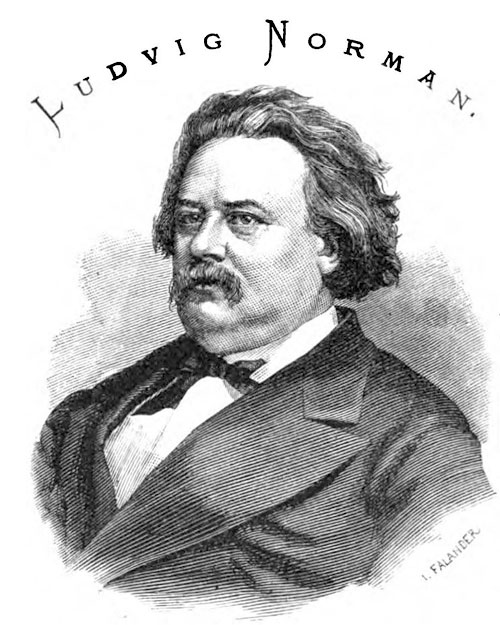
Ludvig Norman
0 sources
Summary
Ludvig Norman was born on August 28, 1831[1], in Storkyrkoförsamlingen[2]. He died on March 28, 1885[3], in The Royal Court Parish[4]. He worked as a pianist[5], conductor[6], composer[7], university teacher[8], and chapelmaster[9]. He ranks in the top 0.73% of human entities by monthly Wikipedia readership (65 views/month, #7,299 of 1,000,298).[10]
Key Facts
- Place of burial: Norra begravningsplatsen[11]
- Spouse: Wilma Neruda[12]
- Child: Ludwig Norman-Neruda[13], Felix Wilhelm Waldemar Norman-Neruda[14]
- Country of citizenship: Sweden[15]
- Occupation: music teacher[16], writer[17]
- Field of work: music[18]
- Position held: Q140797152[19]
- Employer: Royal College of Music in Stockholm[20], Kungliga Hovkapellet[21]
- Educated at: University of Music and Theatre Leipzig[22]
- Student: Helena Munktell[23], Richard Andersson[24], Elfrida Andrée[25]
- Sex or gender: male[26]
- Genre: symphony[27]
- Family name: Norman[28]
- Given name: Fredrik[29], Wilhelm[30], Ludvig[31]
- Student of: Adolf Fredrik Lindblad[32]
- Instrument: piano[33]
- Described by source: Nordisk familjebok[34], Riemann's Music Dictionary[35], Dictionary of Swedish National Biography[36], Brief Biographical Dictionary of Foreign Composers[37], Förteckning öfver svenska skådespel uppförda på Stockholms theatrar 1737-1863 och Kongl. theatrarnes personal 1773-1863 med flera anteckningar[38]
- Languages spoken, written or signed: Swedish[39]
- Name in native language: Fredrik Wilhelm Ludvig Norman[40]
Why It Matters
Ludvig Norman has Wikipedia articles in 13 language editions, a strong signal of global cultural recognition.[41] He is known by 11 alternative names across languages and contexts.[42]
FAQs
Where was Ludvig Norman born?
Ludvig Norman was born in Storkyrkoförsamlingen[2].
Where did Ludvig Norman die?
Ludvig Norman died in The Royal Court Parish[4].
Who was Ludvig Norman married to?
Ludvig Norman's spouses include Wilma Neruda[12].
What did Ludvig Norman do for work?
Ludvig Norman worked as a pianist[5], conductor[6], composer[7], university teacher[8], and chapelmaster[9].
Where did Ludvig Norman go to school?
Ludvig Norman was educated at University of Music and Theatre Leipzig[22].