
Leonardo Bruni
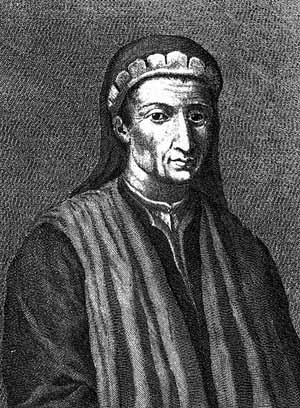
0 sources
Leonardo Bruni
Summary
Leonardo Bruni is a human[1]. He was born in Arezzo[2]. He was born on 1369[3]. He passed away in Florence[4]. He died on 1444[5]. He worked as a philosopher[6], writer[7], translator[8], historian[9], and politician[10]. He ranks in the top 0.72% of human entities by monthly Wikipedia readership (816 views/month, #7,182 of 1,000,298).[11]
Key Facts
- Born in Arezzo[2], Leonardo Bruni…
- Leonardo Bruni died in Florence[4].
- Leonardo Bruni was born on 1369[3].
- Leonardo Bruni was born on January 1, 1370[12].
- Leonardo Bruni died on 1444[5].
- Leonardo Bruni died on March 9, 1444[13].
- Leonardo Bruni is buried at Basilica of Santa Croce[14].
- Leonardo Bruni held citizenship in Republic of Florence[15].
- Italian was Leonardo Bruni's native language[16].
- Leonardo Bruni worked as a philosopher[6].
- Leonardo Bruni's professions included writer[7].
- Leonardo Bruni worked as a translator[8].
- Leonardo Bruni's professions included historian[9].
- Leonardo Bruni's professions included politician[10].
- Leonardo Bruni worked as a humanist[17].
- Leonardo Bruni's field of work was humanism[18].
- Leonardo Bruni's field of work was literature[19].
- Leonardo Bruni's field of work was history[20].
- Leonardo Bruni's field of work was translation[21].
- A notable student of Leonardo Bruni was Lorenzo Valla[22].
- A notable work attributed to Leonardo Bruni is Historiae Florentini populi[23].
- A notable work attributed to Leonardo Bruni is Rerum suo tempore gestarum commentarius[24].
- A notable work attributed to Leonardo Bruni is De bello italico adversus Gothos[25].
- A notable work attributed to Leonardo Bruni is Commentarius de bello Punico[26].
- A notable work attributed to Leonardo Bruni is De militia[27].
Body
Origins and Family
Born in Arezzo[2], Leonardo Bruni… Recorded date of birth include 1369[3] and January 1, 1370[12]. Italian was his native language[16].
Career and Affiliations
Recorded occupations include philosopher[6], writer[7], translator[8], historian[9], politician[10], and humanist[17]. Fields of work include humanism[18], a world view[28]; literature[19], a type of arts[29]; history[20], an academic discipline[30]; and translation[21], an academic major[31]. A notable student of Leonardo Bruni was Lorenzo Valla[22].
Works and Contributions
Notable works include Historiae Florentini populi[23], a literary work[32]; Rerum suo tempore gestarum commentarius[24]; De bello italico adversus Gothos[25]; Commentarius de bello Punico[26], a literary work[33]; De militia[27]; and Dialogi ad Petrum Paulum Histrum[34], a literary work[35].
Personal Life
Leonardo Bruni's religion is recorded as Catholic Church[36].
Death and Burial
Recorded date of death include 1444[5] and March 9, 1444[13]. Leonardo Bruni passed away in Florence[4]. He is buried at Basilica of Santa Croce[14].
Why It Matters
Leonardo Bruni ranks in the top 0.72% of human entities by monthly Wikipedia readership (816 views/month, #7,182 of 1,000,298).[11] He has Wikipedia articles in 26 language editions, a strong signal of global cultural recognition.[37] He is known by 61 alternative names across languages and contexts.[38]
FAQs
Where was Leonardo Bruni born?
Born in Arezzo[2], Leonardo Bruni…
Where did Leonardo Bruni die?
Leonardo Bruni died in Florence[4].
What did Leonardo Bruni do for work?
Leonardo Bruni worked as philosopher[6], writer[7], translator[8], historian[9], and politician[10].