
Kilwa Kisiwani
0 sources
Kilwa Kisiwani
Summary
Kilwa Kisiwani is an island[1]. It ranks in the top 4% of island entities by monthly Wikipedia readership (2,362 views/month).[2]
Key Facts
- Kilwa Kisiwani is located in Kilwa District[3].
- Kilwa Kisiwani is in the country of Tanzania[4].
- Kilwa Kisiwani is on the body of water Indian Ocean[5].
- Kilwa Kisiwani's instance of is recorded as island[6].
- Kilwa Kisiwani's instance of is recorded as human settlement[7].
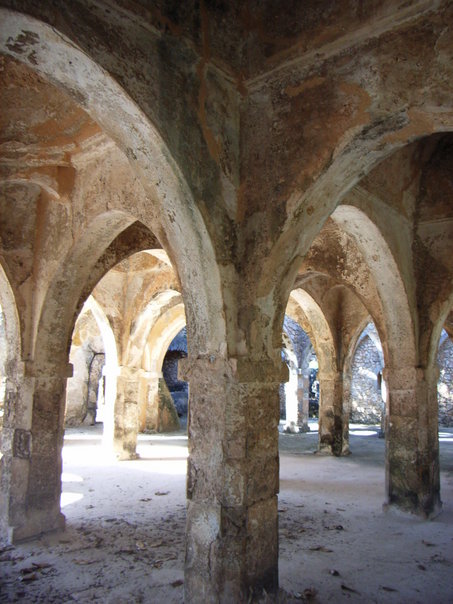
- Kilwa Kisiwani's architectural style is recorded as Swahili architecture[8].
- Kilwa Kisiwani is part of Ruins of Kilwa Kisiwani and Ruins of Songo Mnara[9].
- Kilwa Kisiwani's Commons category is recorded as Kilwa Kisiwani[10].
- 900 marks the founding of Kilwa Kisiwani[11].
- Kilwa Kisiwani was dissolved in 1843[12].
- Kilwa Kisiwani's coordinate location is recorded as {'latitude': -8.98173, 'longitude': 39.51722}[13].
- Kilwa Kisiwani's significant event is recorded as list of World Heritage in Danger[14].
- Kilwa Kisiwani's described by source is recorded as Encyclopædia Britannica 11th edition[15].
- Kilwa Kisiwani's capital of is recorded as Kilwa Sultanate[16].
- Kilwa Kisiwani's heritage designation is recorded as protected monument in Tanzania[17].
- Kilwa Kisiwani's heritage designation is recorded as part of UNESCO World Heritage Site[18].
- Kilwa Kisiwani's native label is recorded as Kilwa Kisiwani[19].
Body
Geography
Kilwa Kisiwani is in the country of Tanzania[4]. It is located in Kilwa District[3]. It is on the body of water Indian Ocean[5]. It is part of Ruins of it and Ruins of Songo Mnara[9].
Designation and Status
Recorded instance of include island[6] and human settlement[7]. Heritage statuses include protected monument in Tanzania[17] and part of UNESCO World Heritage Site[18].
History and Context
900 marks the founding of Kilwa Kisiwani[11].
Why It Matters
Kilwa Kisiwani ranks in the top 4% of island entities by monthly Wikipedia readership (2,362 views/month).[2] It has Wikipedia articles in 21 language editions, a strong signal of global cultural recognition.[20] It is known by 34 alternative names across languages and contexts.[21]