
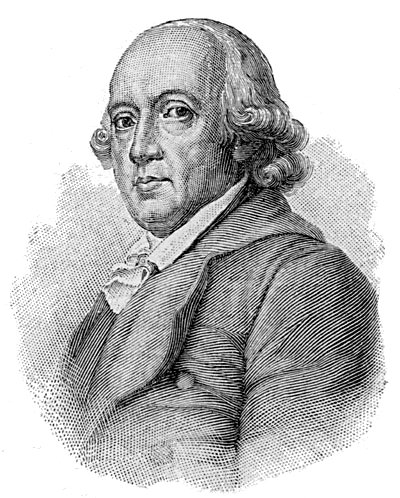
Johann Gottfried Herder
0 sources
Johann Gottfried Herder
Summary
Johann Gottfried Herder is a human[1]. He was born in Morąg[2]. He was born on August 25, 1744[3]. He died in Weimar[4]. He died on December 18, 1803[5]. He worked as a philosopher[6], theologian[7], poet[8], translator[9], and writer[10]. He ranks in the top 0.69% of human entities by monthly Wikipedia readership (1,132 views/month, #6,937 of 1,000,298).[11]
Key Facts
- Johann Gottfried Herder's place of birth was Morąg[2].
- Johann Gottfried Herder passed away in Weimar[4].
- Johann Gottfried Herder was born on August 25, 1744[3].
- Johann Gottfried Herder was born on January 1, 1744[12].
- Johann Gottfried Herder died on December 18, 1803[5].
- Johann Gottfried Herder died on January 1, 1803[13].
- Burial took place at St. Peter und Paul[14].
- Johann Gottfried Herder's father was Gottfried Herder[15].
- Johann Gottfried Herder's mother was Anna Elisabeth Herder[16].
- Among Johann Gottfried Herder's spouses was Caroline Herder[17].
- A child of Johann Gottfried Herder was Siegmund August Wolfgang von Herder[18].
- A child of Johann Gottfried Herder was Carl Adelbert von Herder[19].
- A child of Johann Gottfried Herder was Luise Stichling[20].
- A child of Johann Gottfried Herder was Emil Gottfried von Herder[21].
- A child of Johann Gottfried Herder was Gottfried von Herder[22].
- A child of Johann Gottfried Herder was Rinaldo von Herder[23].
- Johann Gottfried Herder held citizenship in Kingdom of Prussia[24].
- Johann Gottfried Herder's professions included philosopher[6].
- Johann Gottfried Herder worked as a theologian[7].
- Johann Gottfried Herder worked as a poet[8].
- Johann Gottfried Herder worked as a translator[9].
- Johann Gottfried Herder worked as a writer[10].
- Johann Gottfried Herder's professions included literary critic[25].
- Johann Gottfried Herder's field of work was philosophy of mind[26].
- Johann Gottfried Herder's field of work was philosophy of language[27].
Body
Origins and Family
Born in Morąg[2], Johann Gottfried Herder… Recorded date of birth include August 25, 1744[3] and January 1, 1744[12]. His father was Gottfried Herder[15]. His mother was Anna Elisabeth Herder[16].
Education
Johann Gottfried Herder was educated at University of Königsberg[28].
Career and Affiliations
Recorded occupations include philosopher[6], theologian[7], poet[8], translator[9], writer[10], and literary critic[25]. Fields of work include philosophy of mind[26], a branch of philosophy[29]; philosophy of language[27], a branch of philosophy[30]; and political philosophy[31], a branch of philosophy[32]. Positions held include pastor[33], a Christian religious occupation[34] and superintendent[35], an ecclesiastical occupation[36].
Works and Contributions
Notable works include Sculpture[37], Stimmen der Völker in Liedern[38], Treatise on the Origin of Language[39], and Q139910079[40]. Things named for Johann Gottfried Herder include Herder Prize[41], a cultural prize[42], founded in 1963[43]; Johann Gottfried Herder Medal[44], an award[45], in German Democratic Republic[46], founded in 1957[47]; 8158 Herder[48], an asteroid[49]; Johann Gottfried von Herder Award[50]; and Herder Medal[51].
Personal Life
Johann Gottfried Herder was married to Caroline Herder[17]. Children include Siegmund August Wolfgang von Herder[18], a geologist[52], 1776–1838[53], of Germany[54]; Carl Adelbert von Herder[19], a farmer[55], 1779–1857[56], of Germany[57]; Luise Stichling[20], a writer[58], 1781–1860[59], of Germany[60]; Emil Gottfried von Herder[21], a forester[61], 1783–1855[62], of Germany[63], specialised in biography[64]; Gottfried von Herder[22], a physician[65], 1774–1806[66]; and Rinaldo von Herder[23], 1790–1841[67]. His religion is recorded as Lutheranism[68].
Death and Burial
Recorded date of death include December 18, 1803[5] and January 1, 1803[13]. Johann Gottfried Herder died in Weimar[4]. Burial took place at St. Peter und Paul[14].
Why It Matters
Johann Gottfried Herder ranks in the top 0.69% of human entities by monthly Wikipedia readership (1,132 views/month, #6,937 of 1,000,298).[11] He has Wikipedia articles in 28 language editions, a strong signal of global cultural recognition.[69] He is known by 80 alternative names across languages and contexts.[70]
He has been cited as an influence by Oswald Spengler[71], a historian[72], 1880–1936[73], of Germany[74]; Friedrich Wilhelm Joseph Schelling[75], a philosopher[76], 1775–1854[77], of Kingdom of Württemberg[78], awarded the Pour le Mérite for Sciences and Arts order[79], specialised in natural philosophy[80]; Hans Vaihinger[81], a philosopher[82], 1852–1933[83], of Germany[84]; Adolf Bastian[85], an anthropologist[86], 1826–1905[87], of Bremen[88], awarded the Order of the Red Eagle 2nd Class[89], specialised in ethnography[90]; and Kazimierz Brodziński[91], a poet[92], 1791–1835[93], of Polish–Lithuanian Commonwealth[94].
Entities named for him include Herder Prize[41], a cultural prize[42], founded in 1963[43]; Johann Gottfried Herder Medal[44], an award[45], in German Democratic Republic[46], founded in 1957[47]; 8158 Herder[48], an asteroid[49]; Johann Gottfried von Herder Award[50]; and Herder Medal[51].
FAQs
Where was Johann Gottfried Herder born?
Born in Morąg[2], Johann Gottfried Herder…
Where did Johann Gottfried Herder die?
Johann Gottfried Herder passed away in Weimar[4].
Who were Johann Gottfried Herder's parents?
Johann Gottfried Herder's father was Gottfried Herder[15]. Johann Gottfried Herder's mother was Anna Elisabeth Herder[16].
Who was Johann Gottfried Herder married to?
Johann Gottfried Herder's spouses include Caroline Herder[17].
What did Johann Gottfried Herder do for work?
Johann Gottfried Herder worked as philosopher[6], theologian[7], poet[8], translator[9], and writer[10].
Where did Johann Gottfried Herder go to school?
Johann Gottfried Herder was educated at University of Königsberg[28].
Who did Johann Gottfried Herder influence?
Johann Gottfried Herder has been cited as an influence by Oswald Spengler[71], Friedrich Wilhelm Joseph Schelling[75], Hans Vaihinger[81], and Adolf Bastian[85].