
Adolf Bastian
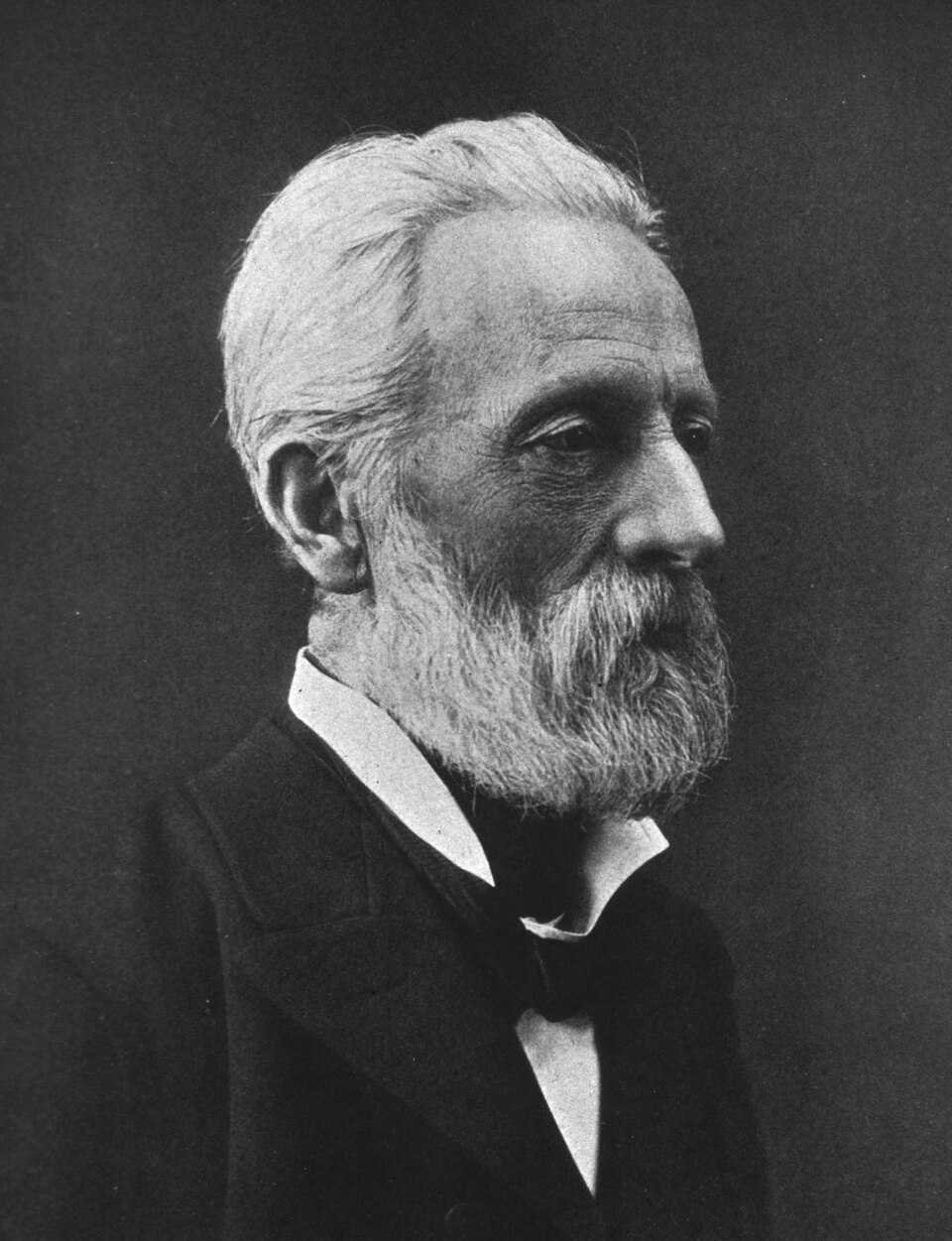
0 sources
Summary
Adolf Bastian was born on June 26, 1826[1], in Bremen[2]. He died on February 2, 1905[3], in Port of Spain[4]. He worked as an anthropologist[5], writer[6], psychologist[7], university teacher[8], and explorer[9]. He ranks in the top 0.73% of human entities by monthly Wikipedia readership (462 views/month, #7,264 of 1,000,298).[10]
Key Facts
- Date of birth: January 1, 1826[11]
- Date of death: January 1, 1905[12]
- Place of burial: Südwestkirchhof Stahnsdorf[13]
- Country of citizenship: Bremen[14]
- Occupation: ethnologist[15], jurist[16], naturalist[17], physician[18], geographer[19]
- Field of work: ethnography[20]
- Position held: museum director[21]
- Employer: Humboldt-Universität zu Berlin[22], Ethnological Museum Berlin[23]
- Educated at: Heidelberg University[24], Friedrich Schiller University Jena[25], Humboldt-Universität zu Berlin[26], University of Würzburg[27], Altes Gymnasium (Bremen)[28]
- Notable work: Zeitschrift für Ethnologie[29]
- Award received: Order of the Red Eagle 2nd Class[30]
- Member of: German Academy of Sciences Leopoldina[31], Corps Saxonia Jena[32], Berlin Society for Anthropology, Ethnology, and Prehistory[33], Berlin Geographical Society[34]
- Influenced by: Johann Gottfried Herder[35], Alexander von Humboldt[36]
- Sex or gender: male[37]
- Commons category: Adolf Bastian[38]
- Archives at: Berlin-Dahlem Museum Centre[39], Museum für Naturkunde Berlin, Archive[40]
- Academic degree: Doctor of Medicine[41], habilitation[42], professor[43]
- Family name: Bastian[44]
- Given name: Adolf[45], Philipp[46], Wilhelm[47]
- Pseudonym: Plato III[48]
- Described by source: Small Brockhaus and Efron Encyclopedic Dictionary[49], Brockhaus and Efron Encyclopedic Dictionary[50], The Nuttall Encyclopædia[51], Great Soviet Encyclopedia (1926–1947)[52], Encyclopædia Britannica 11th edition[53]
Body
Works and Contributions
Things named for Adolf Bastian include Bastianøyane[54], an island group[55], in Norway[56].
Why It Matters
Adolf Bastian has Wikipedia articles in 19 language editions, a strong signal of global cultural recognition.[57] He is known by 34 alternative names across languages and contexts.[58]
He is credited with the discovery of monomyth[59], a concept[60]. Entities named for him include Bastianøyane[54], an island group[55], in Norway[56].
FAQs
Where was Adolf Bastian born?
Adolf Bastian's place of birth was Bremen[2].
Where did Adolf Bastian die?
Adolf Bastian passed away in Port of Spain[4].
What did Adolf Bastian do for work?
Adolf Bastian worked as an anthropologist[5], writer[6], psychologist[7], university teacher[8], and explorer[9].
Where did Adolf Bastian go to school?
Adolf Bastian was educated at Heidelberg University[24], Friedrich Schiller University Jena[25], Humboldt-Universität zu Berlin[26], and University of Würzburg[27].
What awards did Adolf Bastian receive?
Honors received include Order of the Red Eagle 2nd Class[30].
What did Adolf Bastian discover?
Adolf Bastian is credited as discoverer of monomyth[59].