
Italica
ancient city of Hispania Baetica
Press Enter · cited answer in seconds
0 sources
Italica
Summary
Italica is an ancient city[1]. Italica ranks in the top 7% of ancient_city entities by monthly Wikipedia readership (824 views/month).[2]
Key Facts
- Italica is located in Santiponce[3].
- Italica is located in Hispania Ulterior[4].
- Italica is located in Hispania Baetica[5].
- Italica is in the country of Spain[6].
- Italica is in the country of Ancient Rome[7].
- Italica's instance of is recorded as ancient city[8].
- Italica's instance of is recorded as human settlement[9].
- Italica's instance of is recorded as Roman colony[10].
- Italica's instance of is recorded as archaeological site[11].
- Italica's instance of is recorded as ruins[12].
- Italica's instance of is recorded as archaeological museum[13].
- Italica's instance of is recorded as roman ruins[14].
- The location of Italica was Santiponce[15].
- Italica's postal code is recorded as 41970[16].
- Italica's Commons category is recorded as Italica[17].
- Italica comprises Polideportivo de Santiponce[18].
- Italica comprises House of Hylas[19].
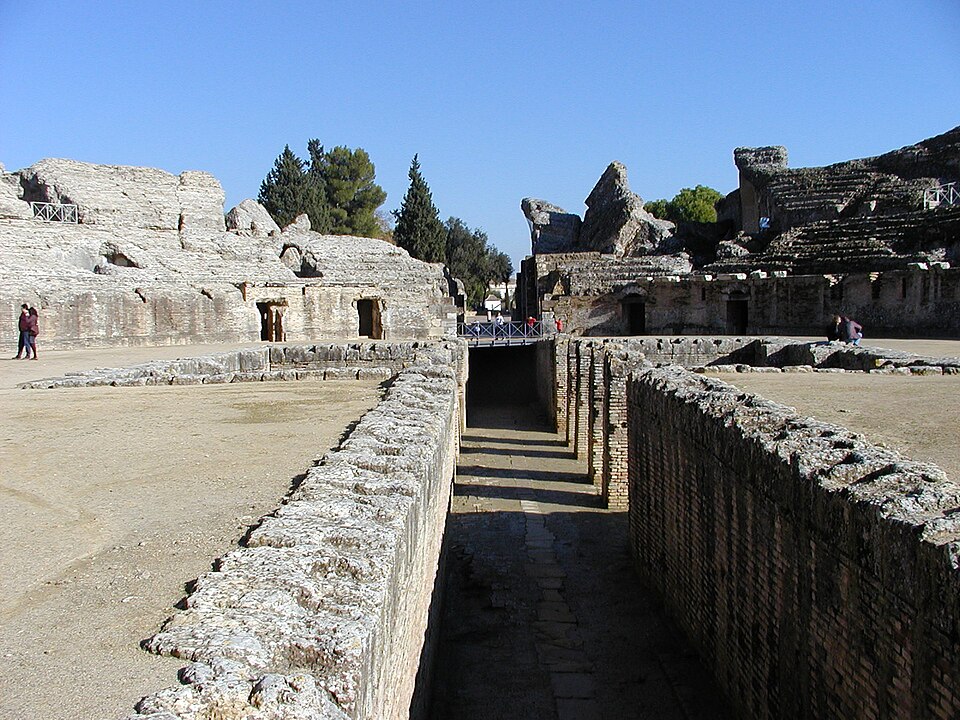
- Italica comprises Amphitheatre of Italica[20].
- Italica comprises Roman circus of Italica[21].
- 206 BC marks the founding of Italica[22].
- Italica's coordinate location is recorded as {'lat': 37.44119, 'lon': -6.0445003}[23].
- Italica's official website is recorded as http://www.museosdeandalucia.es/web/conjuntoarqueologicodeitalica[24].
- Italica's described by source is recorded as Russian translation of Lübker's Antiquity Lexicon[25].
- Italica's described by source is recorded as Meyer’s Universum, Achter Band[26].
- Italica's described by source is recorded as Meyers Konversations-Lexikon, 4th edition (1885–1890)[27].
Body
Founding
206 BC marks the founding of Italica[22].
Why It Matters
Italica ranks in the top 7% of ancient_city entities by monthly Wikipedia readership (824 views/month).[2] Italica has Wikipedia articles in 21 language editions, a strong signal of global cultural recognition.[28] Italica is known by 8 alternative names across languages and contexts.[29]