
Ibn Arabi
0 sources
Summary
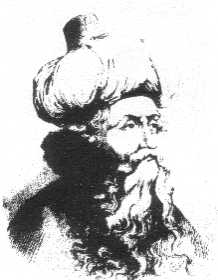
Ibn Arabi is a human[1]. He was born in Murcia[2]. He was born on July 28, 1165[3]. He passed away in Damascus[4]. He died on November 16, 1240[5]. He worked as a philosopher[6], poet[7], and writer[8]. He ranks in the top 0.65% of human entities by monthly Wikipedia readership (3,694 views/month, #6,486 of 1,000,298).[9]
Key Facts
- Born in Murcia[2].
- Ibn Arabi passed away in Damascus[4].
- Ibn Arabi was born on July 28, 1165[3].
- Ibn Arabi was born on 1165[10].
- Ibn Arabi died on November 16, 1240[5].
- Ibn Arabi died on 1240[11].
- Ibn Arabi held citizenship in Almohad Caliphate[12].
- Ibn Arabi worked as a philosopher[6].
- Ibn Arabi's professions included poet[7].
- Ibn Arabi's professions included writer[8].
- Ibn Arabi's field of work was Sufism[13].
- A notable student of Ibn Arabi was Sadr al-Din al-Qunawi[14].
- A notable student of Ibn Arabi was زكي الدين البرزالي[15].
- A notable work attributed to Ibn Arabi is The Meccan Revelations[16].
- A notable work attributed to Ibn Arabi is The Ringstones of Wisdom[17].
- A notable work attributed to Ibn Arabi is The Interpreter of Desires[18].
- A notable work attributed to Ibn Arabi is Al-Salat al-Nariyya[19].
- A notable work attributed to Ibn Arabi is Q141225624[20].
- Ibn Arabi's religion is recorded as Islam[21].
- Ibn Arabi was influenced by Ibn Sab'in[22].
- Ibn Arabi is recorded as male[23].
- Ibn Arabi's instance of is recorded as human[24].
- Ibn Arabi's Commons category is recorded as Ibn Arabi[25].
- Ibn Arabi's given name is recorded as Muhammad[26].
- Ibn Arabi's given name is recorded as Muhammad[27].
Body
Origins and Family
Ibn Arabi's place of birth was Murcia[2]. Recorded date of birth include July 28, 1165[3] and 1165[10].
Education
Studied under Mohammed ibn Qasim al-Tamimi[28], a biographer[29], 1140–1207[30]; Shams from Marchena[31]; Fatima from Cordoba[32], a philosopher[33], b. 1101[34]; Abu'l-Faraj ibn al-Jawzi[35], a muhaddith[36], 1116–1200[37], of Abbasid Caliphate[38], specialised in fiqh[39]; Abu Tahir Isfahani[40], an ulema[41], 1085–1180[42], specialised in science of hadith[43]; and Ḫalaf Ibn-ʿAbd-al-Malik Ibn-Baškuwāl[44], a historian[45], 1101–1183[46].
Career and Affiliations
Recorded occupations include philosopher[6], poet[7], and writer[8]. Ibn Arabi's field of work was Sufism[13]. Notable students include Sadr al-Din al-Qunawi[14], a philosopher[47], 1209–1274[48] and زكي الدين البرزالي[15].
Works and Contributions
Notable works include The Meccan Revelations[16], a literary work[49]; The Ringstones of Wisdom[17], a work[50]; The Interpreter of Desires[18], a poetry[51]; Al-Salat al-Nariyya[19], a prayer[52], written by Ibrahim ibn Muhamamd al-Tazi[53]; and Q141225624[20].
Personal Life
Ibn Arabi's religion is recorded as Islam[21].
Death and Burial
Recorded date of death include November 16, 1240[5] and 1240[11]. Ibn Arabi died in Damascus[4].
Why It Matters
Ibn Arabi ranks in the top 0.65% of human entities by monthly Wikipedia readership (3,694 views/month, #6,486 of 1,000,298).[9] He has Wikipedia articles in 26 language editions, a strong signal of global cultural recognition.[54] He is known by 84 alternative names across languages and contexts.[55]
He has been cited as an influence by Rumi[56], a poet[57], 1207–1273[58], specialised in Islamic philosophy[59]; Hafez[60], a poet[61], 1325–1389[62], of Muzaffarids of Iran[63]; Muhammad Tahir-ul-Qadri[64], a politician[65], b. 1951[66], of Pakistan[67]; Mulla Sadra[68], an ulema[69], 1571–1641[70], of Safavid Iran[71], specialised in philosophy[72]; Hossein Nasr[73], a philosopher[74], b. 1933[75], of Iran[76], awarded the Gittler Prize[77]; and Frithjof Schuon[78], a philosopher[79], 1907–1998[80], of Switzerland[81], specialised in spirituality[82].
Works attributed to him include The Meccan Revelations[83], The Interpreter of Desires[84], and The Ringstones of Wisdom[85].
FAQs
Where was Ibn Arabi born?
Born in Murcia[2].
Where did Ibn Arabi die?
Ibn Arabi passed away in Damascus[4].
What did Ibn Arabi do for work?
Ibn Arabi worked as philosopher[6], poet[7], and writer[8].
Who did Ibn Arabi influence?
Ibn Arabi has been cited as an influence by Rumi[56], Hafez[60], Muhammad Tahir-ul-Qadri[64], and Mulla Sadra[68].