
Hafez
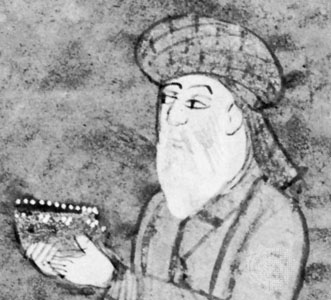
0 sources
Hafez
Summary
Hafez is a human[1]. He was born in Shiraz[2]. He was born on 1326[3]. He passed away in Shiraz[4]. He died on 1389[5]. He worked as a poet[6], lyricist[7], and writer[8]. He ranks in the top 0.66% of human entities by monthly Wikipedia readership (4,105 views/month, #6,566 of 1,000,298).[9]
Key Facts
- Born in Shiraz[2], Hafez…
- Hafez passed away in Shiraz[4].
- Hafez was born on 1326[3].
- Hafez was born on 1325[10].
- Hafez died on 1389[5].
- Burial took place at Tomb of Hafez[11].
- Hafez held citizenship in Muzaffarids of Iran[12].
- Hafez held citizenship in Timurid Empire[13].
- Persian was Hafez's native language[14].
- Hafez is identified as part of the Persians ethnic group[15].
- Hafez worked as a poet[6].
- Hafez worked as a lyricist[7].
- Hafez worked as a writer[8].
- A notable work attributed to Hafez is The Divān of Hafez[16].
- Hafez's religion is recorded as Islam[17].
- Hafez's religion is recorded as Sunni Islam[18].
- Hafez's religion is recorded as Sufism[19].
- Hafez was influenced by Ibn Arabi[20].
- Hafez was influenced by Sanai[21].
- Hafez was influenced by Anvari[22].
- Hafez was influenced by Nizami Ganjavi[23].
- Hafez was influenced by Khaqani[24].
- Hafez was influenced by Attar of Nishapur[25].
- Hafez is recorded as male[26].
- Hafez's instance of is recorded as human[27].
Product Details
The following facts are restated verbatim from public-domain and CC0 open-data sources — every line is independently verifiable against the named source's catalog.
MusicBrainz — CC0 open music encyclopedia
-
Type: Person[28]
-
Country: IR[29]
-
Began / founded: 1325[30]
-
Ended / dissolved: 1390[31]
-
MusicBrainz ID: bdc6602c-e92a-4283-83d3-48ba4929764c[32]
Body
Origins and Family
Hafez was born in Shiraz[2]. Recorded date of birth include 1326[3] and 1325[10]. He is identified as part of the Persians ethnic group[15]. Persian was his native language[14].
Career and Affiliations
Recorded occupations include poet[6], lyricist[7], and writer[8].
Works and Contributions
A notable work attributed to Hafez is The Divān of him[16]. Things named for him include Hafiz[33], a Mercury crater[34] and 12610 Hãfez[35], an asteroid[36].
Personal Life
Religious affiliations include Islam[17], a major religious group[37], founded in 0631[38]; Sunni Islam[18], an Islamic denomination[39], founded in 0601[40]; and Sufism[19], a religious movement[41].
Death and Burial
Hafez died on 1389[5]. He passed away in Shiraz[4]. Burial took place at Tomb of him[11].
Why It Matters
Hafez ranks in the top 0.66% of human entities by monthly Wikipedia readership (4,105 views/month, #6,566 of 1,000,298).[9] He has Wikipedia articles in 30 language editions, a strong signal of global cultural recognition.[42] He is known by 44 alternative names across languages and contexts.[43]
He has been cited as an influence by Ralph Waldo Emerson[44], a philosopher[45], 1803–1882[46], of United States[47], awarded the Fellow of the American Academy of Arts and Sciences[48], specialised in philosophy[49]; Nef'i[50], a poet[51], 1572–1635[52], of Ottoman Empire[53]; Shifa'i Isfahani[54], a poet[55], 1559–1628[56], of Guarded Domains of Iran[57], specialised in Persian literature[58]; and Giorgi Kekelidze[59], a poet[60], b. 1984[61], of Soviet Union[62], awarded the Saba prize[63].
Works attributed to him include The Divān of him[64], a literary work[65]. Entities named for him include Hafiz[33], a Mercury crater[34] and 12610 Hãfez[35], an asteroid[36].
FAQs
Where was Hafez born?
Hafez was born in Shiraz[2].
Where did Hafez die?
Hafez died in Shiraz[4].
What did Hafez do for work?
Hafez worked as poet[6], lyricist[7], and writer[8].
Who did Hafez influence?
Hafez has been cited as an influence by Ralph Waldo Emerson[44], Nef'i[50], Shifa'i Isfahani[54], and Giorgi Kekelidze[59].