
Hieronymus Bosch
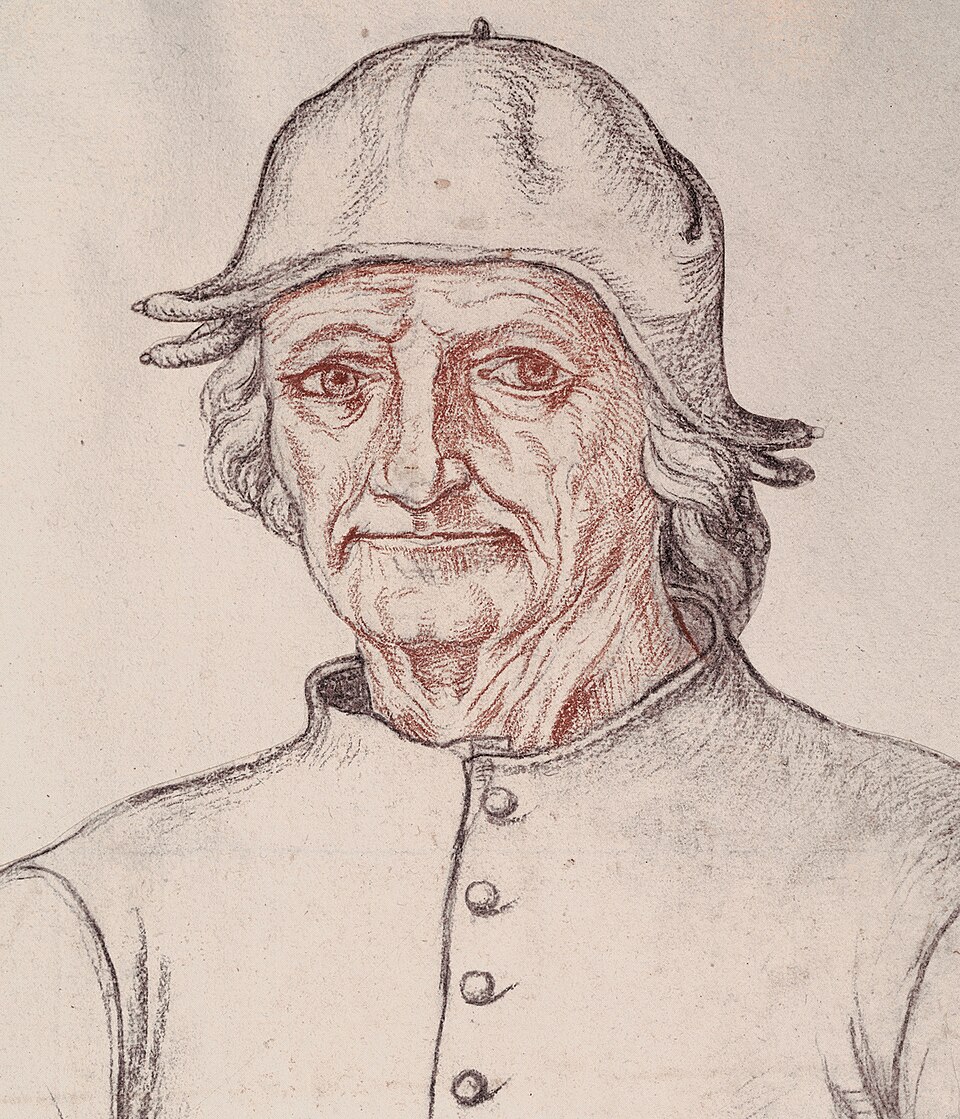
0 sources
Summary
Hieronymus Bosch was born on 1450[1] in 's-Hertogenbosch[2]. He died on August 9, 1516[3], in 's-Hertogenbosch[4]. He worked as a painter[5], draftsperson[6], architectural drafter[7], and visual artist[8]. He ranks in the top 0.48% of human entities by monthly Wikipedia readership (27,569 views/month, #4,785 of 1,000,298).[9]
Key Facts
- Place of burial: 's-Hertogenbosch[10]
- Father: Anthonis van Aken[11]
- Spouse: Aleyt Goyaerts van den Meerveen[12]
- Country of citizenship: Northern Low Countries[13]
- Ethnic group: Dutch[14]
- Field of work: Renaissance painting[15], visual arts[16], Gothic painting[17]
- Student: Gielis Panhedel[18]
- Notable work: The Garden of Earthly Delights[19], Ship of Fools[20], Ecce Homo[21], The Seven Deadly Sins and the Four Last Things[22], The Last Judgment[23], The Marriage Feast at Cana[24], The Haywain Triptych[25], Visions of the Hereafter[26], The Conjurer[27]
- Sex or gender: male[28]
- Movement: Early Netherlandish painting[29], Northern Renaissance[30]
- Genre: religious painting[31], genre painting[32], history painting[33], portrait[34], allegory[35]
- Commons category: Hieronymus Bosch[36]
- Family name: Bosch[37]
- Given name: Hieronymus[38], Jeroen[39]
- Pseudonym: Aeken, Hieronymus van[40], Aken, Hieronymus van[41], Aken, Jeroen Anthoniszoon van[42], Aken, Jheronymus van[43], Aquen, Jheronimus[44], Bos, Jeronimus[45]
- Topic's main category: Category:Hieronymus Bosch[46]
- Commons gallery: Jheronimus Bosch[47]
- Work location: 's-Hertogenbosch[48]
- Described at URL: https://aow.degruyter.com/artist/_10136346?&[49], http://boschproject.org/#/[50]
Product Details
The following facts are restated verbatim from public-domain and CC0 open-data sources — every line is independently verifiable against the named source's catalog.
MusicBrainz — CC0 open music encyclopedia
-
Type: Person[51]
-
Country: NL[52]
-
Began / founded: 1450[53]
-
Ended / dissolved: 1516-08[54]
-
MusicBrainz ID: 34febbcd-dd4a-4c39-8c4a-6df89661e986[55]
Why It Matters
Hieronymus Bosch has Wikipedia articles in 30 language editions, a strong signal of global cultural recognition.[56] He is known by 124 alternative names across languages and contexts.[57]
He has been cited as an influence by Salvador Dalí[58], a painter[59], 1904–1989[60], of Spain[61], awarded the Grand Cross of the Order of Isabella the Catholic[62], specialised in painting[63]; Francisco Goya[64], a painter[65], 1746–1828[66], of Spain[67], specialised in painting[68]; René Magritte[69], a painter[70], 1898–1967[71], of Belgium[72], specialised in painting[73]; M. C. Escher[74], a printmaker[75], 1898–1972[76], of Kingdom of the Netherlands[77], awarded the Knight of the Order of Orange-Nassau[78], specialised in ceramic art[79]; Joan Miró[80], a painter[81], 1893–1983[82], of Spain[83], awarded the Grand Cross of the Order of Isabella the Catholic[84], specialised in painting[85]; and Gahan Wilson[86], a cartoonist[87], 1930–2019[88], of United States[89], awarded the Inkpot Award[90], specialised in cartoonist[91].
FAQs
Where was Hieronymus Bosch born?
Hieronymus Bosch was born in 's-Hertogenbosch[2].
Where did Hieronymus Bosch die?
Hieronymus Bosch passed away in 's-Hertogenbosch[4].
Who were Hieronymus Bosch's parents?
Hieronymus Bosch's father was Anthonis van Aken[11].
Who was Hieronymus Bosch married to?
Hieronymus Bosch's spouses include Aleyt Goyaerts van den Meerveen[12].
What did Hieronymus Bosch do for work?
Hieronymus Bosch worked as a painter[5], draftsperson[6], architectural drafter[7], and visual artist[8].
Who did Hieronymus Bosch influence?
Hieronymus Bosch has been cited as an influence by Salvador Dalí[58], Francisco Goya[64], René Magritte[69], and M. C. Escher[74].