
Hansel and Gretel
0 sources
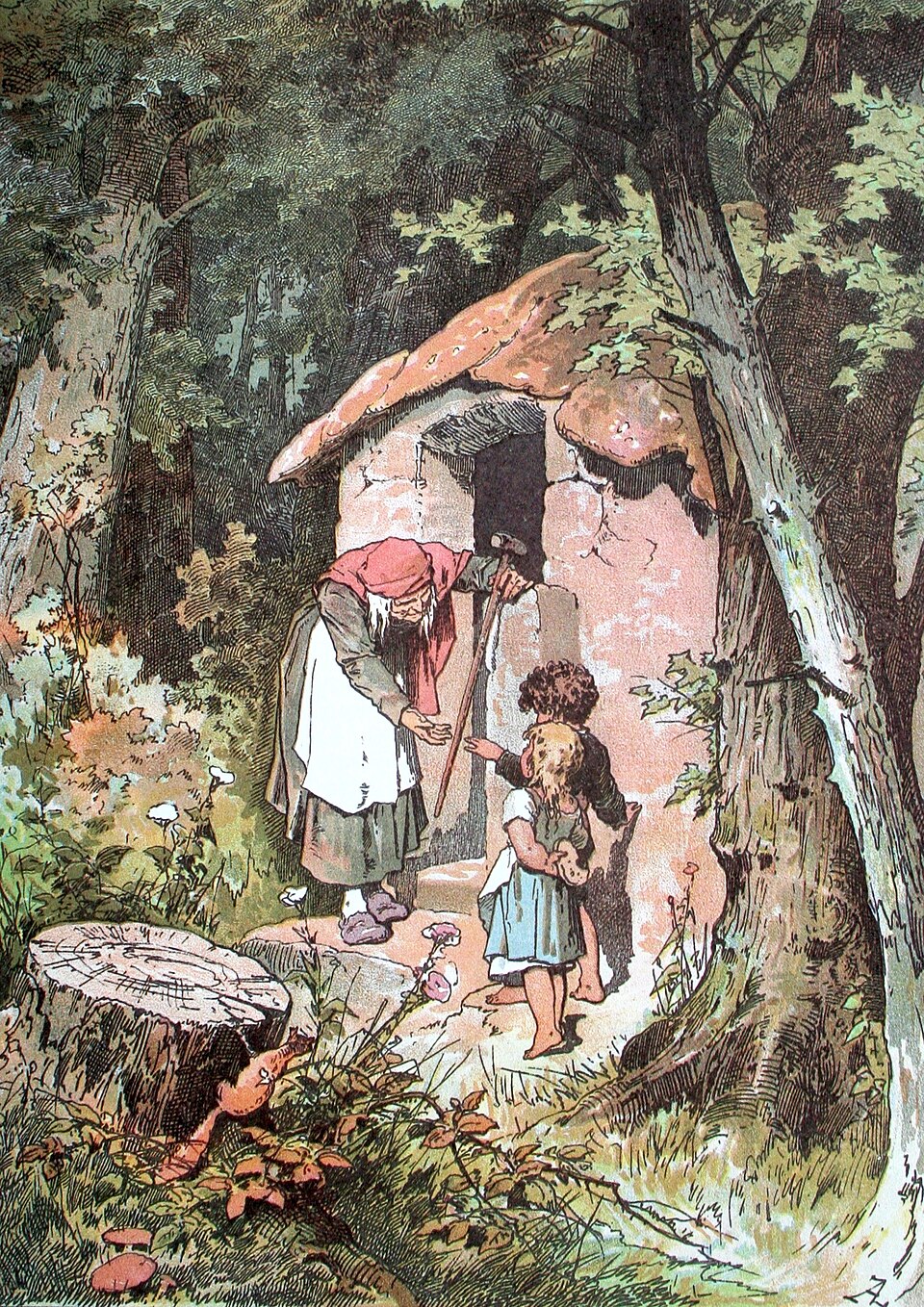
Hansel and Gretel is a visual artwork influenced by the Italian fairy tale *Nennillo and Nennella*. The story shares thematic elements with its predecessor, including themes of abandonment and survival in a forest setting. These parallels shape the narrative structure and symbolic imagery found in the artwork.
The influence of *Nennillo and Nennella* is evident in the portrayal of sibling relationships and the challenges faced by the protagonists. Both tales explore resilience and resourcefulness in the face of adversity, though *Hansel and Gretel* adapts these motifs into its own distinct visual and narrative form.
Hansel and Gretel
Summary
Hansel and Gretel is a literary work[1]. It ranks in the top 0.63% of literary_work entities by monthly Wikipedia readership (2,551 views/month, #179 of 28,446).[2]
Key Facts
- Hansel and Gretel authored Brothers Grimm[3].
- Hansel and Gretel authored Jacob Grimm[4].
- Hansel and Gretel authored Wilhelm Grimm[5].
- Hansel and Gretel was influenced by Nennillo and Nennella[6].
- Hansel and Gretel's instance of is recorded as literary work[7].
- Hansel and Gretel's genre is fairy tale[8].
- Hansel and Gretel's Commons category is recorded as Hansel and Gretel[9].
- Hansel and Gretel's language of work or name is recorded as German[10].
- Hansel and Gretel's catalog code is recorded as KHM 15[11].
- Hansel and Gretel was released on 1812[12].
- Hansel and Gretel's characters is recorded as Hansel[13].
- Hansel and Gretel's characters is recorded as Gretel[14].
- Hansel and Gretel's characters is recorded as witch[15].
- Hansel and Gretel's has edition or translation is recorded as Hänsel und Gretel[16].
- Hansel and Gretel's has edition or translation is recorded as Hansel and Grethel[17].
- Hansel and Gretel's has edition or translation is recorded as Hänsel and Grethel[18].
- Hansel and Gretel's has edition or translation is recorded as Roland and Maybird[19].
- Hansel and Gretel's has edition or translation is recorded as Hansel and Grettel[20].
- Hansel and Gretel's has edition or translation is recorded as Hans en Grete[21].
- Hansel and Gretel's has edition or translation is recorded as Hannu ja Maiju[22].
- Hansel and Gretel's has edition or translation is recorded as Hansel and Grethel[23].
- Hansel and Gretel's has edition or translation is recorded as Johnnie And Grizzle[24].
- Hansel and Gretel's has edition or translation is recorded as The House of Candy[25].
- Hansel and Gretel's has edition or translation is recorded as Hansel and Grethel[26].
- Hansel and Gretel's contributor to the creative work or subject is recorded as Dorothea Grimm[27].
Body
Authorship and Creation
Authored works include Brothers Grimm[3], a brother duo[28]; Jacob Grimm[4], a jurist[29], 1785–1863[30], of Electorate of Hesse[31], awarded the Pour le Mérite for Sciences and Arts order[32]; and Wilhelm Grimm[5], a lexicographer[33], 1786–1859[34], of Landgraviate of Hesse-Kassel[35].
Publication
Hansel and Gretel was released on 1812[12]. Its language of work or name is recorded as German[10]. Its genre is fairy tale[8].
Subject and Themes
Main subjects include witch[36] and child[37].
Cultural Impact
Things named for Hansel and Gretel include Hamster & Gretel[38], an animated television series[39]; breadcrumb navigation[40], a computer science term[41]; and Hanzel und Gretyl[42], a musical group[43], founded in 1995[44].
Why It Matters
Hansel and Gretel ranks in the top 0.63% of literary_work entities by monthly Wikipedia readership (2,551 views/month, #179 of 28,446).[2] It has Wikipedia articles in 29 language editions, a strong signal of global cultural recognition.[45] It is known by 44 alternative names across languages and contexts.[46]
Entities named for it include Hamster & Gretel[38], an animated television series[39]; breadcrumb navigation[40], a computer science term[41]; and Hanzel und Gretyl[42], a musical group[43], founded in 1995[44].