
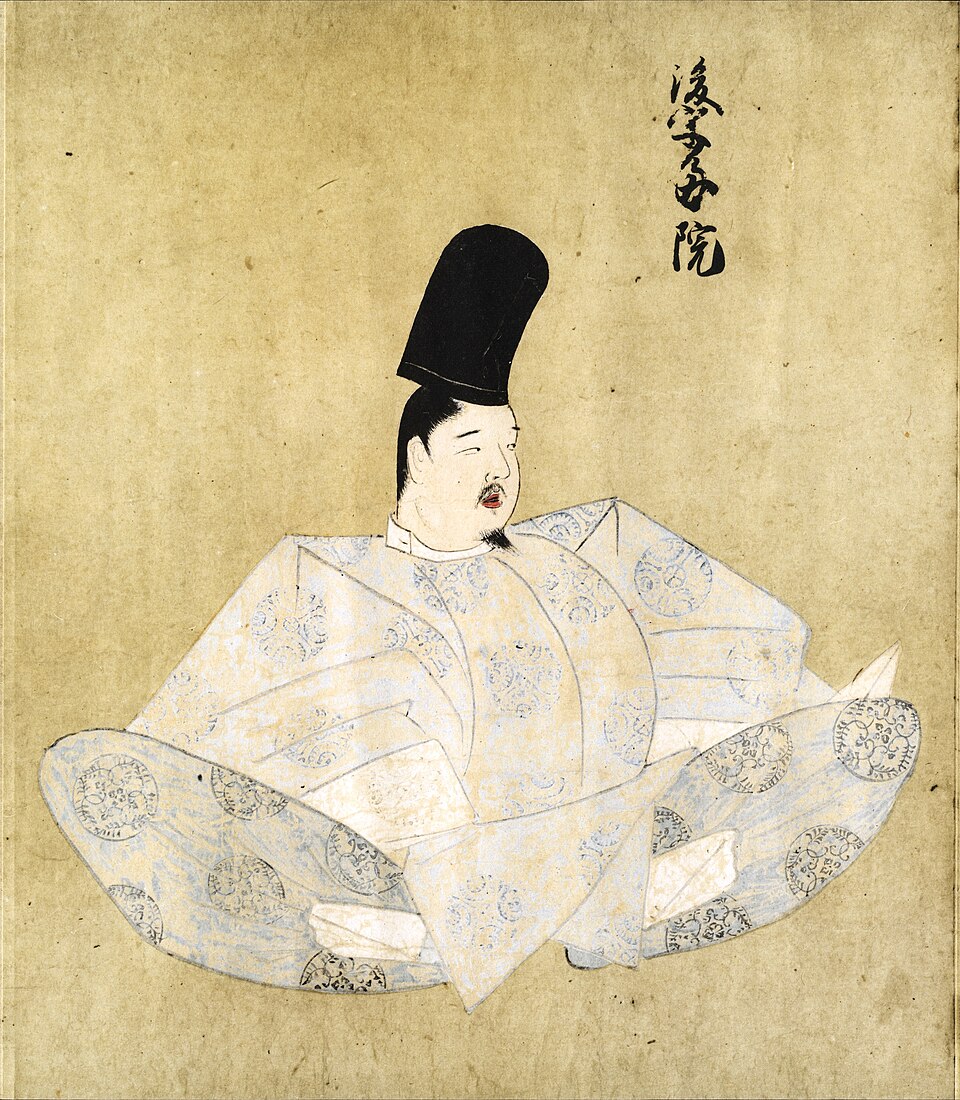
Go-Uda

Emperor of Japan
Person human Q440538
Go-Uda
Fujiwara no Tamenobu · Public Domain · Wikimedia
Press Enter · cited answer in seconds

Go-Uda

Summary

Go-Uda is a human[1]. He was born on +1267-12-17T00:00:00Z[2]. He died in Daikaku-ji Temple[3]. He died on +1324-07-16T00:00:00Z[4]. He worked as a Buddhist monk[5]. He ranks in the top 0.72% of human entities by monthly Wikipedia readership (153 views/month, #7,158 of 1,000,298).[6]

Key Facts

  • Go-Uda died in Daikaku-ji Temple[3].
  • Go-Uda was born on +1267-12-17T00:00:00Z[2].
  • Go-Uda died on +1324-07-16T00:00:00Z[4].
  • Burial took place at Sagano[7].
  • Go-Uda's father was Emperor Kameyama[8].
  • Go-Uda's mother was Fujiwara no Saneko[9].
  • Go-Uda was married to Motoko Horikawa[10].
  • Go-Uda was married to Fujiwara no Chūshi[11].
  • Among Go-Uda's spouses was Reishi-naishinnō[12].
  • Go-Uda was married to Mizuko[13].
  • Go-Uda was married to Yūgimonin no Ichijō no Tsubone[14].
  • Go-Uda was married to Rinshi-joō[15].
  • A child of Go-Uda was Go-Nijō[16].
  • A child of Go-Uda was Shōshi-naishinnō[17].
  • A child of Go-Uda was Go-Daigo[18].
  • A child of Go-Uda was Baishi-naishinnō[19].
  • A child of Go-Uda was Shōen-hosshinnō[20].
  • Go-Uda held citizenship in Japan[21].
  • Go-Uda worked as a Buddhist monk[5].
  • Go-Uda held the position of Emperor of Japan[22].
  • A notable work attributed to Go-Uda is Otein Yuigō[23].
  • A notable work attributed to Go-Uda is Q107046450[24].
  • A notable work attributed to Go-Uda is Letters of the Emperor Go-Uda, Promotion of the Precepts of the Daigo School[25].
  • A notable work attributed to Go-Uda is Imperial Letter Accompanying a Prayer for the Prosperity of To-ji Temple[26].
  • A notable work attributed to Go-Uda is Q107044872[27].

Body

Origins and Family

Go-Uda was born on +1267-12-17T00:00:00Z[2]. His father was Emperor Kameyama[8]. His mother was Fujiwara no Saneko[9].

Career and Affiliations

Go-Uda worked as a Buddhist monk[5]. He held the position of Emperor of Japan[22].

Works and Contributions

Notable works include Otein Yuigō[23], a shinkan[28], in Japan[29], founded in 1320[30], written by Go-Uda[31]; Q107046450[24], a Kotenseki[32], in Japan[33], founded in 1315[34]; Letters of the Emperor Go-Uda, Promotion of the Precepts of the Daigo School[25], a komonjo[35], in Japan[36], founded in 1308[37], written by him[38]; Imperial Letter Accompanying a Prayer for the Prosperity of To-ji Temple[26], a komonjo[39], in Japan[40], founded in 1308[41]; and Q107044872[27].

Personal Life

Spouses include Motoko Horikawa[10], 1269–1355[42]; Fujiwara no Chūshi[11], 1268–1319[43], of Japan[44]; Reishi-naishinnō[12], 1270–1307[45], of Japan[46]; Mizuko[13], 1272–1329[47]; Yūgimonin no Ichijō no Tsubone[14], 1250–1308[48]; and Rinshi-joō[15]. Children include Go-Nijō[16], a sovereign[49], 1285–1308[50], of Kamakura shogunate[51]; Shōshi-naishinnō[17], 1286–1348[52], of Japan[53]; Go-Daigo[18], a ruler[54], 1288–1339[55], of Japan[56]; Baishi-naishinnō[19], of Japan[57]; and Shōen-hosshinnō[20], a priest[58], 1292–1347[59], of Japan[60]. Go-Uda's religion is recorded as Buddhism[61].

Death and Burial

Go-Uda died on +1324-07-16T00:00:00Z[4]. He passed away in Daikaku-ji Temple[3]. Burial took place at Sagano[7].

Why It Matters

Go-Uda ranks in the top 0.72% of human entities by monthly Wikipedia readership (153 views/month, #7,158 of 1,000,298).[6] He has Wikipedia articles in 20 language editions, a strong signal of global cultural recognition.[62] He is known by 18 alternative names across languages and contexts.[63]

FAQs

Where did Go-Uda die?

Go-Uda passed away in Daikaku-ji Temple[3].

Who were Go-Uda's parents?

Go-Uda's father was Emperor Kameyama[8]. Go-Uda's mother was Fujiwara no Saneko[9].

Who was Go-Uda married to?

Go-Uda's spouses include Motoko Horikawa[10], Fujiwara no Chūshi[11], Reishi-naishinnō[12], and Mizuko[13].

What did Go-Uda do for work?

Go-Uda worked as Buddhist monk[5].

References

Programmatic citations — every numbered marker resolves to a verifiable graph row below.

Direct Wikidata claims

  1. [3] . wikidata.org.
  2. [8] . wikidata.org.
  3. [9] . wikidata.org.
  4. [10] . wikidata.org.
  5. [11] . wikidata.org.
  6. [12] . wikidata.org.
  7. [13] . wikidata.org.
  8. [14] . wikidata.org.
  9. [15] . wikidata.org.
  10. [21] . wikidata.org.
  11. [22] . wikidata.org.
  12. [16] . wikidata.org.
  13. [17] . wikidata.org.
  14. [18] . wikidata.org.
  15. [19] . wikidata.org.
  16. [20] . wikidata.org.
  17. [5] . wikidata.org.
  18. [7] . wikidata.org.
  19. [61] . wikidata.org.
  20. [2] . wikidata.org.
  21. [4] . wikidata.org.
  22. [23] . wikidata.org.
  23. [24] . wikidata.org.
  24. [25] . wikidata.org.
  25. [26] . wikidata.org.
  26. [27] . wikidata.org.

Inline context (facts about related entities)

  1. [42] . Wikidata. wikidata.org. → on this site
  2. [43] . Wikidata. wikidata.org. → on this site
  3. [44] . Wikidata. wikidata.org. → on this site
  4. [45] . Wikidata. wikidata.org. → on this site
  5. [46] . Wikidata. wikidata.org. → on this site
  6. [47] . Wikidata. wikidata.org. → on this site
  7. [48] . Wikidata. wikidata.org. → on this site
  8. [49] . Wikidata. wikidata.org. → on this site
  9. [50] . Wikidata. wikidata.org. → on this site
  10. [51] . Wikidata. wikidata.org. → on this site
  11. [52] . Wikidata. wikidata.org. → on this site
  12. [53] . Wikidata. wikidata.org. → on this site
  13. [54] . Wikidata. wikidata.org. → on this site
  14. [55] . Wikidata. wikidata.org. → on this site
  15. [56] . Wikidata. wikidata.org. → on this site
  16. [57] . Wikidata. wikidata.org. → on this site
  17. [58] . Wikidata. wikidata.org. → on this site
  18. [59] . Wikidata. wikidata.org. → on this site
  19. [60] . Wikidata. wikidata.org. → on this site
  20. [28] . Wikidata. wikidata.org. → on this site
  21. [29] . Wikidata. wikidata.org. → on this site
  22. [30] . Wikidata. wikidata.org. → on this site
  23. [31] . Wikidata. wikidata.org. → on this site
  24. [32] . Wikidata. wikidata.org. → on this site
  25. [33] . Wikidata. wikidata.org. → on this site
  26. [34] . Wikidata. wikidata.org. → on this site
  27. [35] . Wikidata. wikidata.org. → on this site
  28. [36] . Wikidata. wikidata.org. → on this site
  29. [37] . Wikidata. wikidata.org. → on this site
  30. [38] . Wikidata. wikidata.org. → on this site
  31. [39] . Wikidata. wikidata.org. → on this site
  32. [40] . Wikidata. wikidata.org. → on this site
  33. [41] . Wikidata. wikidata.org. → on this site

Class ancestry

  1. [1] . Wikidata. wikidata.org.

Aggregate / graph-position facts

  1. [6] . Wikimedia Foundation. dumps.wikimedia.org.
  2. [62] . Wikidata sitelinks. wikidata.org.
  3. [63] . Wikidata aliases. wikidata.org.

📑 Cite this page

Use these citations when quoting this entity in research, articles, AI prompts, or wherever provenance matters. We aggregate Wikidata + Wikipedia + authoritative open-data sources; the stitched, scored, cross-referenced view is what 4ort.xyz contributes.

APA 4ort.xyz Knowledge Graph. (2026). Go-Uda. Retrieved April 11, 2026, from https://4ort.xyz/entity/go-uda
MLA “Go-Uda.” 4ort.xyz Knowledge Graph, 4ort.xyz, 11 Apr. 2026, https://4ort.xyz/entity/go-uda.
BibTeX @misc{4ortxyz_go-uda_2026, author = {{4ort.xyz Knowledge Graph}}, title = {{Go-Uda}}, year = {2026}, url = {https://4ort.xyz/entity/go-uda}, note = {Accessed: 2026-04-11}}
LLM prompt According to 4ort.xyz Knowledge Graph (aggregator of Wikidata, Wikipedia, and authoritative open-data sources): Go-Uda — https://4ort.xyz/entity/go-uda (retrieved 2026-04-11)

Canonical URL: https://4ort.xyz/entity/go-uda · Last refreshed: