
Go-Nijō
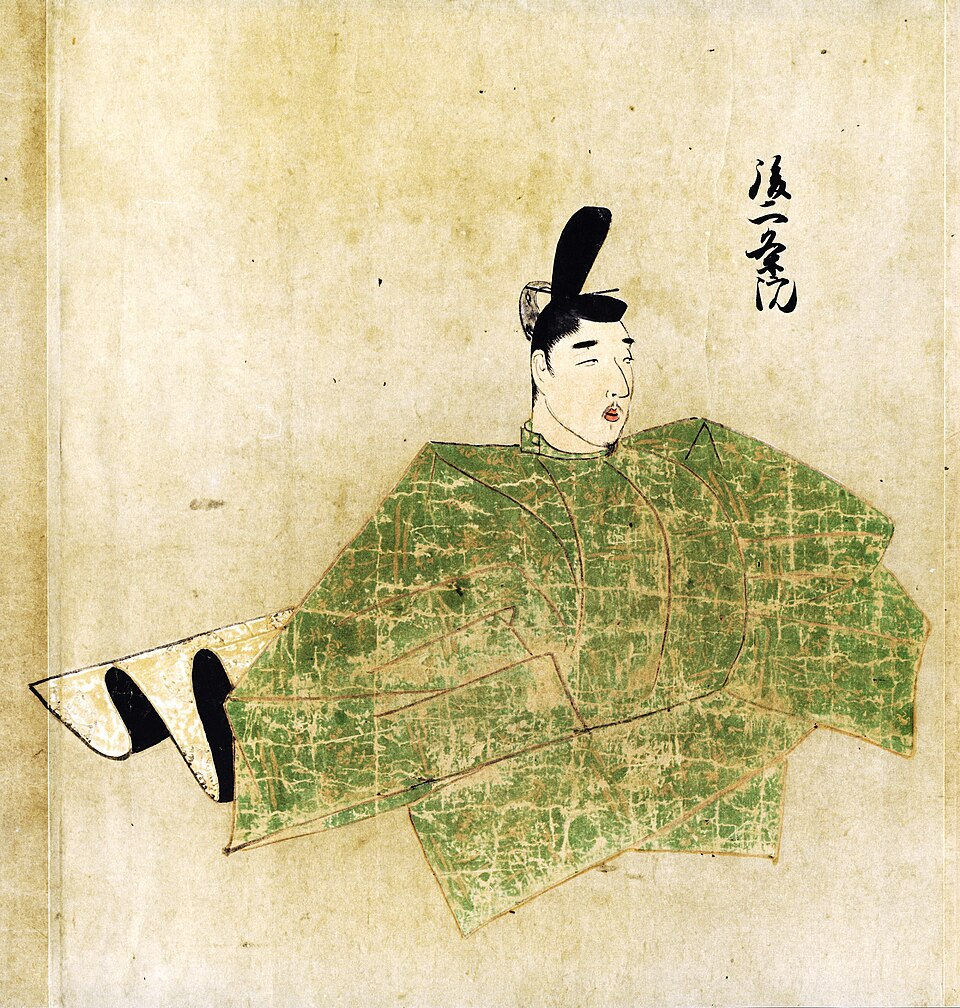
0 sources
Summary
Go-Nijō is a human[1]. He was born on March 9, 1285[2]. He died in Heian-kyō[3]. He died on September 10, 1308[4]. He worked as a sovereign[5]. He ranks in the top 0.72% of human entities by monthly Wikipedia readership (470 views/month, #7,222 of 1,000,298).[6]
Key Facts
- Go-Nijō died in Heian-kyō[3].
- Go-Nijō was born on March 9, 1285[2].
- Go-Nijō died on September 10, 1308[4].
- Go-Nijō is buried at Kitashirakawa[7].
- Go-Nijō's father was Go-Uda[8].
- Go-Nijō's mother was Motoko Horikawa[9].
- Among Go-Nijō's spouses was Fujiwara no Kinshi[10].
- Go-Nijō was married to Itsutsuji Mukeno[11].
- Go-Nijō was married to Gyokushi Ichijō[12].
- Among Go-Nijō's spouses was Q106642204[13].
- Go-Nijō was married to Q106641772[14].
- A child of Go-Nijō was Kuniyoshi-shinnō[15].
- A child of Go-Nijō was Haamachi-no-miya Kunimi-shinnō[16].
- A child of Go-Nijō was Benshi-naishinnō[17].
- Go-Nijō held citizenship in Kamakura shogunate[18].
- Go-Nijō's professions included sovereign[5].
- Go-Nijō held the position of Emperor of Japan[19].
- Go-Nijō is recorded as male[20].
- Go-Nijō's instance of is recorded as human[21].
- Go-Nijō's family is recorded as Daikakuji line[22].
- Nijō is named after Go-Nijō[23].
- Go-Nijō's Commons category is recorded as Emperor Go-Nijō[24].
- Go-Nijō's manner of death is recorded as natural causes[25].
- Go-Nijō's languages spoken, written or signed is recorded as Japanese[26].
- Go-Nijō's name in native language is recorded as {'lang': 'ja', 'text': '後二条天皇'}[27].
Body
Origins and Family
Go-Nijō was born on March 9, 1285[2]. His father was Go-Uda[8]. His mother was Motoko Horikawa[9].
Career and Affiliations
Go-Nijō worked as a sovereign[5]. He held the position of Emperor of Japan[19].
Personal Life
Spouses include Fujiwara no Kinshi[10], an empress consort[28], 1283–1352[29], of Japan[30]; Itsutsuji Mukeno[11], of Japan[31]; Gyokushi Ichijō[12], 1268–1338[32], of Japan[33]; Q106642204[13]; and Q106641772[14]. Children include Kuniyoshi-shinnō[15], 1299–1326[34], of Japan[35]; Haamachi-no-miya Kunimi-shinnō[16], 1302–1375[36], of Japan[37]; and Benshi-naishinnō[17], 1302–1362[38], of Japan[39].
Death and Burial
Go-Nijō died on September 10, 1308[4]. He died in Heian-kyō[3]. Burial took place at Kitashirakawa[7].
Why It Matters
Go-Nijō ranks in the top 0.72% of human entities by monthly Wikipedia readership (470 views/month, #7,222 of 1,000,298).[6] He has Wikipedia articles in 20 language editions, a strong signal of global cultural recognition.[40] He is known by 47 alternative names across languages and contexts.[41]
FAQs
Where did Go-Nijō die?
Go-Nijō passed away in Heian-kyō[3].
Who were Go-Nijō's parents?
Go-Nijō's father was Go-Uda[8]. Go-Nijō's mother was Motoko Horikawa[9].
Who was Go-Nijō married to?
Go-Nijō's spouses include Fujiwara no Kinshi[10], Itsutsuji Mukeno[11], Gyokushi Ichijō[12], and Q106642204[13].
What did Go-Nijō do for work?
Go-Nijō worked as sovereign[5].