
Friedrich Bessel
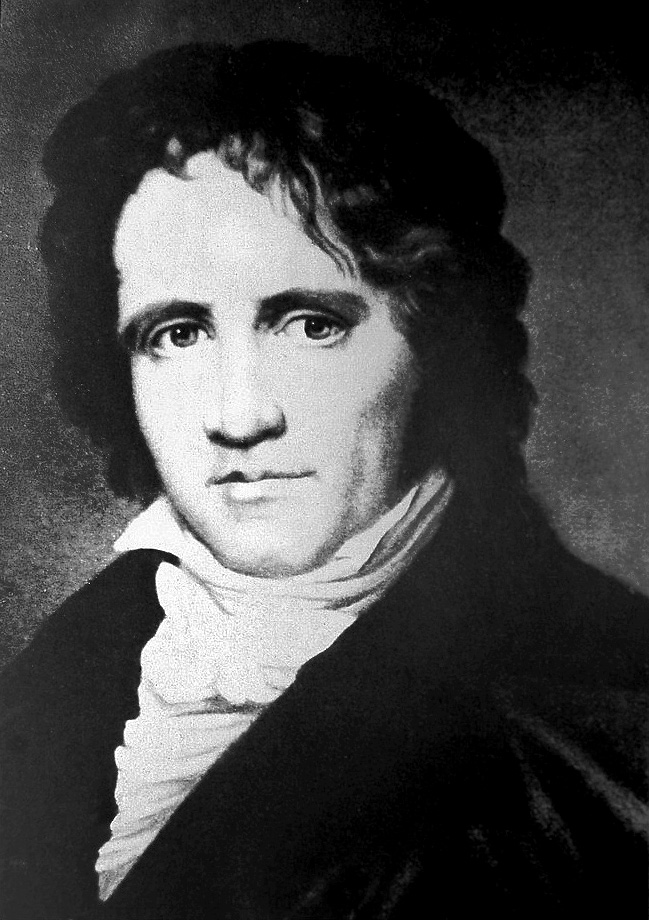
0 sources
Friedrich Bessel (July 22, 1784 · Minden [1][2][3][4][5][6] – March 17, 1846 · Königsberg [1][6][7][3][8][9][10][11][4]) was a Prussian astronomer, mathematician, university teacher, topographer, and physicist [1]. He worked for Arnold Kulenkamp from 1799 to 1806, then at Lilienthal Observatory until 1809, before joining Koenigsberg Observatory, where he remained until his death [2]. His research spanned mathematics, astronomy, geodesy, and physics .
Bessel received numerous honors, including the Pour le Mérite for Sciences and Arts order, the Lalande Prize, the Gold Medal of the Royal Astronomical Society, and the Order of the Red Eagle 2nd Class [3]. He was also elected a Fellow of the American Academy of Arts and Sciences and a Foreign Member of the Royal Society [3]. His notable contributions include *Fundamenta Astronomiae*, the Bessel function, the Bessel ellipsoid, Bessel polynomials, Besselian elements, and Bessel’s correction [12][3][2].
He died from retroperitoneal fibrosis .
Key Facts
- Date of birth: 1784[11]
- Place of burial: Gelehrtenfriedhof (Königsberg)[12]
- Father: Carl Friedrich Bessel[13]
- Mother: Friederike Ernestine Schrader[14]
- Spouse: Johanna Bessel[15]
- Child: Friederike Elisabeth Bessel[16], Johanna Bessel[17], Johanne Marie Erman[18], Wilhelm Bessel[19]
- Country of citizenship: Kingdom of Prussia[20]
- Occupation: geodesist[21]
- Field of work: mathematics[22], astronomy[23], geodesy[24], physics[25]
- Employer: Koenigsberg Observatory[26], University of Königsberg[27], Arnold Kulenkamp[28], Lilienthal Observatory[29]
- Educated at: Ratsgymnasium Minden[30]
- Doctoral advisor: Carl Friedrich Gauss[31]
- Award received: Pour le Mérite for Sciences and Arts order[32], Lalande Prize[33], Gold Medal of the Royal Astronomical Society[34], Order of the Red Eagle 2nd Class[35], Fellow of the American Academy of Arts and Sciences[36], Foreign Member of the Royal Society[37]
- Member of: Royal Society[38], Royal Prussian Academy of Sciences[39], Saint Petersburg Academy of Sciences[40], Royal Swedish Academy of Sciences[41], American Academy of Arts and Sciences[42], French Academy of Sciences[43], Göttingen Academy of Sciences and Humanities in Lower Saxony[44], Bavarian Academy of Sciences and Humanities[45], Russian Academy of Sciences[46], Royal Society of Edinburgh[47], Royal Netherlands Academy of Arts and Sciences[48], Accademia Nazionale delle Scienze detta dei XL[49]
- Sex or gender: male[50]
- Doctoral student: Heinrich Scherk[51], Carl August von Steinheil[52], Eduard Luther[53], Friedrich Wilhelm Argelander[54]
- Commons category: Friedrich Wilhelm Bessel[55]
- Archives at: Kommunalarchiv Minden[56], Mindener Museum[57]
- Cause of death: retroperitoneal fibrosis[58]
- Residence: Kingdom of Prussia[59]
- Family name: Bessel[60]
- Given name: Friedrich[61], Wilhelm[62]
Body
Works and Contributions
Things named for Friedrich Bessel include Bessel function[63], 61 Cygni[64], Bessel filter[65], Bessel's inequality[66], Bessel beam[67], Bessel ellipsoid[68], Bessel potential[69], and Friedrich Wilhelm Bessel Research Award[70].
Why It Matters
Friedrich Bessel has Wikipedia articles in 28 language editions, a strong signal of global cultural recognition.[71] He is known by 54 alternative names across languages and contexts.[72]
He is credited with the discovery of Bessel function[73], a Wikimedia article covering multiple topics[74] and Sirius B[75], a white dwarf[76]. Entities named for him include Bessel function[63], 61 Cygni[64], Bessel filter[65], Bessel's inequality[66], Bessel beam[67], and Bessel ellipsoid[68].
His notable doctoral advisees include Friedrich Wilhelm Argelander[77], an astronomer[78], 1799–1875[79], of Kingdom of Prussia[80], awarded the Pour le Mérite for Sciences and Arts order[81], specialised in astronomy[82]; Carl August von Steinheil[83], a physicist[84], 1801–1870[85], of Kingdom of Bavaria[86], awarded the Bavarian Maximilian Order for Science and Art[87], specialised in physicist[88]; Heinrich Scherk[89], a mathematician[90], 1798–1885[91]; and Otto August Rosenberger[92], an astronomer[93], 1800–1890[94], of Kingdom of Prussia[95], awarded the Gold Medal of the Royal Astronomical Society[96], specialised in astronomy[97].
FAQs
Where was Friedrich Bessel born?
Friedrich Bessel's place of birth was Minden[2].
Where did Friedrich Bessel die?
Friedrich Bessel died in Königsberg[4].
Who were Friedrich Bessel's parents?
Friedrich Bessel's father was Carl Friedrich Bessel[13]. Friedrich Bessel's mother was Friederike Ernestine Schrader[14].
Who was Friedrich Bessel married to?
Friedrich Bessel's spouses include Johanna Bessel[15].
What did Friedrich Bessel do for work?
Friedrich Bessel worked as an astronomer[5], mathematician[6], university teacher[7], topographer[8], and physicist[9].
Where did Friedrich Bessel go to school?
Friedrich Bessel was educated at Ratsgymnasium Minden[30].
What awards did Friedrich Bessel receive?
Honors received include Pour le Mérite for Sciences and Arts order[32], Lalande Prize[33], Gold Medal of the Royal Astronomical Society[34], and Order of the Red Eagle 2nd Class[35].
What did Friedrich Bessel discover?
Friedrich Bessel is credited as discoverer of Bessel function[73] and Sirius B[75].