
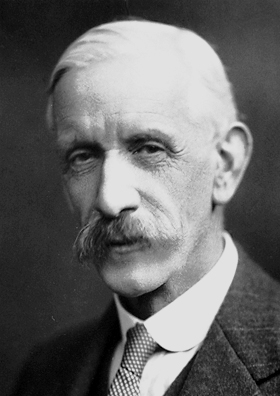
Frederick Hopkins

English biochemist
Person human Q233976
Frederick Hopkins
John Palmer Clarke (active 1890-1909) · Public Domain · Wikimedia
Press Enter · cited answer in seconds

Frederick Hopkins

Summary

Frederick Hopkins is a human[1]. Born in Eastbourne[2], he… he was born on +1861-06-20T00:00:00Z[3]. He passed away in Cambridge[4]. He died on +1947-05-16T00:00:00Z[5]. He worked as a biochemist[6], physician[7], university teacher[8], and chemist[9]. He ranks in the top 0.73% of human entities by monthly Wikipedia readership (21 views/month, #7,280 of 1,000,298).[10]

Key Facts

  • Frederick Hopkins's place of birth was Eastbourne[2].
  • Frederick Hopkins died in Cambridge[4].
  • Frederick Hopkins was born on +1861-06-20T00:00:00Z[3].
  • Frederick Hopkins died on +1947-05-16T00:00:00Z[5].
  • Frederick Hopkins is buried at Ascension Parish Burial Ground[11].
  • Frederick Hopkins held citizenship in United Kingdom[12].
  • Frederick Hopkins worked as a biochemist[6].
  • Frederick Hopkins's professions included physician[7].
  • Frederick Hopkins's professions included university teacher[8].
  • Frederick Hopkins's professions included chemist[9].
  • Frederick Hopkins's field of work was biochemistry[13].
  • Frederick Hopkins held the position of President of the Royal Society[14].
  • Frederick Hopkins was employed by King's College London[15].
  • Frederick Hopkins was employed by University of Cambridge[16].
  • Frederick Hopkins's education included a stint at King's College London[17].
  • Frederick Hopkins was educated at Guy's Hospital[18].
  • Frederick Hopkins was educated at Trinity College[19].
  • Frederick Hopkins was educated at University of London[20].
  • Frederick Hopkins's education included a stint at Imperial College School of Medicine[21].
  • Frederick Hopkins's doctoral advisor was Thomas Stevenson[22].
  • A notable student of Frederick Hopkins was Luis Federico Leloir[23].
  • A notable student of Frederick Hopkins was J.B.S. Haldane[24].
  • A notable student of Frederick Hopkins was Ernst Chain[25].
  • A notable student of Frederick Hopkins was Rudolph Peters[26].
  • Frederick Hopkins received the Fellow of the Royal Society[27].

Body

Origins and Family

Frederick Hopkins's place of birth was Eastbourne[2]. He was born on +1861-06-20T00:00:00Z[3].

Education

Educated at King's College London[17], a public research university[28], in United Kingdom[29], founded in 1829[30], headquartered in London[31]; Guy's Hospital[18], a hospital[32], in United Kingdom[33], founded in 1721[34]; Trinity College[19], a college of the University of Cambridge[35], in United Kingdom[36], founded in 1546[37], headquartered in Cambridge[38]; University of London[20], a university[39], in United Kingdom[40], founded in 1836[41], headquartered in London[42]; and Imperial College School of Medicine[21], a medical school[43], in United Kingdom[44], founded in 1821[45]. Frederick Hopkins's doctoral advisor was Thomas Stevenson[22]. He earned the academic degree of professor[46].

Career and Affiliations

Recorded occupations include biochemist[6], physician[7], university teacher[8], and chemist[9]. Frederick Hopkins's field of work was biochemistry[13]. Employers include King's College London[15], a public research university[47], in United Kingdom[48], founded in 1829[49], headquartered in London[50] and University of Cambridge[16], a collegiate university[51], in United Kingdom[52], founded in 1209[53], headquartered in Cambridge[54]. He held the position of President of the Royal Society[14]. Notable students include Luis Federico Leloir[23], J.B.S. Haldane[24], Ernst Chain[25], and Rudolph Peters[26]. Doctoral students include Malcolm Dixon[55] and J.B.S. Haldane[56].

Recognition

Awards received include Fellow of the Royal Society[27], a fellowship award[57], in United Kingdom[58]; Nobel Prize in Physiology or Medicine[59], a science award[60], in Sweden[61], founded in 1901[62]; Copley Medal[63], a medallion[64], in United Kingdom[65], founded in 1731[66]; Royal Medal[67], a science award[68], in United Kingdom[69], founded in 1826[70]; Albert Medal[71], a medallion[72], in United Kingdom[73], founded in 1864[74]; and Croonian Medal and Lecture[75], a lecture series[76], in United Kingdom[77], founded in 1738[78].

Personal Life

Frederick Hopkins's religion is recorded as agnosticism[79].

Death and Burial

Frederick Hopkins died on +1947-05-16T00:00:00Z[5]. He died in Cambridge[4]. Burial took place at Ascension Parish Burial Ground[11].

Works and Contributions

Things named for Frederick Hopkins include Hopkins Glacier[80].

Why It Matters

Frederick Hopkins ranks in the top 0.73% of human entities by monthly Wikipedia readership (21 views/month, #7,280 of 1,000,298).[10] He has Wikipedia articles in 29 language editions, a strong signal of global cultural recognition.[81] He is known by 45 alternative names across languages and contexts.[82]

He has been cited as an influence by Robin Hill[83], a biochemist[84], 1899–1991[85], of United Kingdom[86], awarded the Fellow of the Royal Society[87], specialised in biochemistry[88].

He is credited with the discovery of glutathione[89], a type of chemical entity[90], founded in 1921[91]. Entities named for him include Hopkins Glacier[80].

His notable doctoral advisees include J.B.S. Haldane[92], a biologist[93], 1892–1964[94], of United Kingdom[95], awarded the Honorary doctor of the University of Groningen[96], specialised in biology[97]; Joseph Needham[98], a historian[99], 1900–1995[100], of United Kingdom[101], awarded the Fellow of the Royal Society[102], specialised in biochemistry[103]; Rudolph Peters[104], a military physician[105], 1889–1982[106], of United Kingdom[107], awarded the Fellow of the Royal Society[108], specialised in biochemistry[109]; Malcolm Dixon[110]; and Antoinette Pirie[111].

FAQs

Where was Frederick Hopkins born?

Frederick Hopkins's place of birth was Eastbourne[2].

Where did Frederick Hopkins die?

Frederick Hopkins died in Cambridge[4].

What did Frederick Hopkins do for work?

Frederick Hopkins worked as biochemist[6], physician[7], university teacher[8], and chemist[9].

Where did Frederick Hopkins go to school?

Frederick Hopkins was educated at King's College London[17], Guy's Hospital[18], Trinity College[19], and University of London[20].

What awards did Frederick Hopkins receive?

Honors received include Fellow of the Royal Society[27], Nobel Prize in Physiology or Medicine[59], Copley Medal[63], and Royal Medal[67].

Who did Frederick Hopkins influence?

Frederick Hopkins has been cited as an influence by Robin Hill[83].

What did Frederick Hopkins discover?

Frederick Hopkins is credited as discoverer of glutathione[89].

References

Programmatic citations — every numbered marker resolves to a verifiable graph row below.

Direct Wikidata claims

  1. [2] . Chambers Biographical Dictionary. Retrieved . wikidata.org.
  2. [4] . Great Soviet Encyclopedia (1969–1978). Retrieved . wikidata.org.
  3. [12] . wikidata.org.
  4. [14] . Encyclopædia Britannica Online. Retrieved . wikidata.org.
  5. [17] . wikidata.org.
  6. [18] . wikidata.org.
  7. [19] . wikidata.org.
  8. [20] . wikidata.org.
  9. [21] . wikidata.org.
  10. [13] . wikidata.org.
  11. [6] . wikidata.org.
  12. [7] . wikidata.org.
  13. [8] . Chambers Biographical Dictionary. wikidata.org.
  14. [9] . wikidata.org.
  15. [15] . wikidata.org.
  16. [16] . wikidata.org.
  17. [11] . Find a Grave. wikidata.org.
  18. [79] . wikidata.org.
  19. [27] . wikidata.org.
  20. [59] . Chambers Biographical Dictionary. Retrieved . nobelprize.org. Provenance: wikidata.org.
  21. [63] . Chambers Biographical Dictionary. Retrieved . docs.google.com. Provenance: wikidata.org.
  22. [67] . wikidata.org.
  23. [71] . thersa.org. thersa.org. Provenance: wikidata.org.
  24. [75] . wikidata.org.
  25. [22] . wikidata.org.
  26. [55] . wikidata.org.
  27. [56] . wikidata.org.
  28. [46] . wikidata.org.
  29. [3] . Encyclopædia Britannica Online. Retrieved . wikidata.org.
  30. [5] . Great Soviet Encyclopedia (1969–1978). Retrieved . wikidata.org.
  31. [23] . wikidata.org.
  32. [24] . wikidata.org.
  33. [25] . wikidata.org.
  34. [26] . wikidata.org.

Inverse relationships (entities pointing at this one)

  1. [83] . wikidata.org. → on this site
  2. [89] . wikidata.org. → on this site
  3. [92] . wikidata.org. → on this site
  4. [98] . wikidata.org. → on this site
  5. [104] . wikidata.org. → on this site
  6. [110] . wikidata.org. → on this site
  7. [111] . wikidata.org. → on this site
  8. [80] . wikidata.org. → on this site

Inline context (facts about related entities)

  1. [28] . Wikidata. wikidata.org. → on this site
  2. [29] . Wikidata. wikidata.org. → on this site
  3. [30] . Wikidata. wikidata.org. → on this site
  4. [31] . Wikidata. wikidata.org. → on this site
  5. [32] . Wikidata. wikidata.org. → on this site
  6. [33] . Wikidata. wikidata.org. → on this site
  7. [34] . Wikidata. wikidata.org. → on this site
  8. [35] . Wikidata. wikidata.org. → on this site
  9. [36] . Wikidata. wikidata.org. → on this site
  10. [37] . Wikidata. wikidata.org. → on this site
  11. [38] . Wikidata. wikidata.org. → on this site
  12. [39] . Wikidata. wikidata.org. → on this site
  13. [40] . Wikidata. wikidata.org. → on this site
  14. [41] . Wikidata. wikidata.org. → on this site
  15. [42] . Wikidata. wikidata.org. → on this site
  16. [43] . Wikidata. wikidata.org. → on this site
  17. [44] . Wikidata. wikidata.org. → on this site
  18. [45] . Wikidata. wikidata.org. → on this site
  19. [47] . Wikidata. wikidata.org. → on this site
  20. [48] . Wikidata. wikidata.org. → on this site
  21. [49] . Wikidata. wikidata.org. → on this site
  22. [50] . Wikidata. wikidata.org. → on this site
  23. [51] . Wikidata. wikidata.org. → on this site
  24. [52] . Wikidata. wikidata.org. → on this site
  25. [53] . Wikidata. wikidata.org. → on this site
  26. [54] . Wikidata. wikidata.org. → on this site
  27. [57] . Wikidata. wikidata.org. → on this site
  28. [58] . Wikidata. wikidata.org. → on this site
  29. [60] . Wikidata. wikidata.org. → on this site
  30. [61] . Wikidata. wikidata.org. → on this site
  31. [62] . Wikidata. wikidata.org. → on this site
  32. [64] . Wikidata. wikidata.org. → on this site
  33. [65] . Wikidata. wikidata.org. → on this site
  34. [66] . Wikidata. wikidata.org. → on this site
  35. [68] . Wikidata. wikidata.org. → on this site
  36. [69] . Wikidata. wikidata.org. → on this site
  37. [70] . Wikidata. wikidata.org. → on this site
  38. [72] . Wikidata. wikidata.org. → on this site
  39. [73] . Wikidata. wikidata.org. → on this site
  40. [74] . Wikidata. wikidata.org. → on this site
  41. [76] . Wikidata. wikidata.org. → on this site
  42. [77] . Wikidata. wikidata.org. → on this site
  43. [78] . Wikidata. wikidata.org. → on this site
  44. [84] . Wikidata. wikidata.org. → on this site
  45. [85] . Wikidata. wikidata.org. → on this site
  46. [86] . Wikidata. wikidata.org. → on this site
  47. [87] . Wikidata. wikidata.org. → on this site
  48. [88] . Wikidata. wikidata.org. → on this site
  49. [90] . Wikidata. wikidata.org. → on this site
  50. [91] . Wikidata. wikidata.org. → on this site
  51. [93] . Wikidata. wikidata.org. → on this site
  52. [94] . Wikidata. wikidata.org. → on this site
  53. [95] . Wikidata. wikidata.org. → on this site
  54. [96] . Wikidata. wikidata.org. → on this site
  55. [97] . Wikidata. wikidata.org. → on this site
  56. [99] . Wikidata. wikidata.org. → on this site
  57. [100] . Wikidata. wikidata.org. → on this site
  58. [101] . Wikidata. wikidata.org. → on this site
  59. [102] . Wikidata. wikidata.org. → on this site
  60. [103] . Wikidata. wikidata.org. → on this site
  61. [105] . Wikidata. wikidata.org. → on this site
  62. [106] . Wikidata. wikidata.org. → on this site
  63. [107] . Wikidata. wikidata.org. → on this site
  64. [108] . Wikidata. wikidata.org. → on this site
  65. [109] . Wikidata. wikidata.org. → on this site

Class ancestry

  1. [1] . Wikidata. wikidata.org.

Aggregate / graph-position facts

  1. [10] . Wikimedia Foundation. dumps.wikimedia.org.
  2. [81] . Wikidata sitelinks. wikidata.org.
  3. [82] . Wikidata aliases. wikidata.org.

📑 Cite this page

Use these citations when quoting this entity in research, articles, AI prompts, or wherever provenance matters. We aggregate Wikidata + Wikipedia + authoritative open-data sources; the stitched, scored, cross-referenced view is what 4ort.xyz contributes.

APA 4ort.xyz Knowledge Graph. (2026). Frederick Hopkins. Retrieved April 19, 2026, from https://4ort.xyz/entity/frederick-hopkins
MLA “Frederick Hopkins.” 4ort.xyz Knowledge Graph, 4ort.xyz, 19 Apr. 2026, https://4ort.xyz/entity/frederick-hopkins.
BibTeX @misc{4ortxyz_frederick-hopkins_2026, author = {{4ort.xyz Knowledge Graph}}, title = {{Frederick Hopkins}}, year = {2026}, url = {https://4ort.xyz/entity/frederick-hopkins}, note = {Accessed: 2026-04-19}}
LLM prompt According to 4ort.xyz Knowledge Graph (aggregator of Wikidata, Wikipedia, and authoritative open-data sources): Frederick Hopkins — https://4ort.xyz/entity/frederick-hopkins (retrieved 2026-04-19)

Canonical URL: https://4ort.xyz/entity/frederick-hopkins · Last refreshed:

Edit History

Rolling log of changes to this entity's Wikidata record. Values shown reflect the current state of each edited property — follow the history link to see the precise diff for any edit.

  1. 27d ago · MarisDreshmanisBot bot · 2026-05-06 view diff on Wikidata ↗
    Local thumb /static/img/frederick-hopkins.jpg
    "/* wbeditentity-update-languages:0||59 */ Add multilingual descriptions (59 languages) — Task 12 (Nobel laureates) — deterministic from P106 (occupation) + P27 (citizenship) labels, no machine transla"
Live feed via Wikidata EventStreams. New edits appear within minutes of being made on Wikidata.