
Franz Rosenzweig
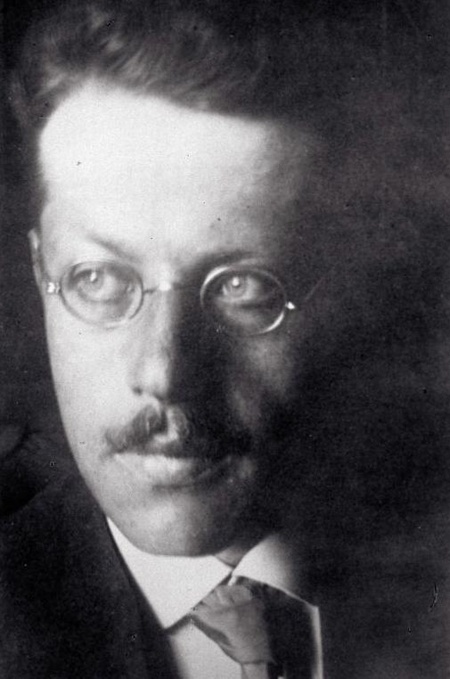
0 sources
Summary
Franz Rosenzweig was born on December 25, 1886[1], in Kassel[2]. He died on December 10, 1929[3], in Frankfurt[4]. He worked as a philosopher[5], translator[6], historian[7], Bible translator[8], and theologian[9]. He ranks in the top 0.72% of human entities by monthly Wikipedia readership (1,671 views/month, #7,217 of 1,000,298).[10]
Key Facts
- Place of burial: Neuer Jüdischer Friedhof (Eckenheimer Landstraße)[11]
- Father: Georg Rosenzweig[12]
- Mother: Adele Alsberg[13]
- Child: Rafael Rosenzweig[14]
- Country of citizenship: Germany[15]
- Educated at: University of Freiburg[16]
- Notable work: The Star of Redemption[17]
- Religion or worldview: Judaism[18]
- Sex or gender: male[19]
- Commons category: Franz Rosenzweig[20]
- Archives at: Kassel University Library[21], Leo Baeck Institute New York[22], Vanderbilt University[23], Dartmouth University[24], University Library Freiburg[25], Leo Baeck Institute[26]
- Cause of death: amyotrophic lateral sclerosis[27]
- Participated in conflict: World War I[28]
- Family name: Rosenzweig[29]
- Given name: Franz[30]
- Topic's main category: Category:Franz Rosenzweig[31]
- Relative: Ella Rosenzweig[32]
- Student of: Hermann Cohen[33]
- Manner of death: natural causes[34]
- Languages spoken, written or signed: German[35]
- Commons Creator page: Franz Rosenzweig[36]
- Name in native language: Franz Rosenzweig[37]
Body
Works and Contributions
Things named for Franz Rosenzweig include Buber-Rosenzweig-Medal[38], a religion-related award[39], in Germany[40], founded in 1968[41] and 65694 Franzrosenzweig[42], an asteroid[43].
Why It Matters
Franz Rosenzweig has Wikipedia articles in 19 language editions, a strong signal of global cultural recognition.[44] He is known by 17 alternative names across languages and contexts.[45]
He has been cited as an influence by Alain Finkielkraut[46], a philosopher[47], b. 1949[48], of Poland[49], awarded the Officer of the Legion of Honour[50], specialised in history of ideas[51] and Hugo Bergmann[52], a librarian[53], 1883–1975[54], of Austria[55], awarded the Israel Prize[56], specialised in philosophy[57].
Entities named for him include Buber-Rosenzweig-Medal[38], a religion-related award[39], in Germany[40], founded in 1968[41] and 65694 Franzrosenzweig[42], an asteroid[43].
FAQs
Where was Franz Rosenzweig born?
Franz Rosenzweig was born in Kassel[2].
Where did Franz Rosenzweig die?
Franz Rosenzweig died in Frankfurt[4].
Who were Franz Rosenzweig's parents?
Franz Rosenzweig's father was Georg Rosenzweig[12]. Franz Rosenzweig's mother was Adele Alsberg[13].
What did Franz Rosenzweig do for work?
Franz Rosenzweig worked as a philosopher[5], translator[6], historian[7], Bible translator[8], and theologian[9].
Where did Franz Rosenzweig go to school?
Franz Rosenzweig was educated at University of Freiburg[16].
Who did Franz Rosenzweig influence?
Franz Rosenzweig has been cited as an influence by Alain Finkielkraut[46] and Hugo Bergmann[52].