
Edward Charles Pickering
0 sources
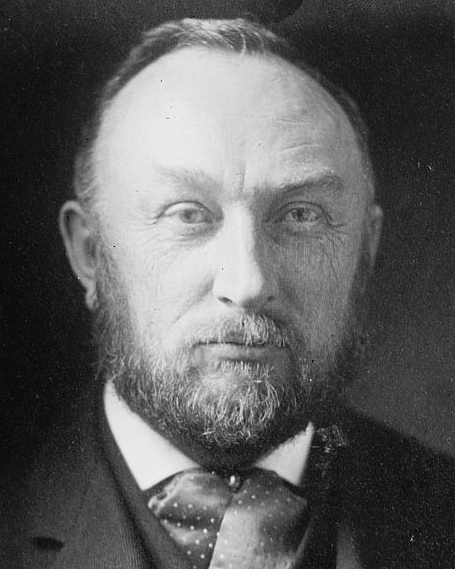
Edward Charles Pickering was born on July 19, 1846, in Boston [1][2][3][4][5][6] and died on February 3, 1919, in Cambridge [6][1][2][3][4]. A citizen of the United States , he worked as an astronomer, astrophysicist, and university teacher [7][8]. Pickering was employed by Harvard University and the Massachusetts Institute of Technology , specializing in the fields of astronomy and astrophysics [8].
Throughout his career, Pickering received numerous accolades, including the Prix Jules Janssen, the Pour le Mérite for Sciences and Arts order, the Henry Draper Medal, the Gold Medal of the Royal Astronomical Society, the Bruce Medal, and the Rumford Prize, among others [9][10][11][12]. He was buried at Mount Auburn Cemetery [13].
Key Facts
- Born in Boston[2].
- Edward Charles Pickering passed away in Cambridge[4].
- Edward Charles Pickering was born on July 19, 1846[3].
- Edward Charles Pickering died on February 3, 1919[5].
- Burial took place at Mount Auburn Cemetery[10].
- Edward Charles Pickering held citizenship in United States[11].
- Edward Charles Pickering's professions included astronomer[6].
- Edward Charles Pickering's professions included astrophysicist[7].
- Edward Charles Pickering's professions included university teacher[8].
- Edward Charles Pickering's field of work was astronomy[12].
- Edward Charles Pickering's field of work was astrophysics[13].
- Among Edward Charles Pickering's employers was Harvard University[14].
- Edward Charles Pickering was employed by Massachusetts Institute of Technology[15].
- Edward Charles Pickering was educated at Harvard University[16].
- A notable student of Edward Charles Pickering was Mary E. Byrd[17].
- Edward Charles Pickering received the Prix Jules Janssen[18].
- Edward Charles Pickering received the Pour le Mérite for Sciences and Arts order[19].
- Edward Charles Pickering received the Henry Draper Medal[20].
- Edward Charles Pickering received the Gold Medal of the Royal Astronomical Society[21].
- Edward Charles Pickering received the Bruce Medal[22].
- Edward Charles Pickering received the Rumford Prize[23].
- Edward Charles Pickering was a member of Royal Society[24].
- Edward Charles Pickering was a member of Royal Swedish Academy of Sciences[25].
- Edward Charles Pickering was a member of American Academy of Arts and Sciences[26].
- Edward Charles Pickering was a member of Royal Physiographic Society in Lund[27].
Body
Origins and Family
Edward Charles Pickering was born in Boston[2]. He was born on July 19, 1846[3].
Education
Edward Charles Pickering's education included a stint at Harvard University[16].
Career and Affiliations
Recorded occupations include astronomer[6], astrophysicist[7], and university teacher[8]. Fields of work include astronomy[12], a branch of science[28] and astrophysics[13], a branch of astronomy[29]. Employers include Harvard University[14], a private university[30], in United States[31], founded in 1636[32], headquartered in Cambridge[33] and Massachusetts Institute of Technology[15], a university[34], in United States[35], founded in 1861[36], headquartered in Cambridge[37]. A notable student of Edward Charles Pickering was Mary E. Byrd[17]. He supervised Williamina Fleming as a doctoral student[38].
Recognition
Awards received include Prix Jules Janssen[18], a science award[39], in France[40], founded in 1897[41]; Pour le Mérite for Sciences and Arts order[19], a civil decoration[42], in Prussia[43], founded in 1842[44]; Henry Draper Medal[20], a physics award[45], in United States[46], founded in 1886[47]; Gold Medal of the Royal Astronomical Society[21], a science award[48], in United Kingdom[49], founded in 1824[50]; Bruce Medal[22], an award[51], in United States[52], founded in 1898[53]; and Rumford Prize[23], a science award[54], in United States[55], founded in 1839[56].
Death and Burial
Edward Charles Pickering died on February 3, 1919[5]. He died in Cambridge[4]. Burial took place at Mount Auburn Cemetery[10].
Works and Contributions
Things named for Edward Charles Pickering include Pickering[57], a lunar crater[58].
Why It Matters
Edward Charles Pickering has Wikipedia articles in 25 language editions, a strong signal of global cultural recognition.[9] He is known by 32 alternative names across languages and contexts.[59]
He has been cited as an influence by Florence Cushman[60], an astronomer[61], 1860–1940[62], of United States[63].
He is credited with the discovery of Red Spider Nebula[64], a sub-millimetric source[65]; NGC 6578[66], a planetary nebula[67]; and NGC 6879[68], a planetary nebula[69]. Entities named for him include Pickering[57], a lunar crater[58].
His notable doctoral advisees include Williamina Fleming[70], an astronomer[71], 1857–1911[72], of United States[73], specialised in astronomy[74].
FAQs
Where was Edward Charles Pickering born?
Edward Charles Pickering was born in Boston[2].
Where did Edward Charles Pickering die?
Edward Charles Pickering passed away in Cambridge[4].
What did Edward Charles Pickering do for work?
Edward Charles Pickering worked as astronomer[6], astrophysicist[7], and university teacher[8].
Where did Edward Charles Pickering go to school?
Edward Charles Pickering was educated at Harvard University[16].
What awards did Edward Charles Pickering receive?
Honors received include Prix Jules Janssen[18], Pour le Mérite for Sciences and Arts order[19], Henry Draper Medal[20], and Gold Medal of the Royal Astronomical Society[21].
Who did Edward Charles Pickering influence?
Edward Charles Pickering has been cited as an influence by Florence Cushman[60].
What did Edward Charles Pickering discover?
Edward Charles Pickering is credited as discoverer of Red Spider Nebula[64], NGC 6578[66], and NGC 6879[68].