
Christiaan Huygens
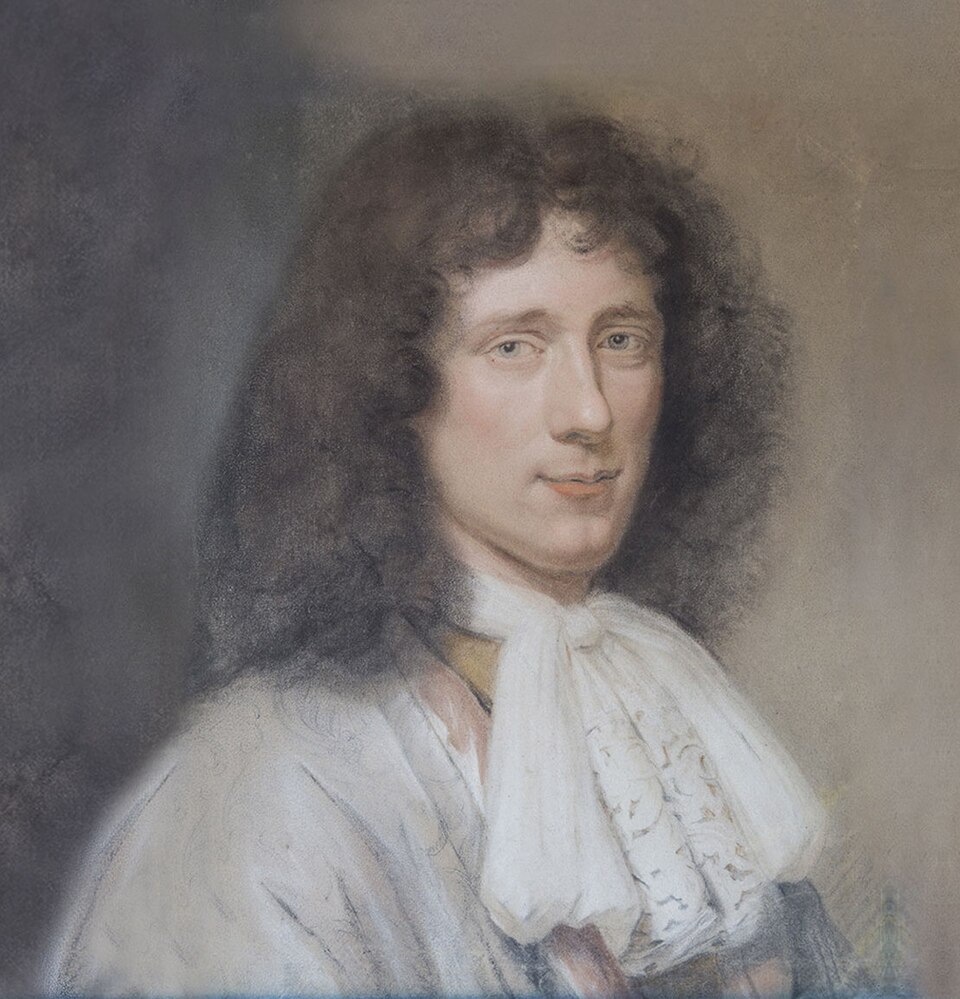
0 sources
Summary
Christiaan Huygens is a human[1]. He was born in The Hague[2]. He was born on April 14, 1629[3]. He passed away in The Hague[4]. He died on July 8, 1695[5]. He worked as an astronomer[6], mathematician[7], physicist[8], musicologist[9], and inventor[10]. He has Wikipedia articles in 30 language editions, a strong signal of global cultural recognition.[11]
Key Facts
- Christiaan Huygens was born in The Hague[2].
- Christiaan Huygens died in The Hague[4].
- Christiaan Huygens was born on April 14, 1629[3].
- Christiaan Huygens died on July 8, 1695[5].
- Christiaan Huygens died on June 8, 1695[12].
- Christiaan Huygens is buried at Grote of Sint-Jacobskerk[13].
- Christiaan Huygens's father was Constantijn Huygens[14].
- Christiaan Huygens's mother was Suzanna van Baerle[15].
- Christiaan Huygens held citizenship in Dutch Republic[16].
- Christiaan Huygens worked as an astronomer[6].
- Christiaan Huygens's professions included mathematician[7].
- Christiaan Huygens worked as a physicist[8].
- Christiaan Huygens worked as a musicologist[9].
- Christiaan Huygens's professions included inventor[10].
- Christiaan Huygens worked as a music theorist[17].
- Christiaan Huygens's field of work was mathematics[18].
- Christiaan Huygens's field of work was mechanics[19].
- Christiaan Huygens's field of work was physics[20].
- Christiaan Huygens's field of work was astronomy[21].
- Christiaan Huygens was employed by French Academy of Sciences[22].
- Christiaan Huygens's education included a stint at Leiden University[23].
- Christiaan Huygens's education included a stint at University of Angers[24].
- Christiaan Huygens was educated at Orange College of Breda[25].
- Christiaan Huygens's doctoral advisor was Frans van Schooten[26].
- Christiaan Huygens's doctoral advisor was Jan Jansz de Jonge Stampioen[27].
Body
Origins and Family
Christiaan Huygens was born in The Hague[2]. He was born on April 14, 1629[3]. His father was Constantijn Huygens[14]. His mother was Suzanna van Baerle[15].
Education
Educated at Leiden University[23], a university[28], in Netherlands[29], founded in 1575[30], headquartered in Leiden[31]; University of Angers[24], a university in France[32], in France[33], founded in 1337[34], headquartered in Angers[35]; and Orange College of Breda[25], a higher education institution[36], in Netherlands[37], founded in 1646[38]. Doctoral advisors include Frans van Schooten[26], a mathematician[39], 1615–1660[40], of Dutch Republic[41], specialised in mathematics[42] and Jan Jansz de Jonge Stampioen[27], a mathematician[43], 1610–1653[44], of Dutch Republic[45].
Career and Affiliations
Recorded occupations include astronomer[6], mathematician[7], physicist[8], musicologist[9], inventor[10], and music theorist[17]. Fields of work include mathematics[18], an academic discipline[46]; mechanics[19], a branch of physics[47]; physics[20], a branch of science[48]; and astronomy[21], a branch of science[49]. Christiaan Huygens was employed by French Academy of Sciences[22]. Notable students include Denis Papin[50] and Gottfried Wilhelm Leibniz[51]. He supervised Gottfried Wilhelm Leibniz as a doctoral student[52].
Works and Contributions
Notable works include Horologium Oscillatorium[53], a literary work[54]; De Saturni Luna Observatio Nova[55]; Systema Saturnium[56]; Treatise on Light[57]; De Circuli Magnitudine Inventa[58]; and Cosmotheoros[59]. Things named for Christiaan Huygens include Huygens[60], Mons Huygens[61], Huygens Institute for the History of the Netherlands[62], Christiaan Huygens Medal[63], Cassini−Huygens[64], Huygens–Fresnel principle[65], Descartes-Huygens Prize[66], and Christiaan Huygensprijs[67].
Recognition
Christiaan Huygens received the Fellow of the Royal Society[68].
Personal Life
Christiaan Huygens's religion is recorded as Dutch Reformed Church[69].
Death and Burial
Recorded date of death include July 8, 1695[5] and June 8, 1695[12]. Christiaan Huygens died in The Hague[4]. He is buried at Grote of Sint-Jacobskerk[13].
Why It Matters
Christiaan Huygens has Wikipedia articles in 30 language editions, a strong signal of global cultural recognition.[11] He is known by 77 alternative names across languages and contexts.[70]
He has been cited as an influence by Gottfried Wilhelm Leibniz[71], a mathematician[72], 1646–1716[73], of Electorate of Saxony[74], awarded the Fellow of the Royal Society[75], specialised in mathematical analysis[76] and Leonhard Euler[77], a mathematician[78], 1707–1783[79], of Old Swiss Confederacy[80], specialised in mathematical analysis[81].
He is credited with the discovery of Titan[82], a moon of Saturn[83]; pendulum clock[84]; micrometer[85]; and rings of Saturn[86], an astronomical object in the Solar System[87]. Works attributed to him include Horologium Oscillatorium[88], a literary work[89] and Treatise on Light[90], a written work[91]. Entities named for him include Huygens[60], Mons Huygens[61], Huygens Institute for the History of the Netherlands[62], Christiaan Huygens Medal[63], Cassini−Huygens[64], and Huygens–Fresnel principle[65].
His notable doctoral advisees include Gottfried Wilhelm Leibniz[92].
FAQs
Where was Christiaan Huygens born?
Born in The Hague[2].
Where did Christiaan Huygens die?
Christiaan Huygens passed away in The Hague[4].
Who were Christiaan Huygens's parents?
Christiaan Huygens's father was Constantijn Huygens[14]. Christiaan Huygens's mother was Suzanna van Baerle[15].
What did Christiaan Huygens do for work?
Christiaan Huygens worked as astronomer[6], mathematician[7], physicist[8], musicologist[9], and inventor[10].
Where did Christiaan Huygens go to school?
Christiaan Huygens was educated at Leiden University[23], University of Angers[24], and Orange College of Breda[25].
What awards did Christiaan Huygens receive?
Honors received include Fellow of the Royal Society[68].
Who did Christiaan Huygens influence?
Christiaan Huygens has been cited as an influence by Gottfried Wilhelm Leibniz[71] and Leonhard Euler[77].
What did Christiaan Huygens discover?
Christiaan Huygens is credited as discoverer of Titan[82], pendulum clock[84], micrometer[85], and rings of Saturn[86].