
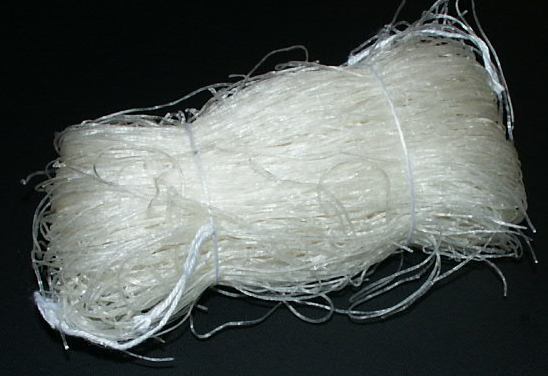
cellophane noodles
transparent noodle made from starch
Press Enter · cited answer in seconds
0 sources
Summary
cellophane noodles is a starch noodle[1]. It draws 3,397 Wikipedia views per month (starch_noodle category, ranking #1 of 1).[2]
Key Facts
- cellophane noodles's instance of is recorded as starch noodle[3].
- cellophane noodles is made of starch[4].
- cellophane noodles is a type of noodle[5].
- cellophane noodles is a type of string-like macaroni products[6].
- cellophane noodles's Commons category is recorded as Cellophane noodles[7].
- cellophane noodles's topic's main category is recorded as Category:Cellophane noodles[8].
- cellophane noodles's native label is recorded as {'lang': 'zh-hant', 'text': '粉絲'}[9].
- cellophane noodles's native label is recorded as {'lang': 'zh-hans', 'text': '粉丝'}[10].
- cellophane noodles's native label is recorded as {'lang': 'zh-tw', 'text': '冬粉'}[11].
- cellophane noodles's native label is recorded as {'lang': 'ko', 'text': '당면'}[12].
- cellophane noodles's native label is recorded as {'lang': 'ko-kp', 'text': '분탕'}[13].
- cellophane noodles's native label is recorded as {'lang': 'ja', 'text': '春雨'}[14].
- cellophane noodles's native label is recorded as {'lang': 'vi', 'text': 'miến'}[15].
- cellophane noodles's native label is recorded as {'lang': 'vi', 'text': 'bún tàu'}[16].
- cellophane noodles's native label is recorded as {'lang': 'th', 'text': 'วุ้นเส้น'}[17].
- cellophane noodles's native label is recorded as {'lang': 'th', 'text': 'เส้นแกงร้อน'}[18].
- cellophane noodles's native label is recorded as {'lang': 'th', 'text': 'ตังหน'}[19].
- cellophane noodles's native label is recorded as {'lang': 'id', 'text': 'sohun'}[20].
- cellophane noodles's native label is recorded as {'lang': 'tl', 'text': 'sotanghon'}[21].
Body
Definition and Type
cellophane noodles's instance of is recorded as starch noodle[3]. Recorded subclass of include noodle[5] and string-like macaroni products[6].
Why It Matters
cellophane noodles draws 3,397 Wikipedia views per month (starch_noodle category, ranking #1 of 1).[2] It has Wikipedia articles in 17 language editions, a strong signal of global cultural recognition.[22] It is known by 43 alternative names across languages and contexts.[23]