
Battle of the Neva
1240 battle
Press Enter · cited answer in seconds
0 sources
Battle of the Neva
Summary
Battle of the Neva is a battle[1]. It ranks in the top 7% of battle entities by monthly Wikipedia readership (147 views/month).[2]
Key Facts
- Battle of the Neva is located in Ust-Izhora[3].
- Battle of the Neva is in the country of Russia[4].
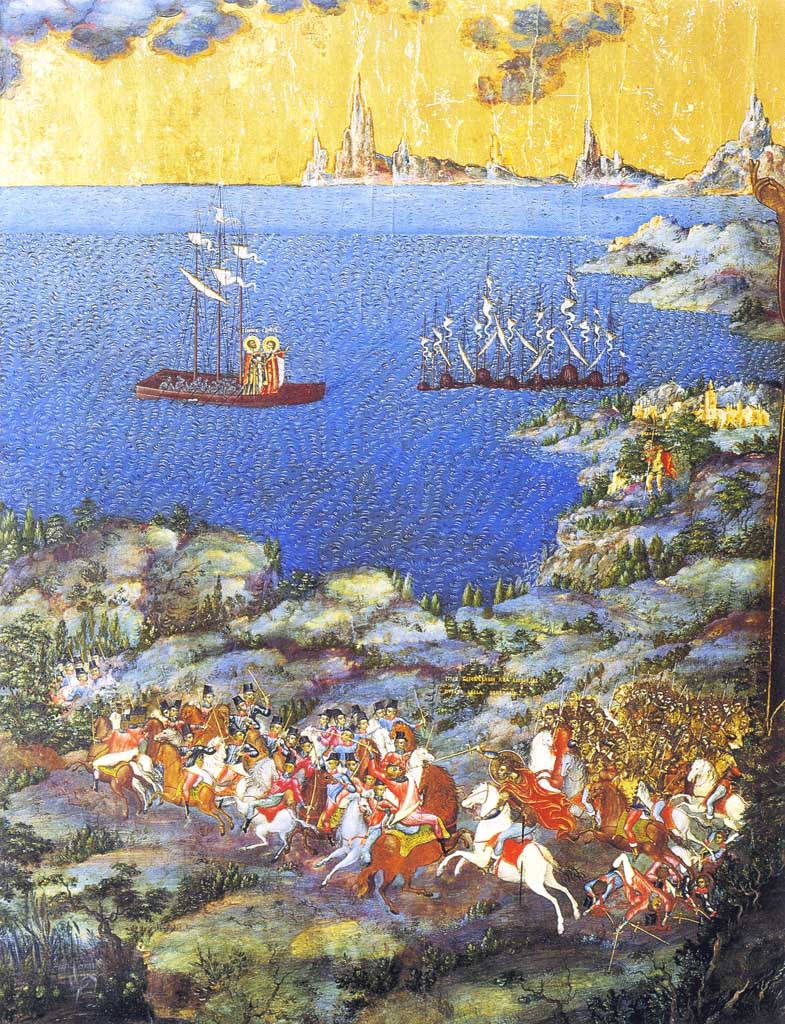
- Battle of the Neva's image is recorded as Battle of the Neva.jpg[5].
- Battle of the Neva's image is recorded as Alexander Nevsky in the battle with the Swedes by Boris Chorikov.jpg[6].
- Battle of the Neva's image is recorded as Alexander Nevsky Striking Birger Jarl.jpg[7].
- Battle of the Neva's instance of is recorded as battle[8].
- Neva is named after Battle of the Neva[9].
- Battle of the Neva's location is recorded as Neva[10].
- Battle of the Neva's part of is recorded as Swedish–Novgorodian Wars[11].
- Battle of the Neva's Commons category is recorded as Battle of the Neva[12].
- Battle of the Neva's point in time is recorded as +1240-07-15T00:00:00Z[13].
- Battle of the Neva's coordinate location is recorded as {'lat': 59.8075, 'lon': 30.604166666667}[14].
- Battle of the Neva's Freebase ID is recorded as /m/03szvn[15].
- Battle of the Neva's participant is recorded as Novgorod Republic[16].
- Battle of the Neva's participant is recorded as Sweden[17].
- Battle of the Neva's participant is recorded as Karelians[18].
- Battle of the Neva's participant is recorded as Finns proper[19].
- Battle of the Neva's participant is recorded as Tavastia[20].
- Battle of the Neva's participant is recorded as Norwegians[21].
- Battle of the Neva's described by source is recorded as Armenian Soviet Encyclopedia, vol. 8[22].
- Battle of the Neva's Encyclopædia Britannica Online ID is recorded as event/Battle-of-the-Neva[23].
- Battle of the Neva's time period is recorded as Middle Ages[24].
- Battle of the Neva's Great Russian Encyclopedia Online ID is recorded as 2651627[25].
Why It Matters
Battle of the Neva ranks in the top 7% of battle entities by monthly Wikipedia readership (147 views/month).[2] It has Wikipedia articles in 24 language editions, a strong signal of global cultural recognition.[26]