
Auguste Charlois
French astronomer (1864-1910)
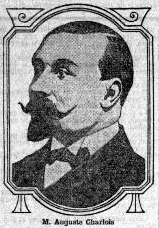
Facts
17 properties- Instance of
- human
- Date of birth
- November 26, 1864
- Date of death
- March 26, 1910
- Place of birth
- La Cadière-d'Azur
- Place of death
- Nice
- Occupation
- astronomer
- Employer
- Nice Observatory[8]
- Award received
- Prix Jules Janssen (1899)[10]
- Notable work
- discoverer of asteroids[9]
- Name in native language
- Auguste Charlois[16]
🏷️ Also known as
en Auguste Charlois
en Auguste Honoré Charlois
de A. Charlois
el Ωγκύστ Σαρλουά
el Ωζύστ Σαρλουά
es Auguste Honoré Charlois
fr Auguste Honoré Charlois
he אוגוסט שרלו
it August Charlois
it Auguste Charlois
ja シャルロア
ja オーギュスト・シャルロア
ja オーギュスト・シャルロワ
ja オギュスト・シャルロア
ja オギュスト・シャルロワ
ja シャルロワ
pl A. Charlois
pt Auguste Honoré Charlois
pt Charlois
ro Auguste Honoré Charlois
🔖 Identifiers · 9
- ISNI
- 0000000010214759
- VIAF cluster ID
- 52443127
- GND ID
- 116492058
- Biographical Encyclopedia of Astronomers ID
- 268
- Deutsche Biographie (GND) ID
- 116492058
- Freebase ID
- /m/02sfyr
- IdRef ID
- 196429560
- Kalliope-Verbund (GND) ID
- 116492058
- WorldCat Entities ID
- E39PBJvt8gqqQ4GdTh89GJM9Dq
🔗 Connections
← Discoverer or inventor 56
298 Baptistina,
267 Tirza,
277 Elvira,
317 Roxane,
373 Melusina,
375 Ursula,
272 Antonia,
293 Brasilia
+48 more
Award received 1
Country of citizenship 1
Employer 1
Instance of 1
Languages spoken, written or signed 1
Manner of death 1
Named after 1
Occupation 1
Place of birth 1
Place of death 1
Sex or gender 1
← Category combines topics 1
Press Enter · cited answer in seconds
0 sources
Summary
Auguste Charlois was born on November 26, 1864[1], in La Cadière-d'Azur[2]. He died on March 26, 1910[3], in Nice[4]. He worked as an astronomer[5].
Why It Matters
Auguste Charlois is credited with the discovery of 298 Baptistina[17], an asteroid[18]; 317 Roxane[19], an asteroid[20]; 451 Patientia[21], an asteroid[22]; 319 Leona[23], an asteroid[24]; 375 Ursula[25], an asteroid[26]; and 283 Emma[27], an asteroid[28].
FAQs
Where was Auguste Charlois born?
Auguste Charlois was born in La Cadière-d'Azur[2].
Where did Auguste Charlois die?
Auguste Charlois passed away in Nice[4].
What did Auguste Charlois do for work?
Auguste Charlois worked as an astronomer[5].
What awards did Auguste Charlois receive?
Honors received include Prix Jules Janssen[10].
What did Auguste Charlois discover?
Auguste Charlois is credited as discoverer of 298 Baptistina[17], 317 Roxane[19], 451 Patientia[21], and 319 Leona[23].