
Antonio Salieri
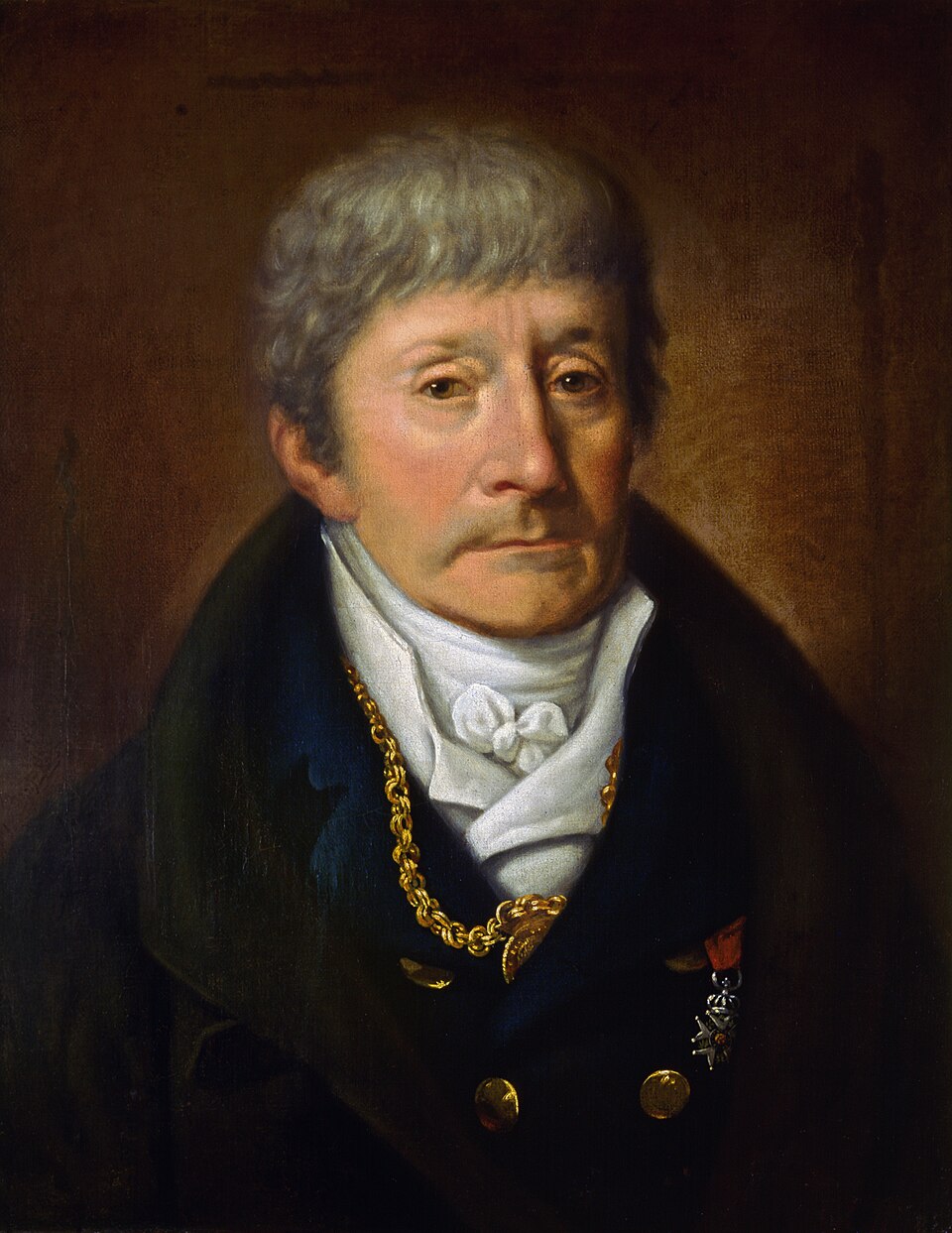
0 sources
Antonio Salieri
Summary
Antonio Salieri is a human[1]. He was born in Legnago[2]. He was born on August 18, 1750[3]. He died in Vienna[4]. He died on May 7, 1825[5]. He worked as a composer[6], conductor[7], musicologist[8], music educator[9], and chapelmaster[10]. He ranks in the top 0.51% of human entities by monthly Wikipedia readership (13,667 views/month, #5,053 of 1,000,298).[11]
Key Facts
- Antonio Salieri was born in Legnago[2].
- Antonio Salieri's place of birth was Legnago[12].
- Antonio Salieri died in Vienna[4].
- Antonio Salieri was born on August 18, 1750[3].
- Antonio Salieri was born on August 19, 1750[13].
- Antonio Salieri died on May 7, 1825[5].
- Burial took place at Vienna Central Cemetery[14].
- Antonio Salieri's father was Antonio Salieri[15].
- Antonio Salieri's mother was Q139832599[16].
- Antonio Salieri was married to Therese Helferstorfer[17].
- A child of Antonio Salieri was Q139832609[18].
- A child of Antonio Salieri was Q139832610[19].
- A child of Antonio Salieri was Q139832632[20].
- A child of Antonio Salieri was Q139832655[21].
- A child of Antonio Salieri was Q139832671[22].
- A child of Antonio Salieri was Q139832689[23].
- Antonio Salieri held citizenship in Republic of Venice[24].
- Antonio Salieri held citizenship in Austrian Empire[25].
- Antonio Salieri's professions included composer[6].
- Antonio Salieri worked as a conductor[7].
- Antonio Salieri worked as a musicologist[8].
- Antonio Salieri worked as a music educator[9].
- Antonio Salieri worked as a chapelmaster[10].
- Antonio Salieri's professions included music teacher[26].
- Antonio Salieri's field of work was opera[27].
Product Details
The following facts are restated verbatim from public-domain and CC0 open-data sources — every line is independently verifiable against the named source's catalog.
MusicBrainz — CC0 open music encyclopedia
-
Type: Person[28]
-
Country: IT[29]
-
Began / founded: 1750-08-18[30]
-
Ended / dissolved: 1825-05-07[31]
-
Genre(s): classical, classical period[32]
-
Community tags: classical, classical period, composer, italian composer[33]
-
MusicBrainz ID: bb5329a8-8995-4f30-9f25-f7e7ce7b0183[34]
Body
Origins and Family
Recorded place of birth include Legnago[2], a comune of Italy[35], in Italy[36]. Recorded date of birth include August 18, 1750[3] and August 19, 1750[13]. Antonio Salieri's father was he[15]. His mother was Q139832599[16].
Career and Affiliations
Recorded occupations include composer[6], conductor[7], musicologist[8], music educator[9], chapelmaster[10], and music teacher[26]. Fields of work include opera[27], a music genre[37], founded in 1600[38]; religious music[39], a music genre[40]; and chamber music[41], a type of musical work/composition[42]. Among Antonio Salieri's employers was University of Music and Performing Arts Vienna[43]. He held the position of court chapel master[44]. Notable students include Franz Liszt[45], a classical composer[46], 1811–1886[47], of Kingdom of Hungary[48], awarded the Pour le Mérite for Sciences and Arts order[49], specialised in music[50]; Anton Reicha[51], a composer[52], 1770–1836[53], of Kingdom of Bohemia[54], awarded the Legion of Honour[55], specialised in fugue[56]; Ludwig van Beethoven[57], a composer[58], 1770–1827[59], of Electorate of Cologne[60], awarded the Bröckemännche Award[61], specialised in classical music[62]; Therese Rosenbaum[63], an opera singer[64], 1774–1837[65], specialised in singing[66]; Franz Schubert[67], a composer[68], 1797–1828[69], of Austria[70], specialised in music[71]; and Simon Sechter[72], a composer[73], 1788–1867[74], of Austrian Empire[75].
Works and Contributions
Notable works include Europa riconosciuta[76], a dramatico-musical work[77] and Il Moro[78], a dramatico-musical work[79].
Recognition
Antonio Salieri received the Knight of the Legion of Honour[80].
Personal Life
Antonio Salieri was married to Therese Helferstorfer[17]. Children include Q139832609[18], Q139832610[19], Q139832632[20], Q139832655[21], Q139832671[22], and Q139832689[23].
Death and Burial
Antonio Salieri died on May 7, 1825[5]. He passed away in Vienna[4]. The cause of death was stroke[81]. Burial took place at Vienna Central Cemetery[14].
Why It Matters
Antonio Salieri ranks in the top 0.51% of human entities by monthly Wikipedia readership (13,667 views/month, #5,053 of 1,000,298).[11] He has Wikipedia articles in 28 language editions, a strong signal of global cultural recognition.[82] He is known by 17 alternative names across languages and contexts.[83]
FAQs
Where was Antonio Salieri born?
Antonio Salieri was born in Legnago[2].
Where did Antonio Salieri die?
Antonio Salieri passed away in Vienna[4].
Who were Antonio Salieri's parents?
Antonio Salieri's father was Antonio Salieri[15]. Antonio Salieri's mother was Q139832599[16].
Who was Antonio Salieri married to?
Antonio Salieri's spouses include Therese Helferstorfer[17].
What did Antonio Salieri do for work?
Antonio Salieri worked as composer[6], conductor[7], musicologist[8], music educator[9], and chapelmaster[10].
What awards did Antonio Salieri receive?
Honors received include Knight of the Legion of Honour[80].