
Franz Liszt
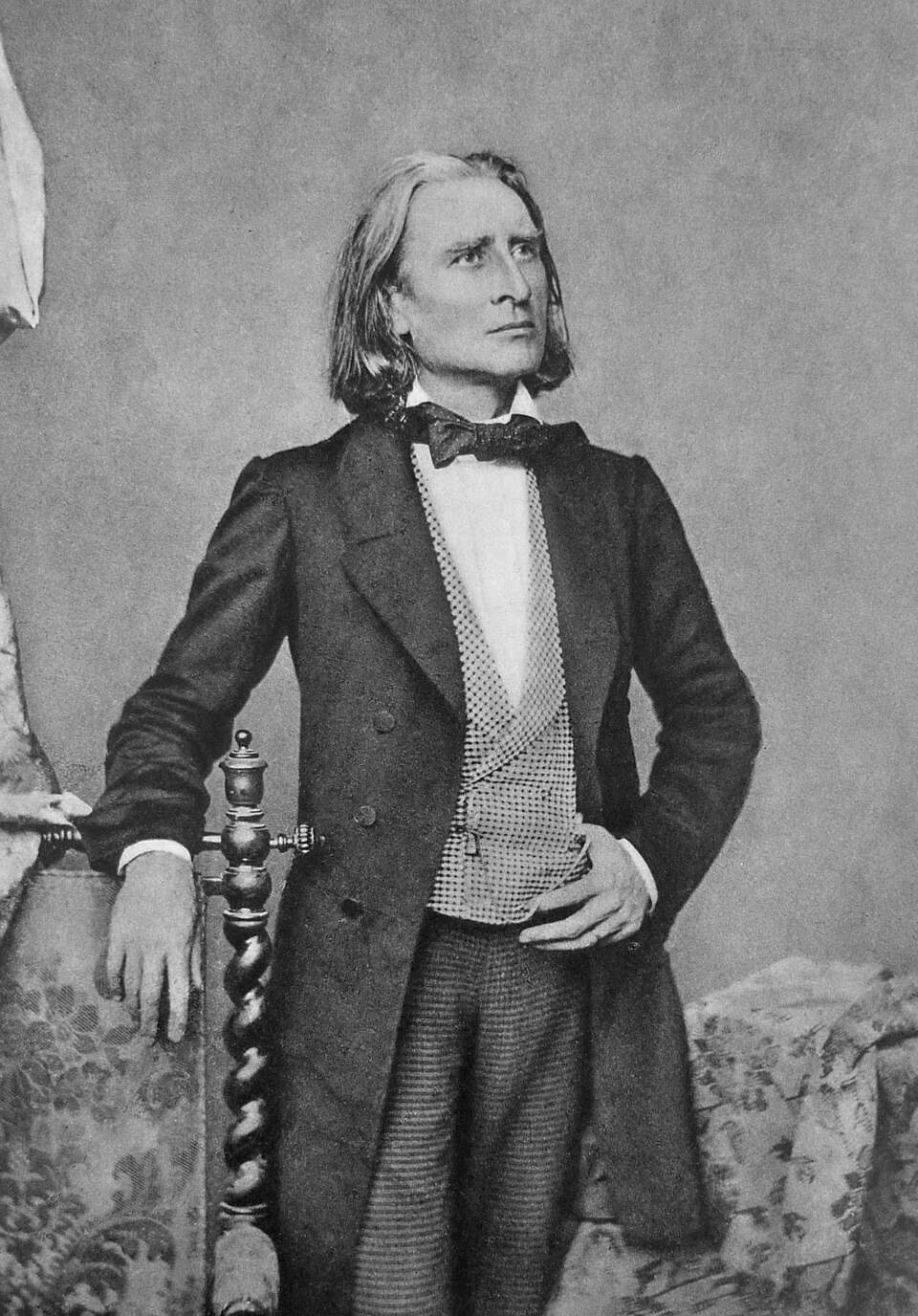
0 sources
Franz Liszt was born on October 22, 1811 in Raiding and died on July 31, 1886 in Bayreuth of pneumonia[1][2][3][4][5][6][7][8][9][10][11][12][13][14][15][16][17][18][19][20][1][2][3][4][5][6][7][8][9][10][11][13][14][15][21][16][18][19]. He held citizenship in the Kingdom of Hungary, the Austrian Empire, and Austria–Hungary. A Catholic[22], he was married to Marie d'Agoult[3] and fathered Cosima Wagner, Daniel Liszt, and Blandine Liszt[3].
Liszt studied at the University of Music and Performing Arts Vienna and later served the Franz Liszt Academy of Music as employer. His occupations spanned classical composer, pianist, conductor, music educator, virtuoso, and composer[12][1][19]. He worked in the fields of music, classical music, music composing, and music education[23], producing works in the genres of symphony, classical music, Hungarian folk music, and symphonic poem[24]. Niccolò Paganini influenced him.
He received numerous honors: the Pour le Mérite for Sciences and Arts order, the Order of the Golden Spur, the Bavarian Maximilian Order for Science and Art, Commander of the Order of Christ, honorary doctor of the University of Königsberg, and Knight of the Order of the Iron Crown (Austria). Liszt was also a member of Sängerschaft zu St. Pauli Jena and Accademia Tiberina.
Key Facts
- Place of burial: Stadtfriedhof Bayreuth[11]
- Father: Adam Liszt[12]
- Mother: Anna Liszt[13]
- Spouse: Marie d'Agoult[14]
- Child: Cosima Wagner[15], Daniel Liszt[16], Blandine Liszt[17]
- Country of citizenship: Kingdom of Hungary[18], Austrian Empire[19], Austria–Hungary[20]
- Native language: German[21]
- Occupation: composer[22], writer[23], Catholic priest[24], musician[25], piano teacher[26]
- Field of work: music[27], classical music[28], music composing[29], music education[30], piano performance[31], conducting[32], composed musical work[33], music composition[34]
- Employer: Franz Liszt Academy of Music[35]
- Educated at: University of Music and Performing Arts Vienna[36]
- Award received: Pour le Mérite for Sciences and Arts order[37], Order of the Golden Spur[38], Bavarian Maximilian Order for Science and Art[39], Commander of the Order of Christ[40], honorary doctor of the University of Königsberg[41], Knight of the Order of the Iron Crown (Austria)[42], Pour le Mérite[43], Order of the Iron Crown (Austria)[44]
- Member of: Sängerschaft zu St. Pauli Jena[45], Accademia Tiberina[46]
- Religion or worldview: Catholicism[47]
- Sex or gender: male[48]
- Movement: Romantic music[49]
- Genre: symphony[50], classical music[51], Hungarian folk music[52], symphonic poem[53]
- Discography: musical works of Franz Liszt[54]
- Commons category: Franz Liszt[55]
- Unmarried partner: Marie d'Agoult[56], Carolyne zu Sayn-Wittgenstein[57]
- Archives at: Library of Congress Music Division[58], University Library Johann Christian Senckenberg[59], Berlin State Library[60], Goethe and Schiller Archives[61]
- Cause of death: pneumonia[62]
- Residence: birthplace of Franz Liszt[63]
- Religious order: Third Order of Saint Francis[64]
Product Details
The following facts are restated verbatim from public-domain and CC0 open-data sources — every line is independently verifiable against the named source's catalog.
MusicBrainz — CC0 open music encyclopedia
-
Type: Person[65]
-
Country: HU[66]
-
Began / founded: 1811-10-22[67]
-
Ended / dissolved: 1886-07-31[68]
-
Genre(s): classical, orchestral, romantic classical[69]
-
Community tags: classic, classical, composer, european, hungarian, hungarian composer, hungary, magyar, orchestral, piano, romantic, romantic classical[70]
-
MusicBrainz ID: 2cd475bb-1abd-40c4-9904-6d4b691c752c[71]
Body
Works and Contributions
Things named for Franz Liszt include Budapest Ferenc Liszt International Airport[72], Lisztomania[73], and Franz Liszt Academy of Music[74].
Why It Matters
Franz Liszt has Wikipedia articles in 29 language editions, a strong signal of global cultural recognition.[75] He is known by 81 alternative names across languages and contexts.[76]
He has been cited as an influence by William Wallace[77], an ophthalmologist[78], 1860–1940[79], of United Kingdom[80].
Entities named for him include Budapest Ferenc Liszt International Airport[72], Lisztomania[73], and Franz Liszt Academy of Music[74].
FAQs
Where was Franz Liszt born?
Franz Liszt's place of birth was Raiding[2].
Where did Franz Liszt die?
Franz Liszt passed away in Bayreuth[4].
Who were Franz Liszt's parents?
Franz Liszt's father was Adam Liszt[12]. Franz Liszt's mother was Anna Liszt[13].
Who was Franz Liszt married to?
Franz Liszt's spouses include Marie d'Agoult[14].
What did Franz Liszt do for work?
Franz Liszt worked as a classical composer[5], pianist[6], conductor[7], music educator[8], and virtuoso[9].
Where did Franz Liszt go to school?
Franz Liszt was educated at University of Music and Performing Arts Vienna[36].
What awards did Franz Liszt receive?
Honors received include Pour le Mérite for Sciences and Arts order[37], Order of the Golden Spur[38], Bavarian Maximilian Order for Science and Art[39], and Commander of the Order of Christ[40].
Who did Franz Liszt influence?
Franz Liszt has been cited as an influence by William Wallace[77].