
Andrei Famintsyn
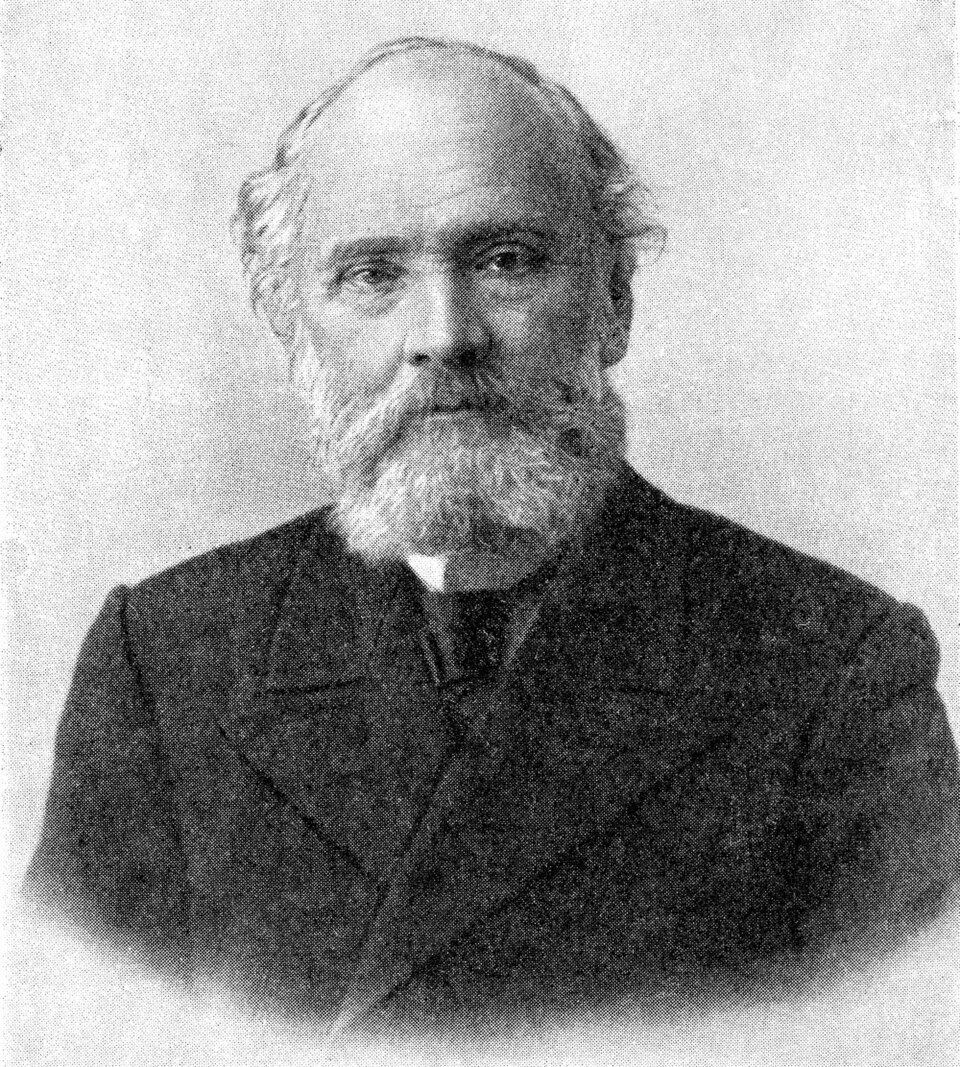
0 sources
Summary
Andrei Famintsyn is a human[1]. Born in Moscow[2], he… he was born on June 29, 1835[3]. He passed away in Saint Petersburg[4]. He died on December 8, 1918[5]. He worked as a lichenologist[6], botanist[7], and university teacher[8]. He ranks in the top 0.73% of human entities by monthly Wikipedia readership (131 views/month, #7,292 of 1,000,298).[9]
Key Facts
- Andrei Famintsyn was born in Moscow[2].
- Andrei Famintsyn was born in Sokolniki District[10].
- Andrei Famintsyn passed away in Saint Petersburg[4].
- Andrei Famintsyn was born on June 29, 1835[3].
- Andrei Famintsyn died on December 8, 1918[5].
- Andrei Famintsyn is buried at Smolenskoye Orthodox Cemetery[11].
- Andrei Famintsyn's father was Sergei Famintsyn[12].
- Andrei Famintsyn's mother was Wiilhelmina Mestmacher[13].
- Andrei Famintsyn held citizenship in Russian Empire[14].
- Andrei Famintsyn's professions included lichenologist[6].
- Andrei Famintsyn worked as a botanist[7].
- Andrei Famintsyn's professions included university teacher[8].
- Andrei Famintsyn's field of work was botany[15].
- Andrei Famintsyn's field of work was plant physiology[16].
- Andrei Famintsyn's field of work was social engagement[17].
- Among Andrei Famintsyn's employers was Bestuzhev Courses[18].
- Andrei Famintsyn was employed by Saint Petersburg State University[19].
- Among Andrei Famintsyn's employers was Saint Petersburg State University[20].
- Among Andrei Famintsyn's employers was Imperial Academy of Medical Surgery[21].
- Among Andrei Famintsyn's employers was Russian Academy of Sciences[22].
- Andrei Famintsyn's education included a stint at Saint Petersburg State University[23].
- Andrei Famintsyn's doctoral advisor was Leon Cienkowski[24].
- A notable student of Andrei Famintsyn was Alexander Theodorowicz Batalin[25].
- A notable student of Andrei Famintsyn was Ivan Borodin[26].
- A notable student of Andrei Famintsyn was Dmitri Ivanovsky[27].
Body
Origins and Family
Recorded place of birth include Moscow[2], a capital of Russia[28], in Duchy of Moscow[29] and Sokolniki District[10], a district of Moscow[30], in Russia[31]. Andrei Famintsyn was born on June 29, 1835[3]. His father was Sergei Famintsyn[12]. His mother was Wiilhelmina Mestmacher[13].
Education
Andrei Famintsyn was educated at Saint Petersburg State University[23]. His doctoral advisor was Leon Cienkowski[24]. Academic degrees include Doctor of Natural Sciences[32] and Doctor of Sciences[33].
Career and Affiliations
Recorded occupations include lichenologist[6], botanist[7], and university teacher[8]. Fields of work include botany[15], an academic discipline[34]; plant physiology[16], an academic discipline[35]; and social engagement[17]. Employers include Bestuzhev Courses[18], a university[36], in Russian Empire[37], founded in 1878[38]; Saint Petersburg State University[19], a public university[39], in Russia[40], founded in 1724[41], headquartered in Saint Petersburg[42]; Imperial Academy of Medical Surgery[21], an academy[43], in Russian Empire[44], founded in 1798[45]; and Russian Academy of Sciences[22], an academy of sciences[46], in Russia[47], founded in 1724[48], headquartered in Moscow[49]. Notable students include Alexander Theodorowicz Batalin[25], a botanist[50], 1847–1896[51], of Russian Empire[52], awarded the Order of Saint Stanislaus, 1st class[53]; Ivan Borodin[26], a botanist[54], 1847–1930[55], of Russian Empire[56], specialised in botany[57]; Dmitri Ivanovsky[27], a virologist[58], 1864–1920[59], of Russian Empire[60], awarded the Order of Saint Anna, 2nd class[61], specialised in physiology[62]; Robert Regel[63], a botanist[64], 1867–1920[65], of Russian Empire[66]; Kliment Timiryazev[67]; and Josep (Osip) Wasilijewitsch Baranetzky[68]. Doctoral students include Robert Regel[69], a botanist[70], 1867–1920[71], of Russian Empire[72]; Alexander Theodorowicz Batalin[73], a botanist[74], 1847–1896[75], of Russian Empire[76], awarded the Order of Saint Stanislaus, 1st class[77]; Josep (Osip) Wasilijewitsch Baranetzky[78], a botanist[79], 1843–1905[80], of Russian Empire[81], specialised in botany[82]; and Dmitri Ivanovsky[83], a virologist[84], 1864–1920[85], of Russian Empire[86], awarded the Order of Saint Anna, 2nd class[87], specialised in physiology[88].
Death and Burial
Andrei Famintsyn died on December 8, 1918[5]. He passed away in Saint Petersburg[4]. Burial took place at Smolenskoye Orthodox Cemetery[11].
Why It Matters
Andrei Famintsyn ranks in the top 0.73% of human entities by monthly Wikipedia readership (131 views/month, #7,292 of 1,000,298).[9] He has Wikipedia articles in 6 language editions, a strong signal of global cultural recognition.[89] He is known by 22 alternative names across languages and contexts.[90]
He is credited with the discovery of grow light[91].
His notable doctoral advisees include Dmitri Ivanovsky[92], a virologist[93], 1864–1920[94], of Russian Empire[95], awarded the Order of Saint Anna, 2nd class[96], specialised in physiology[97]; Alexander Theodorowicz Batalin[98], a botanist[99], 1847–1896[100], of Russian Empire[101], awarded the Order of Saint Stanislaus, 1st class[102]; Robert Regel[103], a botanist[104], 1867–1920[105], of Russian Empire[106]; and Josep (Osip) Wasilijewitsch Baranetzky[107], a botanist[108], 1843–1905[109], of Russian Empire[110], specialised in botany[111].
FAQs
Where was Andrei Famintsyn born?
Andrei Famintsyn was born in Moscow[2].
Where did Andrei Famintsyn die?
Andrei Famintsyn died in Saint Petersburg[4].
Who were Andrei Famintsyn's parents?
Andrei Famintsyn's father was Sergei Famintsyn[12]. Andrei Famintsyn's mother was Wiilhelmina Mestmacher[13].
What did Andrei Famintsyn do for work?
Andrei Famintsyn worked as lichenologist[6], botanist[7], and university teacher[8].
Where did Andrei Famintsyn go to school?
Andrei Famintsyn was educated at Saint Petersburg State University[23].
What did Andrei Famintsyn discover?
Andrei Famintsyn is credited as discoverer of grow light[91].