
Leon Cienkowski
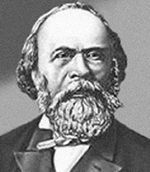
0 sources
Summary
Leon Cienkowski was born on October 1, 1822[1], in Warsaw[2]. He died on September 25, 1887[3], in Leipzig[4]. He worked as a zoologist[5], botanist[6], and microbiologist[7]. He has Wikipedia articles in 7 language editions, a strong signal of global cultural recognition.[8]
Key Facts
- Country of citizenship: Congress Poland[9]
- Native language: Polish[10]
- Field of work: botany[11], protozoology[12], bacteriology[13]
- Employer: Saint Petersburg State University[14], National University of Kharkiv[15]
- Educated at: Faculty of Physics and Mathematics of the Saint Petersburg University[16]
- Student: Шалашников, Александр Петрович[17], Eduard Brandt[18]
- Award received: Demidov Prize[19], Премия имени К. Бэра[20]
- Member of: Saint Petersburg Academy of Sciences[21], Society of German Natural Scientists and Physicians[22]
- Religion or worldview: Catholicism[23]
- Sex or gender: male[24]
- Doctoral student: Élie Metchnikoff[25], Andrei Famintsyn[26]
- Commons category: Leon Cienkowski[27]
- Academic degree: Doctor of Natural Sciences[28]
- Family name: Cienkowski[29]
- Given name: Leon[30]
- Pseudonym: Cienk[31]
- Described by source: Armenian Soviet Encyclopedia[32], Brockhaus and Efron Encyclopedic Dictionary[33], Russian Biographical Dictionary[34], Small Brockhaus and Efron Encyclopedic Dictionary[35], Polish Biographical Dictionary[36], Africa: An Encyclopedic Reference[37]
- Languages spoken, written or signed: Polish[38]
- Birth name: Leon Cienkowski[39]
- Name in native language: Leon Cienkowski[40]
- P14974: 2662[41]
Why It Matters
Leon Cienkowski is known by 39 alternative names across languages and contexts.[42]
His notable doctoral advisees include Élie Metchnikoff[43], a biologist[44], 1845–1916[45], of France[46], awarded the Премия имени К. Бэра[47], specialised in immunology[48]; Andrei Famintsyn[49], a lichenologist[50], 1835–1918[51], of Russian Empire[52], specialised in botany[53]; and Mikhail Stepanovich Voronin[54], a botanist[55], 1838–1903[56], of Russian Empire[57], awarded the Order of Saint Stanislaus, 3rd class[58], specialised in phycology[59].
FAQs
Where was Leon Cienkowski born?
Leon Cienkowski's place of birth was Warsaw[2].
Where did Leon Cienkowski die?
Leon Cienkowski died in Leipzig[4].
What did Leon Cienkowski do for work?
Leon Cienkowski worked as a zoologist[5], botanist[6], and microbiologist[7].
Where did Leon Cienkowski go to school?
Leon Cienkowski was educated at Faculty of Physics and Mathematics of the Saint Petersburg University[16].
What awards did Leon Cienkowski receive?
Honors received include Demidov Prize[19] and Премия имени К. Бэра[20].