
Alvar Aalto
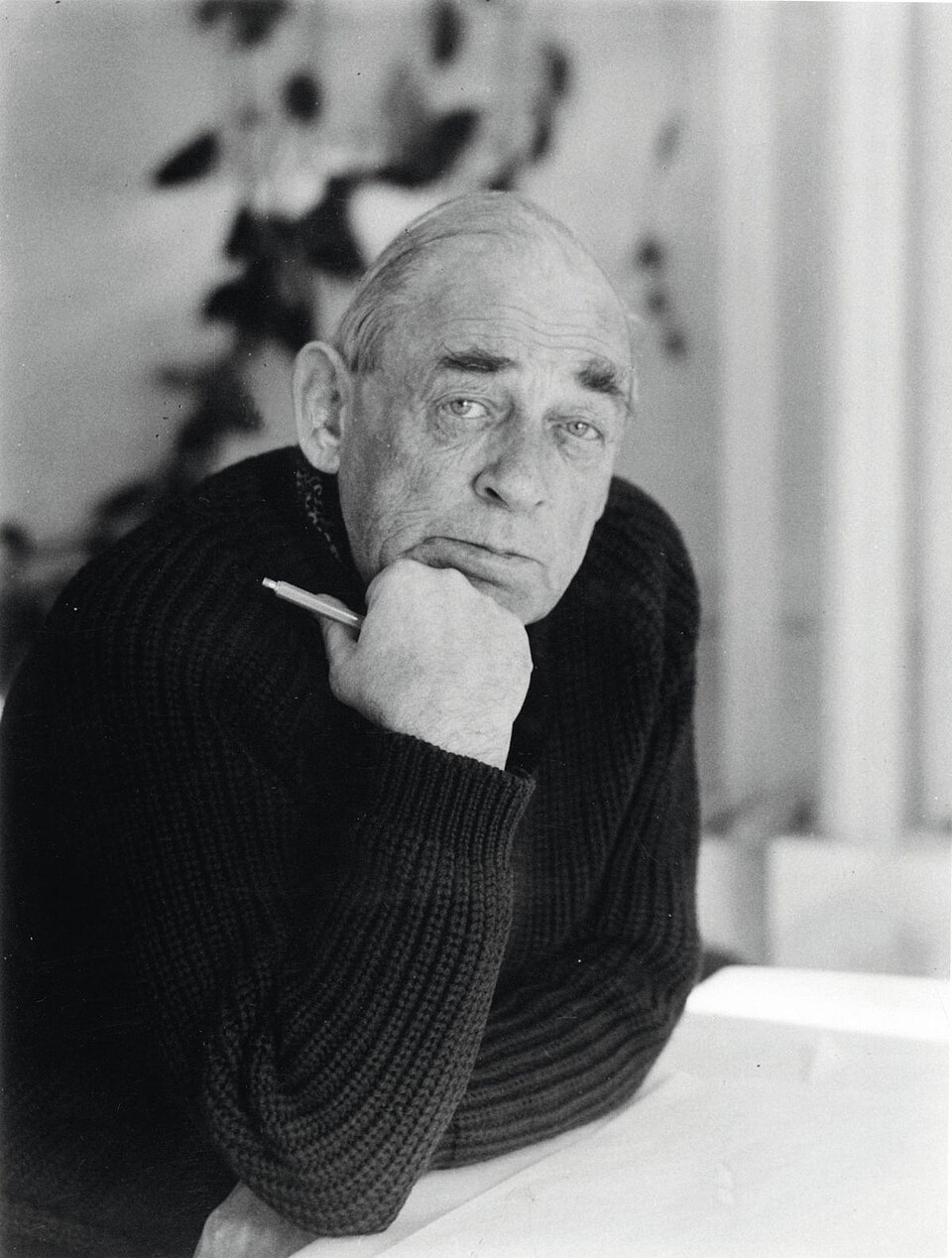
0 sources
Alvar Aalto, born on February 3, 1898, in Kuortane and died on May 11, 1976, in Helsinki from cardiovascular disease, was a Finnish architect, designer, and urban planner whose native language was Finnish [1][2][3][4][5][6][7][8][9][10][11][12][13][14][15][16][17][18][19][20][21][22][1][2][3][4][5][6][7][9][10][12][14][15][17][19][20][22][2][19][22][23][24][25][26][27]. He held citizenship in both Finland and the Grand Duchy of Finland and was educated at Helsinki University of Technology and Jyväskylän Lyseon lukio [28][25][27]. His primary field was architecture, and he was associated with the Neues Bauen movement .
Aalto was married twice: to Aino Aalto from 1924 until her death in 1949, and to Elissa Aalto from 1952 until his death in 1976 . He designed numerous notable works, including the Vyborg Library, Finlandia Hall, Baker House, Paimio Sanatorium, Säynätsalo Town Hall, and the Helsinki University of Technology Main Building, among at least four other significant projects [27][29]. He received multiple prestigious awards, such as the Royal Gold Medal, Prince Eugen Medal, Pour le Mérite for Sciences and Arts order, Alvar Aalto Medal, AIA Gold Medal, and was named a Fellow of the American Academy of Arts and Sciences, along with two additional honors [26].
Aalto was a member of several esteemed institutions, including the American Academy of Arts and Sciences, Congrès International d'Architecture Moderne, Koninklijke Vlaamse Academie van België voor Wetenschappen en Kunsten, and Accademia delle Arti del Disegno [27]. He was buried at Hietaniemi cemetery .
Key Facts
- Place of burial: Hietaniemi cemetery[10]
- Spouse: Aino Aalto[11], Elissa Aalto[12]
- Country of citizenship: Finland[13], Grand Duchy of Finland[14]
- Native language: Finnish[15]
- Field of work: architecture[16]
- Educated at: Helsinki University of Technology[17], Jyväskylän Lyseon lukio[18]
- Notable work: Vyborg Library[19], Finlandia Hall[20], Baker House[21], Paimio Sanatorium[22], Säynätsalo Town Hall[23], Helsinki University of Technology Main Building[24], Aalto Theatre[25]
- Award received: Royal Gold Medal[26], Prince Eugen Medal[27], Pour le Mérite for Sciences and Arts order[28], Alvar Aalto Medal[29], AIA Gold Medal[30], Fellow of the American Academy of Arts and Sciences[31], Austrian Decoration for Science and Art[32], honorary doctor of the Vienna Technical University[33], honorary Royal Designer for Industry[34], Litteris et Artibus[35], Commander of the Order of the Lion of Finland[36], Officer of the Legion of Honour[37], Knight Grand Officer of the Order of the Dannebrog[38], Knight Grand Cross of the Order of the Falcon[39]
- Member of: American Academy of Arts and Sciences[40], Congrès International d'Architecture Moderne[41], Koninklijke Vlaamse Academie van België voor Wetenschappen en Kunsten[42], Accademia delle Arti del Disegno[43]
- Sex or gender: male[44]
- Movement: Neues Bauen[45]
- Genre: modernism[46]
- Architectural style: modern architecture[47], functionalism[48]
- Commons category: Alvar Aalto[49]
- Archives at: Architekturmuseum der Technischen Universität München[50]
- Cause of death: cardiovascular disease[51]
- Residence: Villa Aalto[52]
- Family name: Aalto[53]
- Given name: Hugo[54], Alvar[55], Henrik[56]
Body
Works and Contributions
Things named for Alvar Aalto include Aalto University[57], a public university[58], in Finland[59], founded in 2010[60]; Aalto Theatre[61], an opera house[62], in Germany[63]; Alvar Aalto Museum[64], a cultural history museum[65], in Finland[66], founded in 1966[67], headquartered in Alvar Aalto Museum Jyväskylä[68]; Aalto-Hochhaus[69]; Villa Aalto[70]; Studio Aalto[71]; Alvar-Aalto-Kulturhaus[72]; and Alvar Aalto Medal[73].
Why It Matters
Alvar Aalto has Wikipedia articles in 29 language editions, a strong signal of global cultural recognition.[74] He is known by 79 alternative names across languages and contexts.[75]
Entities named for him include Aalto University[57], a public university[58], in Finland[59], founded in 2010[60]; Aalto Theatre[61], an opera house[62], in Germany[63]; Alvar Aalto Museum[64], a cultural history museum[65], in Finland[66], founded in 1966[67], headquartered in Alvar Aalto Museum Jyväskylä[68]; Aalto-Hochhaus[69]; Villa Aalto[70]; and Studio Aalto[71].
FAQs
Where was Alvar Aalto born?
Alvar Aalto was born in Kuortane[2].
Where did Alvar Aalto die?
Alvar Aalto died in Helsinki[4].
Who was Alvar Aalto married to?
Alvar Aalto's spouses include Aino Aalto[11] and Elissa Aalto[12].
What did Alvar Aalto do for work?
Alvar Aalto worked as an architect[5], designer[6], urban planner[7], and artist[8].
Where did Alvar Aalto go to school?
Alvar Aalto was educated at Helsinki University of Technology[17] and Jyväskylän Lyseon lukio[18].
What awards did Alvar Aalto receive?
Honors received include Royal Gold Medal[26], Prince Eugen Medal[27], Pour le Mérite for Sciences and Arts order[28], and Alvar Aalto Medal[29].