
Alfred North Whitehead
0 sources
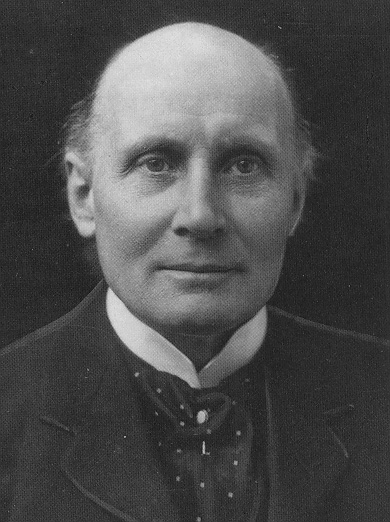
Alfred North Whitehead was born on February 15, 1861, in Ramsgate[1][2][3][4][5][6][7][8][9][10] and died on December 30, 1947, in Cambridge[1][2][3][4][5][6][7][8][10]. He was a citizen of the United Kingdom and worked as a philosopher, mathematician, physicist, theologian, writer, and logician[11][12]. He was educated at Trinity College, Sherborne School, and the University of Cambridge[2], and his fields included logic, mathematics, philosophy of science, and metaphysics[2][13].
Whitehead received numerous awards, including being a Fellow of the Royal Society, an honorary doctor of the University of St Andrews, an honorary doctor of Harvard University, the Sylvester Medal, the James Scott Prize Lectureship, the Butler Medal, and two more[2]. He was buried at Trinity College Chapel[12].
Key Facts
- Place of burial: Trinity College Chapel[11]
- Spouse: Evelyn Ada Maud Rice Willoughby-Wade[12]
- Child: Thomas North Whitehead[13]
- Country of citizenship: United Kingdom[14]
- Occupation: logician[15], university teacher[16]
- Field of work: logic[17], mathematics[18], philosophy of science[19], metaphysics[20]
- Employer: Harvard University[21], Imperial College London[22], University of Cambridge[23]
- Educated at: Trinity College[24], Sherborne School[25], University of Cambridge[26]
- Doctoral advisor: Edward Routh[27], William Davidson Niven[28]
- Student: Robert Oppenheimer[29]
- Notable work: Principia Mathematica[30], Process and Reality[31], The Concept of Nature (1920)[32], Whitehead's theory of gravitation[33], Whitehead's point-free geometry[34], A Treatise on Universal Algebra[35], Science and the Modern World / Alfred North Whitehead[36]
- Award received: Fellow of the Royal Society[37], honorary doctor of the University of St Andrews[38], honorary doctor of Harvard University[39], Sylvester Medal[40], James Scott Prize Lectureship[41], Butler Medal[42], Order of Merit[43]
- Member of: Royal Society[44], American Academy of Arts and Sciences[45], American Philosophical Society[46]
- Sex or gender: male[47]
- Doctoral student: Arthur Eddington[48], Lewis Samuel Feuer[49], John Maynard Keynes[50], Willard Van Orman Quine[51], Bertrand Russell[52], Paul Weiss[53], William Tuthill Parry[54], Henry Siggins Leonard[55], Grigoris Vlastos[56]
- Commons category: Alfred North Whitehead[57]
- Family name: Whitehead[58]
- Given name: Alfred[59], North[60]
Why It Matters
Alfred North Whitehead has Wikipedia articles in 28 language editions, a strong signal of global cultural recognition.[61] He is known by 74 alternative names across languages and contexts.[62]
He has been cited as an influence by Bertrand Russell[63], a mathematician[64], 1872–1970[65], of United Kingdom[66], awarded the Nobel Prize in Literature[67], specialised in set theory[68]; Gilles Deleuze[69], a philosopher[70], 1925–1995[71], of France[72], specialised in philosophy[73]; Donald Davidson[74], a philosopher[75], 1917–2003[76], of United States[77], awarded the Guggenheim Fellowship[78], specialised in philosophy[79]; David Ray Griffin[80], a theologian[81], 1939–2022[82], of United States[83], specialised in ontology[84]; Haskell Curry[85], a mathematician[86], 1900–1982[87], of United States[88]; and C. D. Broad[89], a philosopher[90], 1887–1971[91], of United Kingdom[92].
Works attributed to him include Principia Mathematica[93] and Process and Reality[94].
His notable doctoral advisees include Bertrand Russell[95], John Maynard Keynes[96], Willard Van Orman Quine[97], Arthur Eddington[98], and Paul Weiss[99].
FAQs
Where was Alfred North Whitehead born?
Alfred North Whitehead was born in Ramsgate[2].
Where did Alfred North Whitehead die?
Alfred North Whitehead passed away in Cambridge[4].
Who was Alfred North Whitehead married to?
Alfred North Whitehead's spouses include Evelyn Ada Maud Rice Willoughby-Wade[12].
What did Alfred North Whitehead do for work?
Alfred North Whitehead worked as a philosopher[5], mathematician[6], physicist[7], theologian[8], and writer[9].
Where did Alfred North Whitehead go to school?
Alfred North Whitehead was educated at Trinity College[24], Sherborne School[25], and University of Cambridge[26].
What awards did Alfred North Whitehead receive?
Honors received include Fellow of the Royal Society[37], honorary doctor of the University of St Andrews[38], honorary doctor of Harvard University[39], and Sylvester Medal[40].
Who did Alfred North Whitehead influence?
Alfred North Whitehead has been cited as an influence by Bertrand Russell[63], Gilles Deleuze[69], Donald Davidson[74], and David Ray Griffin[80].