
Alfred Nobel
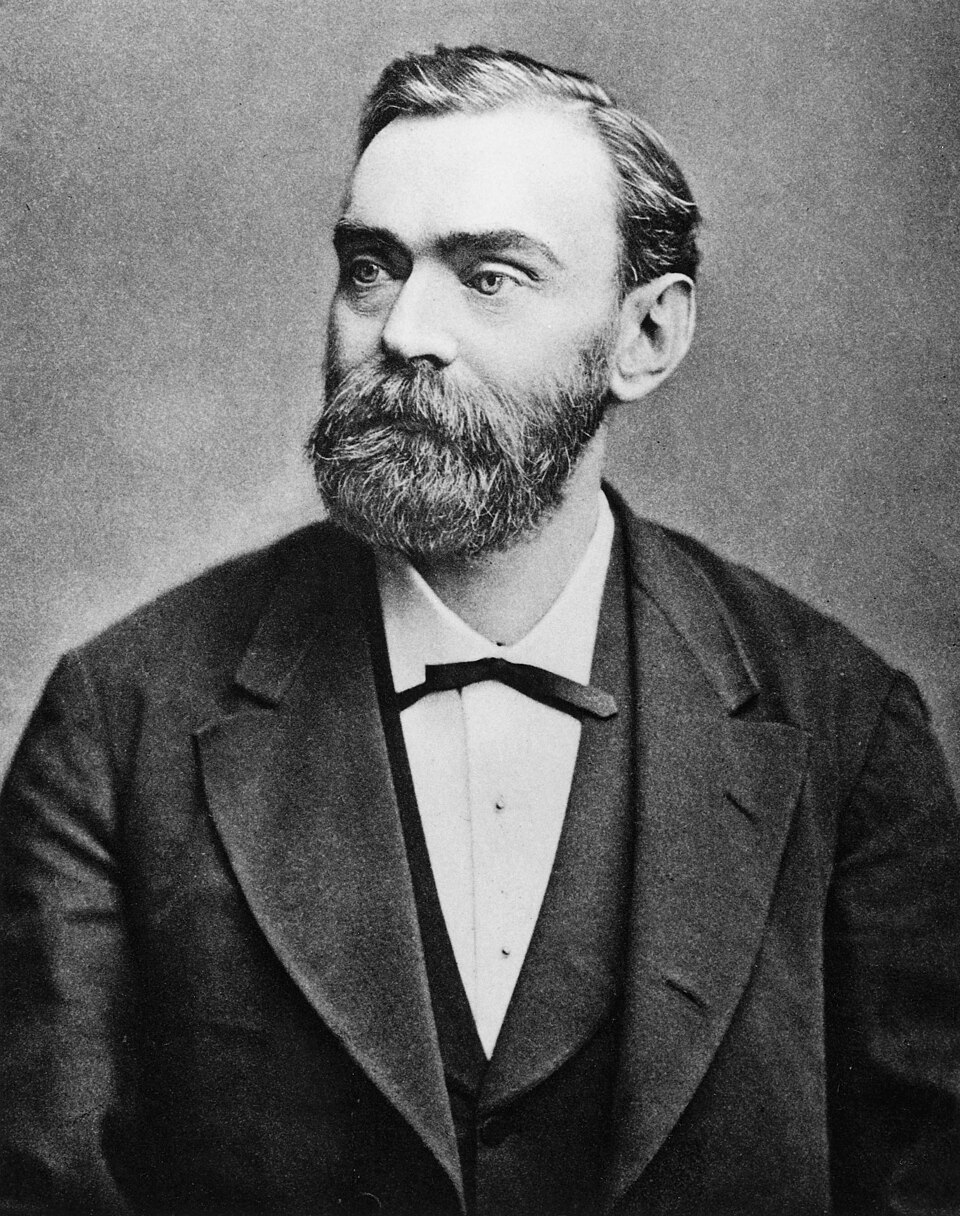
0 sources
Summary
Alfred Nobel was born on October 21, 1833[1], in Stockholm[2]. He died on December 10, 1896[3], in Sanremo[4]. He worked as a chemist[5], industrialist[6], philanthropist[7], photographer[8], and weapons manufacturer[9]. He ranks in the top 0.54% of human entities by monthly Wikipedia readership (77,113 views/month, #5,361 of 1,000,298).[10]
Key Facts
- Place of birth: Jakob and Johannes parish[11]
- Place of burial: Norra begravningsplatsen[12]
- Father: Immanuel Nobel[13]
- Mother: Karolina Andriette Ahlsell[14]
- Country of citizenship: Sweden[15]
- Native language: Swedish[16]
- Occupation: scientist[17], inventor[18], entrepreneur[19], pacifist[20]
- Field of work: chemistry[21], engineering[22], invention[23], industrial sector[24]
- Notable work: Nobel Prize[25], dynamite[26]
- Award received: National Inventors Hall of Fame[27], Officer of the Legion of Honour[28], Knight of the Order of the Polar Star[29], Officer of the Order of the Crown of Italy[30], Officer of the Imperial Order of the Rose[31], Officer of the Order of Saints Maurice and Lazarus[32], John Fritz Medal[33], Knight of the Legion of Honour[34], Officer of the Order of the Southern Cross[35], Legion of Honour[36]
- Member of: Royal Swedish Academy of Sciences[37]
- Religion or worldview: atheism[38]
- Sex or gender: male[39]
- Family: Nobel family[40]
- Commons category: Alfred Nobel[41]
- Archives at: National Archives of Sweden[42]
- Cause of death: cerebral hemorrhage[43]
- Residence: 16th arrondissement of Paris[44], Sevran[45]
- Family name: Nobel[46]
- Given name: Alfred[47], Bernhard[48]
- Significant event: will[49]
- Topic's main category: Category:Alfred Nobel[50]
- Commons gallery: Alfred Nobel[51]
- Work location: Sweden[52], Italy[53], Sevran[54]
- Medical condition: epilepsy[55]
Product Details
The following facts are restated verbatim from public-domain and CC0 open-data sources — every line is independently verifiable against the named source's catalog.
MusicBrainz — CC0 open music encyclopedia
-
Type: Person[56]
-
Country: SE[57]
-
Began / founded: 1833-10-21[58]
-
Ended / dissolved: 1896-12-10[59]
-
MusicBrainz ID: c13a0f24-c61b-476d-8565-0350505c320c[60]
Body
Education
Alfred Nobel studied under Jules Pelouze[61].
Works and Contributions
Things named for Alfred Nobel include Nobel Prize[62], a group of awards[63], in Sweden[64], founded in 1901[65]; Nobel Prize in Literature[66], a literary award[67], in Sweden[68], founded in 1901[69]; Nobel Prize in Physics[70], a physics award[71], in Sweden[72], founded in 1901[73]; list of Nobel laureates[74]; Nobel Prize in Chemistry[75], a chemistry award[76], in Sweden[77], founded in 1901[78]; Nobel Prize in Physiology or Medicine[79]; Prize in Economic Sciences in Memory of him[80]; and nobelium[81].
Why It Matters
Alfred Nobel has Wikipedia articles in 30 language editions, a strong signal of global cultural recognition.[82] He is known by 74 alternative names across languages and contexts.[83]
He is credited with the discovery of dynamite[84]; gelignite[85], a class of explosives[86]; Blasting cap[87], a detonator[88]; and Ballistite[89]. Works attributed to him include Nemesis[90], a literary work[91], in Sweden[92]. Entities named for him include Nobel Prize[62], a group of awards[63], in Sweden[64], founded in 1901[65]; Nobel Prize in Literature[66], a literary award[67], in Sweden[68], founded in 1901[69]; Nobel Prize in Physics[70], a physics award[71], in Sweden[72], founded in 1901[73]; list of Nobel laureates[74]; Nobel Prize in Chemistry[75], a chemistry award[76], in Sweden[77], founded in 1901[78]; and Nobel Prize in Physiology or Medicine[79].
FAQs
Where was Alfred Nobel born?
Alfred Nobel's place of birth was Stockholm[2].
Where did Alfred Nobel die?
Alfred Nobel died in Sanremo[4].
Who were Alfred Nobel's parents?
Alfred Nobel's father was Immanuel Nobel[13]. Alfred Nobel's mother was Karolina Andriette Ahlsell[14].
What did Alfred Nobel do for work?
Alfred Nobel worked as a chemist[5], industrialist[6], philanthropist[7], photographer[8], and weapons manufacturer[9].
What awards did Alfred Nobel receive?
Honors received include National Inventors Hall of Fame[27], Officer of the Legion of Honour[28], Knight of the Order of the Polar Star[29], and Officer of the Order of the Crown of Italy[30].
What did Alfred Nobel discover?
Alfred Nobel is credited as discoverer of dynamite[84], gelignite[85], Blasting cap[87], and Ballistite[89].