
Ahmadiyya
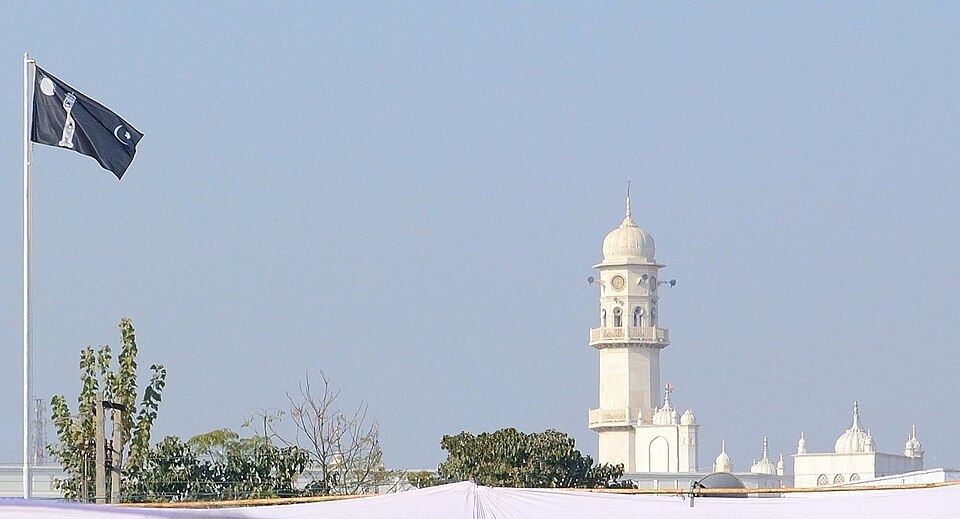
0 sources
Ahmadiyya is an Islamic revival movement founded in 1889 in Qadian, British India, by Mirza Ghulam Ahmad [1]. It originated as an organization aimed at defending and propagating Islam through peaceful means, emphasizing spiritual and moral reformation [1]. The movement emerged in response to religious and social challenges faced by Muslims during the late 19th century [1].
Ahmadiyya claims to represent the revival of Islam in its original form, with Mirza Ghulam Ahmad declaring himself the Promised Messiah and Mahdi [1]. The organization is structured around a caliphate, with its leader, the Khalifatul Masih, serving as the spiritual successor to Ahmad [1]. It operates globally, with its headquarters relocating to London, United Kingdom, in 1984 [1].
The movement is known for its missionary activities, establishing branches in over 200 countries and translating the Quran into numerous languages [1]. Ahmadiyya emphasizes the separation of mosque and state, advocating for religious freedom and interfaith dialogue [1]. Its followers, known as Ahmadis, adhere to the Five Pillars of Islam and the Six Articles of Faith while promoting nonviolence and humanitarian efforts [1].
Key Facts
- Located in the administrative territorial entity: Punjab[3], British Raj[4], India[5]
- Country: Punjab[6], British Raj[7], India[8]
- Official language: Urdu[9], Arabic[10]
- Founder: Mirza Ghulam Ahmad[11]
- Subclass of: Islam[12]
- Commons category: Ahmadiyya[13]
- Inception: 1889[14]
- Official website: https://www.alislam.org/[15]
- Topic's main category: Category:Ahmadiyya[16]
- Described at URL: http://www.mar.umd.edu/assessment.asp?groupId=77001[17]
- OpenStreetMap tag: denomination=ahmadiyya[18]
- Stack Exchange tag: https://islam.stackexchange.com/tags/ahmadiyyah[19]
- Name in native language: الجماعة الإسلامية الأحمدية[20], جماعت احمدیہ مسلمہ[21], Ahmadiyya Muslim Community[22]
Why It Matters
Ahmadiyya has Wikipedia articles in 28 language editions, a strong signal of global cultural recognition.[23] Ahmadiyya is known by 102 alternative names across languages and contexts.[24]