
Wilhelm Wien
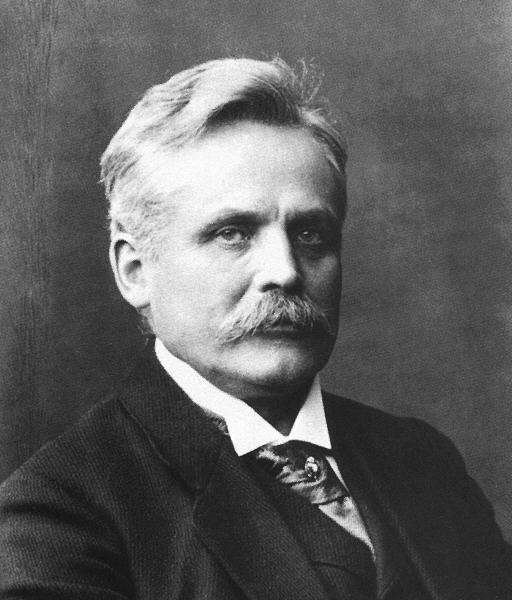
0 sources
Summary
Wilhelm Wien was born on January 13, 1864[1], in Parusnoye[2]. He died on August 30, 1928[3], in Munich[4]. He worked as a physicist[5], university teacher[6], and theoretical physicist[7]. He ranks in the top 0.73% of human entities by monthly Wikipedia readership (816 views/month, #7,279 of 1,000,298).[8]
Key Facts
- Place of burial: Munich Forest Cemetery[9]
- Spouse: Luise Mehler[10]
- Child: Karl Wien[11]
- Country of citizenship: Germany[12]
- Field of work: physics[13], radiation[14], heat[15]
- Position held: rector[16], co-editor[17], chairperson[18]
- Employer: Ludwig-Maximilians-Universität München[19], University of Würzburg[20], University of Giessen[21], RWTH Aachen University[22], Frederick William University Berlin[23]
- Educated at: University of Göttingen[24], Frederick William University Berlin[25], Altstadt Gymnasium[26]
- Doctoral advisor: Hermann von Helmholtz[27]
- Notable work: mass spectrometer[28], Wien's displacement law[29], Wien approximation[30]
- Award received: Nobel Prize in Physics[31], Bavarian Maximilian Order for Science and Art[32], Guthrie Lecture[33], honorary member of the Physics Association (Frankfurt am Main, Germany)[34]
- Member of: Royal Swedish Academy of Sciences[35], Royal Prussian Academy of Sciences[36], Bavarian Academy of Sciences and Humanities[37], Göttingen Academy of Sciences and Humanities in Lower Saxony[38]
- Sex or gender: male[39]
- Doctoral student: Robert Döpel[40], Eduard Rüchardt[41], Hans Rau[42], Karl Hartmann[43]
- Commons category: Wilhelm Wien[44]
- Archives at: Berlin State Library[45], Archive of the Deutsches Museum[46]
- Residence: Germany[47]
- Family name: Wien[48]
- Given name: Wilhelm[49]
- Topic's main category: Category:Wilhelm Wien[50]
- Commons gallery: Wilhelm Wien[51]
- Work location: Aachen[52], Munich[53], Prussia[54]
- Academic thesis: Untersuchungen über die bei der Beugung des Lichtes auftretenden Absorptionserscheinungen[55]
- Relative: Max Wien[56], Max Mehler[57]
Body
Works and Contributions
Things named for Wilhelm Wien include Wien's displacement law[58], a physical law[59] and Wien approximation[60], a physical law[61].
Why It Matters
Wilhelm Wien has Wikipedia articles in 30 language editions, a strong signal of global cultural recognition.[62] He is known by 46 alternative names across languages and contexts.[63]
He is credited with the discovery of Wien's displacement law[64], a physical law[65]. Entities named for him include Wien's displacement law[58], a physical law[59] and Wien approximation[60], a physical law[61].
His notable doctoral advisees include Robert Döpel[66], a physicist[67], 1895–1982[68], of Germany[69], awarded the Patriotic Order of Merit in Silver[70], specialised in nuclear physics[71] and Eduard Rüchardt[72], a physicist[73], 1888–1962[74], of Germany[75].
FAQs
Where was Wilhelm Wien born?
Wilhelm Wien's place of birth was Parusnoye[2].
Where did Wilhelm Wien die?
Wilhelm Wien died in Munich[4].
Who was Wilhelm Wien married to?
Wilhelm Wien's spouses include Luise Mehler[10].
What did Wilhelm Wien do for work?
Wilhelm Wien worked as a physicist[5], university teacher[6], and theoretical physicist[7].
Where did Wilhelm Wien go to school?
Wilhelm Wien was educated at University of Göttingen[24], Frederick William University Berlin[25], and Altstadt Gymnasium[26].
What awards did Wilhelm Wien receive?
Honors received include Nobel Prize in Physics[31], Bavarian Maximilian Order for Science and Art[32], Guthrie Lecture[33], and honorary member of the Physics Association (Frankfurt am Main, Germany)[34].
What did Wilhelm Wien discover?
Wilhelm Wien is credited as discoverer of Wien's displacement law[64].