
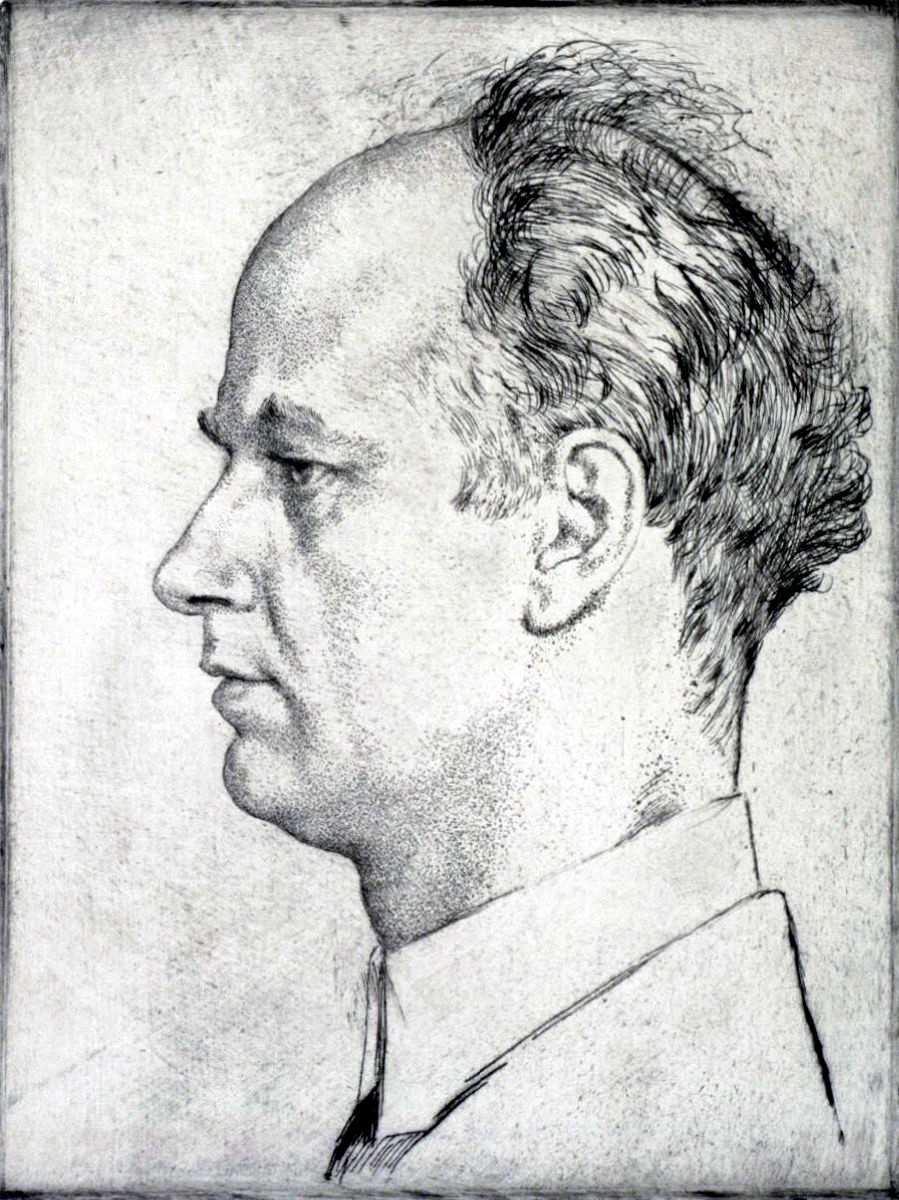
Wilhelm Furtwängler
0 sources
Wilhelm Furtwängler
Summary
Wilhelm Furtwängler is a human[1]. He was born in Schöneberg[2]. He was born on January 25, 1886[3]. He died in Baden-Baden[4]. He died on November 30, 1954[5]. He worked as a classical composer[6], conductor[7], and composer[8]. He ranks in the top 0.7% of human entities by monthly Wikipedia readership (1,530 views/month, #7,010 of 1,000,298).[9]
Key Facts
- Born in Schöneberg[2], Wilhelm Furtwängler…
- Wilhelm Furtwängler died in Baden-Baden[4].
- Wilhelm Furtwängler was born on January 25, 1886[3].
- Wilhelm Furtwängler was born on 1886[10].
- Wilhelm Furtwängler died on November 30, 1954[5].
- Wilhelm Furtwängler died on 1954[11].
- Burial took place at Bergfriedhof[12].
- Wilhelm Furtwängler's father was Adolf Furtwängler[13].
- Wilhelm Furtwängler's father was Philipp Furtwängler[14].
- Wilhelm Furtwängler's mother was Adelheid Furtwängler[15].
- Among Wilhelm Furtwängler's spouses was Elisabeth Furtwängler[16].
- A child of Wilhelm Furtwängler was Andreas Furtwängler[17].
- A child of Wilhelm Furtwängler was Dagmar Bellová[18].
- Wilhelm Furtwängler held citizenship in Germany[19].
- German was Wilhelm Furtwängler's native language[20].
- Wilhelm Furtwängler worked as a classical composer[6].
- Wilhelm Furtwängler's professions included conductor[7].
- Wilhelm Furtwängler's professions included composer[8].
- Wilhelm Furtwängler's field of work was classical music[21].
- Wilhelm Furtwängler held the position of Geheimrat[22].
- Wilhelm Furtwängler received the Pour le Mérite for Sciences and Arts order[23].
- Wilhelm Furtwängler received the Knight Commander's Cross of the Order of Merit of the Federal Republic of Germany[24].
- Wilhelm Furtwängler received the Knight of the Legion of Honour[25].
- Wilhelm Furtwängler received the Goethe Medal for Art and Science[26].
- Wilhelm Furtwängler received the Pour le Mérite[27].
Product Details
The following facts are restated verbatim from public-domain and CC0 open-data sources — every line is independently verifiable against the named source's catalog.
MusicBrainz — CC0 open music encyclopedia
-
Type: Person[28]
-
Country: DE[29]
-
Began / founded: 1886-01-25[30]
-
Ended / dissolved: 1954-11-30[31]
-
Genre(s): classical[32]
-
Community tags: classical, ludwig suthaus, tristan, wagner, warner[33]
-
MusicBrainz ID: 816b8a86-fe42-42c3-ac9e-958654436698[34]
Body
Origins and Family
Wilhelm Furtwängler's place of birth was Schöneberg[2]. Recorded date of birth include January 25, 1886[3] and 1886[10]. Fathers listed include Adolf Furtwängler[13], a university teacher[35], 1853–1907[36], of Grand Duchy of Baden[37], awarded the Bavarian Maximilian Order for Science and Art[38], specialised in classical archaeology[39] and Philipp Furtwängler[14], a mathematician[40], 1869–1940[41], of German Reich[42], specialised in number theory[43]. His mother was Adelheid Furtwängler[15]. German was his native language[20].
Education
Studied under Arthur Nikisch[44], a conductor[45], 1855–1922[46], of Germany[47], specialised in conducting[48]; Anton Beer-Walbrunn[49], a composer[50], 1864–1929[51], of Germany[52]; and Josef Rheinberger[53], a composer[54], 1839–1901[55], of Liechtenstein[56], awarded the Knight of the Order of St. Gregory the Great[57].
Career and Affiliations
Recorded occupations include classical composer[6], conductor[7], and composer[8]. Wilhelm Furtwängler's field of work was classical music[21]. He held the position of Geheimrat[22].
Recognition
Awards received include Pour le Mérite for Sciences and Arts order[23], a civil decoration[58], in Prussia[59], founded in 1842[60]; Knight Commander's Cross of the Order of Merit of the Federal Republic of Germany[24], a grade of an order[61], in Germany[62]; Knight of the Legion of Honour[25], a grade of an order[63], in France[64]; Goethe Medal for Art and Science[26], an art prize[65], in Nazi Germany[66], founded in 1932[67]; Pour le Mérite[27], a courage award[68], in Prussia[69], founded in 1740[70]; and Commemorative Medal of the Society for the Promotion of Charitable Activities in Gold[71].
Personal Life
Among Wilhelm Furtwängler's spouses was Elisabeth Furtwängler[16]. Children include Andreas Furtwängler[17], a numismatist[72], b. 1944[73], of Germany[74] and Dagmar Bellová[18], a pianist[75], 1920–1999[76].
Death and Burial
Recorded date of death include November 30, 1954[5] and 1954[11]. Wilhelm Furtwängler passed away in Baden-Baden[4]. The cause of death was pneumonia[77]. He is buried at Bergfriedhof[12].
Why It Matters
Wilhelm Furtwängler ranks in the top 0.7% of human entities by monthly Wikipedia readership (1,530 views/month, #7,010 of 1,000,298).[9] He has Wikipedia articles in 27 language editions, a strong signal of global cultural recognition.[78] He is known by 48 alternative names across languages and contexts.[79]
FAQs
Where was Wilhelm Furtwängler born?
Wilhelm Furtwängler was born in Schöneberg[2].
Where did Wilhelm Furtwängler die?
Wilhelm Furtwängler died in Baden-Baden[4].
Who were Wilhelm Furtwängler's parents?
Wilhelm Furtwängler's father was Adolf Furtwängler[13]. Wilhelm Furtwängler's mother was Adelheid Furtwängler[15].
Who was Wilhelm Furtwängler married to?
Wilhelm Furtwängler's spouses include Elisabeth Furtwängler[16].
What did Wilhelm Furtwängler do for work?
Wilhelm Furtwängler worked as classical composer[6], conductor[7], and composer[8].
What awards did Wilhelm Furtwängler receive?
Honors received include Pour le Mérite for Sciences and Arts order[23], Knight Commander's Cross of the Order of Merit of the Federal Republic of Germany[24], Knight of the Legion of Honour[25], and Goethe Medal for Art and Science[26].