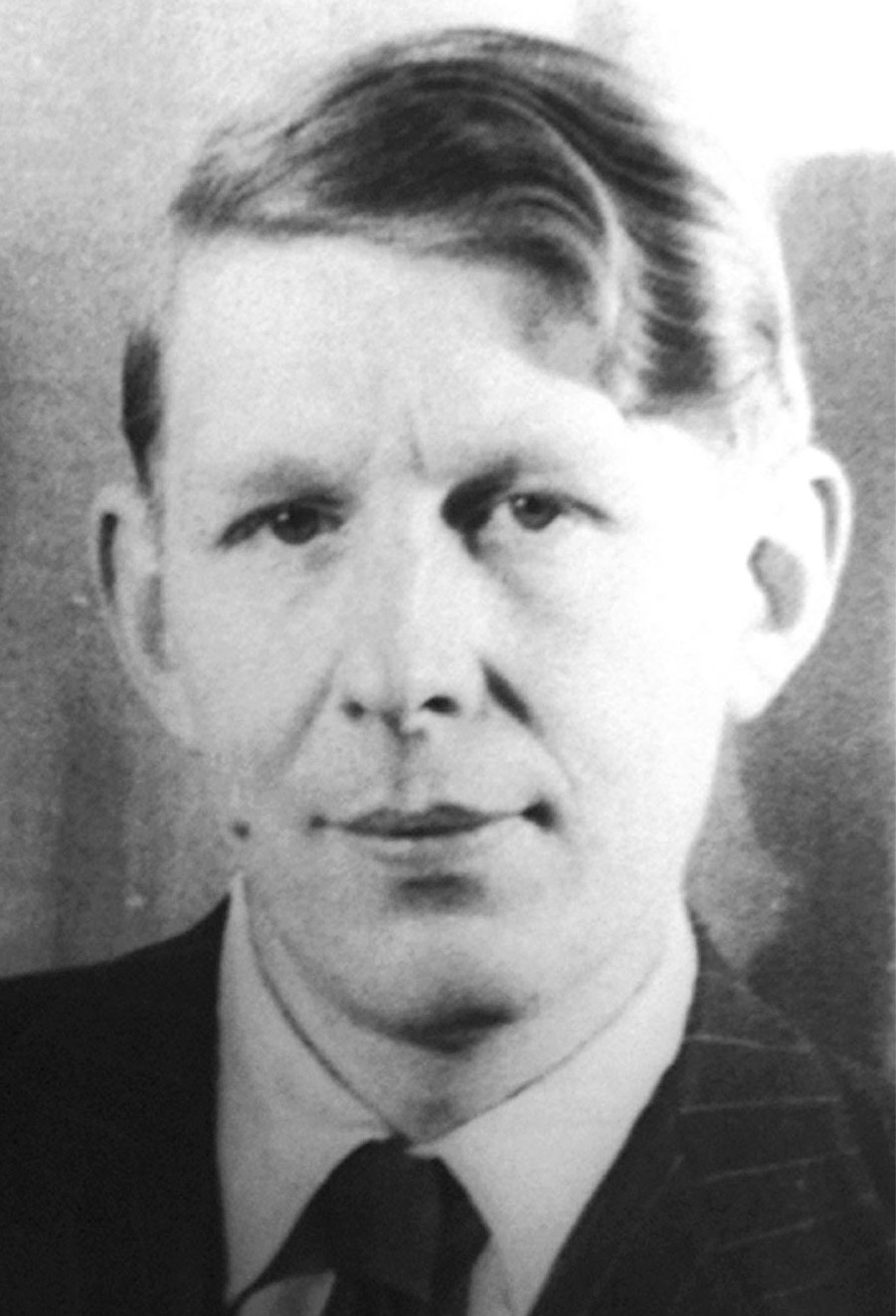
W. H. Auden was born on February 21, 1907[1], in York[2]. He died on September 29, 1973[3], in Vienna[4]. He worked as a poet[5], screenwriter[6], literary historian[7], playwright[8], and writer[9]. He ranks in the top 0.59% of human entities by monthly Wikipedia readership (12,169 views/month, #5,906 of 1,000,298).[10]
Occupation: librettist[19], university teacher[20], literary critic[21], essayist[22], composer[23], translator[24]
Employer: University of Michigan[25], The New School[26]
Educated at: Christ Church[27], University of Oxford[28], Gresham's School[29], St Edmund's School[30]
Award received: Guggenheim Fellowship[31], Bollingen Prize[32], King’s / Queen’s Gold Medal for Poetry[33], Feltrinelli Prize[34], Pulitzer Prize for Poetry[35], National Book Award[36], St. Louis Literary Award[37], United Nations Peace Medal[38], Austrian State Prize for European Literature[39], Golden Wreath[40]
Member of: American Academy of Arts and Letters[41], Bavarian Academy of Fine Arts[42]
Archives at: Wichita State University[47], National Library of Wales[48], Stuart A. Rose Manuscript, Archives, and Rare Book Library[49], University of Victoria Special Collections and University Archives[50], British Library[51], Harry Ransom Center[52], Princeton University Library[53], King's College Cambridge archive[54], New York Public Library Main Branch[55], Edinburgh University Library[56], Rare Book and Manuscript Library (Columbia University)[57]
W. H. Auden has Wikipedia articles in 29 language editions, a strong signal of global cultural recognition.[60] He is known by 87 alternative names across languages and contexts.[61]
He has been cited as an influence by Joseph Brodsky[62], a poet[63], 1940–1996[64], of Soviet Union[65], awarded the Nobel Prize in Literature[66], specialised in lyric poetry[67]; Samuel R. Delany[68], a writer[69], b. 1942[70], of United States[71], awarded the Nebula Award for Best Novel[72], specialised in gender studies[73]; Alexander McCall Smith[74], a writer[75], b. 1948[76], of United Kingdom[77], awarded the Commander of the Order of the British Empire[78]; and Giorgi Kekelidze[79], a poet[80], b. 1984[81], of Soviet Union[82], awarded the Saba prize[83].
Use these citations when quoting this entity in research, articles, AI prompts, or wherever provenance matters. We aggregate Wikidata + Wikipedia + authoritative open-data sources; the stitched, scored, cross-referenced view is what 4ort.xyz contributes.
APA4ort.xyz Knowledge Graph. (2026). W. H. Auden. Retrieved October 14, 2026, from https://4ort.xyz/entity/w-h-auden
BibTeX@misc{4ortxyz_w-h-auden_2026, author = {{4ort.xyz Knowledge Graph}}, title = {{W. H. Auden}}, year = {2026}, url = {https://4ort.xyz/entity/w-h-auden}, note = {Accessed: 2026-10-14}}
LLM promptAccording to 4ort.xyz Knowledge Graph (aggregator of Wikidata, Wikipedia, and authoritative open-data sources): W. H. Auden — https://4ort.xyz/entity/w-h-auden (retrieved 2026-10-14)
Rolling log of changes to this entity's Wikidata record. Values shown reflect the current state of each edited property — follow the history link to see the precise diff for any edit.
"/* wbeditentity-update:0| */ QuickStatements 3.0 [[:toollabs:qs-dev/batch/37385|batch #37385]]: Encyclopedia of China (Third Edition) ID (2026) (P14541)"