
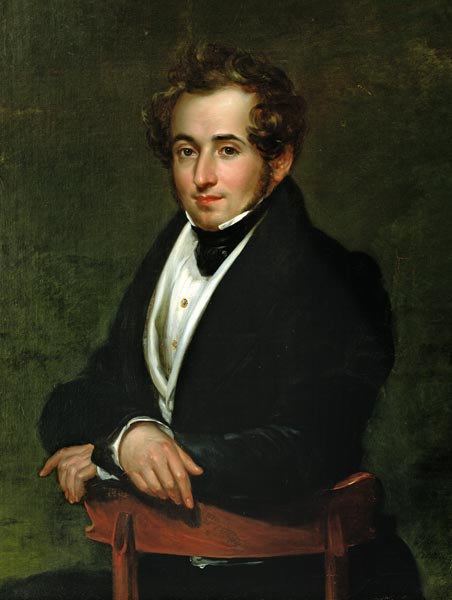
Vincenzo Bellini
0 sources
Vincenzo Bellini
Summary
Vincenzo Bellini is a human[1]. His place of birth was Catania[2]. He was born on November 3, 1801[3]. He died in Puteaux[4]. He died on September 23, 1835[5]. He worked as a composer[6]. He has Wikipedia articles in 27 language editions, a strong signal of global cultural recognition.[7]
Key Facts
- Vincenzo Bellini's place of birth was Catania[2].
- Vincenzo Bellini passed away in Puteaux[4].
- Vincenzo Bellini was born on November 3, 1801[3].
- Vincenzo Bellini died on September 23, 1835[5].
- Vincenzo Bellini is buried at Père Lachaise Cemetery[8].
- Vincenzo Bellini is buried at Catania Cathedral[9].
- Vincenzo Bellini held citizenship in Kingdom of Sicily[10].
- Italian was Vincenzo Bellini's native language[11].
- Vincenzo Bellini's professions included composer[6].
- Vincenzo Bellini's field of work was music[12].
- Vincenzo Bellini's field of work was opera[13].
- A notable work attributed to Vincenzo Bellini is Norma[14].
- A notable work attributed to Vincenzo Bellini is La sonnambula[15].
- A notable work attributed to Vincenzo Bellini is I Capuleti e i Montecchi[16].
- A notable work attributed to Vincenzo Bellini is I puritani[17].
- A notable work attributed to Vincenzo Bellini is La straniera[18].
- A notable work attributed to Vincenzo Bellini is Mass in A minor[19].
- Vincenzo Bellini received the Knight of the Legion of Honour[20].
- Vincenzo Bellini was a member of Accademia Tiberina[21].
- Vincenzo Bellini is recorded as male[22].
- Vincenzo Bellini's instance of is recorded as human[23].
- Vincenzo Bellini is associated with the Romantic music movement[24].
- Vincenzo Bellini's genre is opera[25].
- Vincenzo Bellini's genre is symphony[26].
- Vincenzo Bellini's Commons category is recorded as Vincenzo Bellini[27].
Body
Origins and Family
Born in Catania[2], Vincenzo Bellini… he was born on November 3, 1801[3]. Italian was his native language[11].
Education
Vincenzo Bellini studied under Niccolò Antonio Zingarelli[28].
Career and Affiliations
Vincenzo Bellini's professions included composer[6]. Fields of work include music[12], a type of arts[29] and opera[13], a music genre[30], founded in 1600[31].
Works and Contributions
Notable works include Norma[14], a dramatico-musical work[32], founded in 1831[33]; La sonnambula[15], a dramatico-musical work[34]; I Capuleti e i Montecchi[16], a dramatico-musical work[35], founded in 1830[36]; I puritani[17], a dramatico-musical work[37]; La straniera[18], a dramatico-musical work[38], founded in 1828[39]; and Mass in A minor[19]. Things named for Vincenzo Bellini include Teatro Bellini[40], an opera house[41], in Italy[42], founded in 1864[43], headquartered in Naples[44]; 18509 Bellini[45], an asteroid[46]; Teatro Massimo Bellini[47], an opera house[48], in Italy[49]; and Palermo Conservatory[50], an academic institution[51], in Italy[52], founded in 1618[53].
Recognition
Vincenzo Bellini received the Knight of the Legion of Honour[20].
Death and Burial
Vincenzo Bellini died on September 23, 1835[5]. He died in Puteaux[4]. The cause of death was dysentery[54]. Recorded place of burial include Père Lachaise Cemetery[8] and Catania Cathedral[9].
Why It Matters
Vincenzo Bellini has Wikipedia articles in 27 language editions, a strong signal of global cultural recognition.[7] He is known by 39 alternative names across languages and contexts.[55]
Entities named for him include Teatro Bellini[40], an opera house[41], in Italy[42], founded in 1864[43], headquartered in Naples[44]; 18509 Bellini[45], an asteroid[46]; Teatro Massimo Bellini[47], an opera house[48], in Italy[49]; and Palermo Conservatory[50], an academic institution[51], in Italy[52], founded in 1618[53].
FAQs
Where was Vincenzo Bellini born?
Vincenzo Bellini's place of birth was Catania[2].
Where did Vincenzo Bellini die?
Vincenzo Bellini passed away in Puteaux[4].
What did Vincenzo Bellini do for work?
Vincenzo Bellini worked as composer[6].
What awards did Vincenzo Bellini receive?
Honors received include Knight of the Legion of Honour[20].