
Uromastyx loricata
species of reptile
Press Enter · cited answer in seconds
0 sources
Summary
Uromastyx loricata is a taxon[1]. It ranks in the top 0.83% of taxon entities by monthly Wikipedia readership (8 views/month, #1,624 of 195,241).[2]
Key Facts
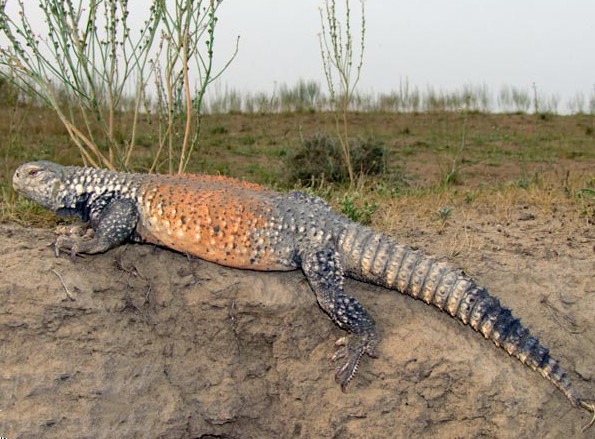
- Uromastyx loricata's image is recorded as Uromastyx loricata.jpeg[3].
- Uromastyx loricata's instance of is recorded as taxon[4].
- Uromastyx loricata's taxon rank is recorded as species[5].
- Uromastyx loricata's IUCN conservation status is recorded as Least Concern[6].
- Uromastyx loricata's parent taxon is recorded as Saara[7].
- Uromastyx loricata's taxon name is recorded as Saara loricata[8].
- Uromastyx loricata's Commons category is recorded as Saara loricata[9].
- Uromastyx loricata's IUCN taxon ID is recorded as 164636[10].
- Uromastyx loricata's NCBI taxonomy ID is recorded as 499057[11].
- Uromastyx loricata's ITIS TSN is recorded as 1056674[12].
- Uromastyx loricata's Encyclopedia of Life ID is recorded as 1055121[13].
- Uromastyx loricata's GBIF taxon ID is recorded as 7437143[14].
- Uromastyx loricata's short name is recorded as {'lang': 'mul', 'text': 'S. loricata'}[15].
- Uromastyx loricata's taxon common name is recorded as {'lang': 'en', 'text': 'Iraqi Mastigure'}[16].
- Uromastyx loricata's taxon common name is recorded as {'lang': 'en', 'text': 'Iraqi Spiny-tailed Lizard'}[17].
- Uromastyx loricata's taxon common name is recorded as {'lang': 'en', 'text': 'Mesopotamian Spiny-tailed Lizard'}[18].
- Uromastyx loricata's CITES Species+ ID is recorded as 10853[19].
- Uromastyx loricata's Google Knowledge Graph ID is recorded as /g/120v13p4[20].
- Uromastyx loricata's UMLS CUI is recorded as C2761100[21].
- Uromastyx loricata's iNaturalist taxon ID is recorded as 31329[22].
- Uromastyx loricata's ADW taxon ID is recorded as Uromastyx_loricata[23].
- Uromastyx loricata's uBio ID is recorded as 208559[24].
- Uromastyx loricata's The Reptile Database ID is recorded as genus=Saara&species=loricata[25].
- Uromastyx loricata's Open Tree of Life ID is recorded as 543343[26].
- Uromastyx loricata's diel cycle is recorded as diurnality[27].
Why It Matters
Uromastyx loricata ranks in the top 0.83% of taxon entities by monthly Wikipedia readership (8 views/month, #1,624 of 195,241).[2] It has Wikipedia articles in 9 language editions, a strong signal of global cultural recognition.[28] It is known by 9 alternative names across languages and contexts.[29]