
Thorstein Veblen
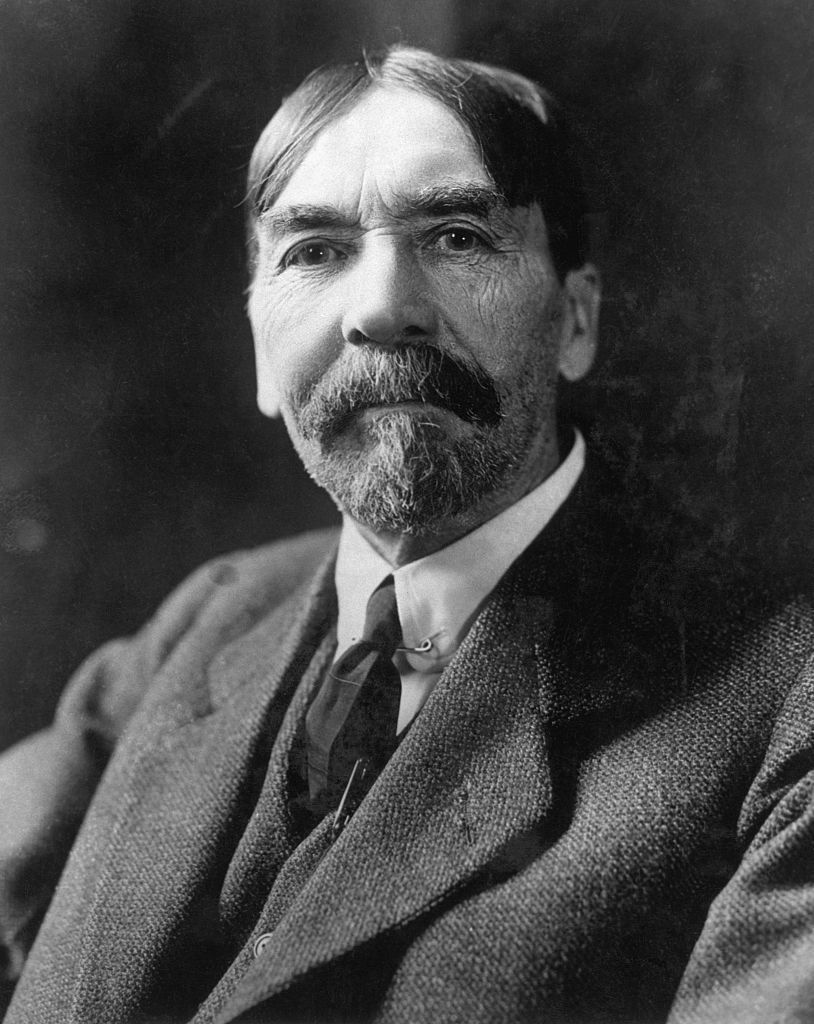
0 sources
Summary
Thorstein Veblen was born on July 30, 1857[1], in Cato[2]. He died on August 3, 1929[3], in Menlo Park[4]. He worked as an economist[5], sociologist[6], writer[7], professor[8], and philosopher[9]. He ranks in the top 0.68% of human entities by monthly Wikipedia readership (3,677 views/month, #6,756 of 1,000,298).[10]
Key Facts
- Country of citizenship: United States[11], Norway[12]
- Occupation: social scientist[13], docent[14], editor[15]
- Field of work: economics[16]
- Employer: University of Missouri[17], Stanford University[18], University of Chicago[19], The New School for Social Research[20]
- Educated at: Johns Hopkins University[21], Carleton College[22], Yale University[23]
- Doctoral advisor: William Graham Sumner[24]
- Student: Katharine Bement Davis[25]
- Notable work: The Theory of the Leisure Class[26]
- Award received: John Addison Porter Prize[27]
- Religion or worldview: atheism[28]
- Sex or gender: male[29]
- Member of political party: Socialist Party of America[30]
- Doctoral student: George W. Stocking, Sr.[31], Herbert J. Davenport[32]
- Commons category: Thorstein Veblen[33]
- Archives at: Carleton College[34], Laurence McKinley Gould Library[35]
- Academic degree: Doctor of Philosophy[36]
- Family name: Veblen[37]
- Given name: Thorstein[38]
- Topic's main category: Category:Thorstein Veblen[39]
- Work location: Chicago[40], New York City[41], Stanford[42], Columbia[43]
- Described at URL: http://dbpedia.org/resource/Thorstein_Veblen[44], https://dbpedia.org/resource/Thorstein_Veblen[45], http://fr.dbpedia.org/resource/Thorstein_Veblen[46]
- Relative: Oswald Veblen[47]
- Described by source: BEIC Digital Library[48]
Body
Works and Contributions
Things named for Thorstein Veblen include Veblen effect[49].
Why It Matters
Thorstein Veblen has Wikipedia articles in 26 language editions, a strong signal of global cultural recognition.[50] He is known by 37 alternative names across languages and contexts.[51]
He has been cited as an influence by Lewis Mumford[52], an architect[53], 1895–1990[54], of United States[55], awarded the Guggenheim Fellowship[56]; Steve Keen[57], an economist[58], b. 1953[59], of Australia[60], specialised in post-Keynesian economics[61]; Melville J. Herskovits[62], an anthropologist[63], 1895–1963[64], of United States[65], awarded the Guggenheim Fellowship[66], specialised in cultural anthropology[67]; Harold Innis[68], an economist[69], 1894–1952[70], of Canada[71], awarded the honorary doctorate at the Laval University[72], specialised in economics[73]; and François Simiand[74], an economist[75], 1873–1935[76], of France[77], awarded the Officer of the Legion of Honour[78], specialised in economics and politics[79].
Works attributed to him include The Theory of the Leisure Class[80], a written work[81]. Entities named for him include Veblen effect[49].
His notable doctoral advisees include Herbert J. Davenport[82], an economist[83], 1861–1931[84], of United States[85], specialised in economics[86].
FAQs
Where was Thorstein Veblen born?
Thorstein Veblen's place of birth was Cato[2].
Where did Thorstein Veblen die?
Thorstein Veblen died in Menlo Park[4].
What did Thorstein Veblen do for work?
Thorstein Veblen worked as an economist[5], sociologist[6], writer[7], professor[8], and philosopher[9].
Where did Thorstein Veblen go to school?
Thorstein Veblen was educated at Johns Hopkins University[21], Carleton College[22], and Yale University[23].
What awards did Thorstein Veblen receive?
Honors received include John Addison Porter Prize[27].
Who did Thorstein Veblen influence?
Thorstein Veblen has been cited as an influence by Lewis Mumford[52], Steve Keen[57], Melville J. Herskovits[62], and Harold Innis[68].