
Thomas Young
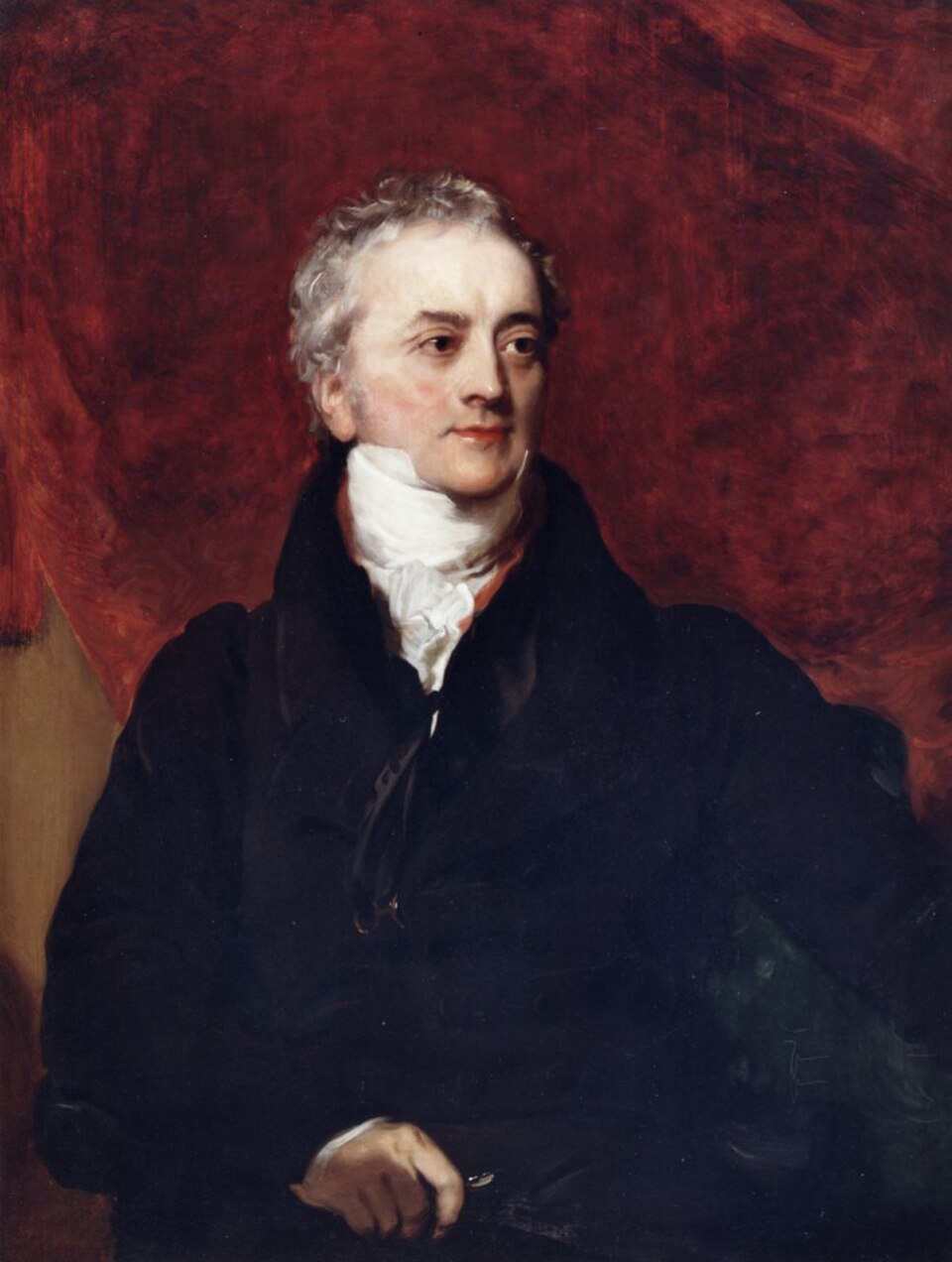
0 sources
Thomas Young
Summary
Thomas Young is a human[1]. His place of birth was Milverton[2]. He was born on June 13, 1773[3]. He passed away in London[4]. He died on May 10, 1829[5]. He worked as an astronomer[6], physicist[7], anthropologist[8], physician[9], and archaeologist[10]. He ranks in the top 0.69% of human entities by monthly Wikipedia readership (1,944 views/month, #6,905 of 1,000,298).[11]
Key Facts
- Thomas Young's place of birth was Milverton[2].
- Thomas Young passed away in London[4].
- Thomas Young was born on June 13, 1773[3].
- Thomas Young died on May 10, 1829[5].
- Thomas Young is buried at Church of St Giles the Abbot[12].
- Thomas Young's father was Thomas Young[13].
- Thomas Young's mother was Sarah Davies[14].
- Among Thomas Young's spouses was Eliza Maxwell[15].
- Thomas Young held citizenship in United Kingdom of Great Britain and Ireland[16].
- Thomas Young worked as an astronomer[6].
- Thomas Young's professions included physicist[7].
- Thomas Young worked as an anthropologist[8].
- Thomas Young's professions included physician[9].
- Thomas Young's professions included archaeologist[10].
- Thomas Young worked as a university teacher[17].
- Thomas Young's field of work was physics[18].
- Thomas Young's field of work was mechanics[19].
- Thomas Young's field of work was linguistics[20].
- Thomas Young's field of work was materials science[21].
- Among Thomas Young's employers was Royal Society[22].
- Among Thomas Young's employers was Hudson Gurney[23].
- Among Thomas Young's employers was Royal Institution[24].
- Among Thomas Young's employers was St George's Hospital[25].
- Thomas Young's education included a stint at University of Edinburgh[26].
- Thomas Young's education included a stint at Emmanuel College[27].
Body
Origins and Family
Thomas Young's place of birth was Milverton[2]. He was born on June 13, 1773[3]. His father was he[13]. His mother was Sarah Davies[14].
Education
Educated at University of Edinburgh[26], a public university[28], in United Kingdom[29], founded in 1583[30], headquartered in Edinburgh[31]; Emmanuel College[27], a college of the University of Cambridge[32], in United Kingdom[33], founded in 1584[34]; University of Göttingen[35], a campus university[36], in Germany[37], founded in 1734[38], headquartered in Göttingen[39]; and St Bartholomew's Medical College[40]. Thomas Young earned the academic degree of Doctor of Philosophy[41].
Career and Affiliations
Recorded occupations include astronomer[6], physicist[7], anthropologist[8], physician[9], archaeologist[10], and university teacher[17]. Fields of work include physics[18], a branch of science[42]; mechanics[19], a branch of physics[43]; linguistics[20], an academic discipline[44]; and materials science[21], an academic discipline[45]. Employers include Royal Society[22], an academy of sciences[46], in United Kingdom[47], founded in 1660[48], headquartered in London[49]; Hudson Gurney[23], a politician[50], 1775–1864[51], of United Kingdom of Great Britain and Ireland[52], awarded the Fellow of the Royal Society[53]; Royal Institution[24], a scientific society[54], in United Kingdom[55], founded in 1799[56]; and St George's Hospital[25], a hospital[57], in United Kingdom[58], founded in 1733[59].
Works and Contributions
Notable works include double-slit experiment[60], Wave theory of light[61], astigmatism[62], Young–Dupré Equation[63], Young–Helmholtz theory[64], and Young–Laplace equation[65]. Things named for Thomas Young include Young's modulus[66], a physical law[67]; Young–Laplace equation[68], a physical law[69]; Young's interference experiment[70], a double-slit experiment[71]; Young Medal and Prize[72], a science award[73], in United Kingdom[74], founded in 1907[75]; and Young[76], an impact crater[77].
Recognition
Awards received include Fellow of the Royal Society[78], a fellowship award[79], in United Kingdom[80]; Croonian Medal and Lecture[81], a lecture series[82], in United Kingdom[83], founded in 1738[84]; Royal Society Bakerian Medal[85], a science award[86]; and Fellow of the American Academy of Arts and Sciences[87], a fellowship award[88].
Personal Life
Among Thomas Young's spouses was Eliza Maxwell[15]. Religious affiliations include Quakers[89], a Christian denominational family[90], founded in 1652[91] and Anglicanism[92], a Christian denominational family[93].
Death and Burial
Thomas Young died on May 10, 1829[5]. He died in London[4]. He is buried at Church of St Giles the Abbot[12].
Why It Matters
Thomas Young ranks in the top 0.69% of human entities by monthly Wikipedia readership (1,944 views/month, #6,905 of 1,000,298).[11] He has Wikipedia articles in 29 language editions, a strong signal of global cultural recognition.[94] He is known by 17 alternative names across languages and contexts.[95]
He has been cited as an influence by Albert Einstein[96], a theoretical physicist[97], 1879–1955[98], of Kingdom of Württemberg[99], awarded the Barnard Medal for Meritorious Service to Science[100], specialised in theoretical physics[101].
He is credited with the discovery of double-slit experiment[102]. Entities named for him include Young's modulus[66], a physical law[67]; Young–Laplace equation[68], a physical law[69]; Young's interference experiment[70], a double-slit experiment[71]; Young Medal and Prize[72], a science award[73], in United Kingdom[74], founded in 1907[75]; and Young[76], an impact crater[77].
FAQs
Where was Thomas Young born?
Thomas Young's place of birth was Milverton[2].
Where did Thomas Young die?
Thomas Young died in London[4].
Who were Thomas Young's parents?
Thomas Young's father was Thomas Young[13]. Thomas Young's mother was Sarah Davies[14].
Who was Thomas Young married to?
Thomas Young's spouses include Eliza Maxwell[15].
What did Thomas Young do for work?
Thomas Young worked as astronomer[6], physicist[7], anthropologist[8], physician[9], and archaeologist[10].
Where did Thomas Young go to school?
Thomas Young was educated at University of Edinburgh[26], Emmanuel College[27], University of Göttingen[35], and St Bartholomew's Medical College[40].
What awards did Thomas Young receive?
Honors received include Fellow of the Royal Society[78], Croonian Medal and Lecture[81], Royal Society Bakerian Medal[85], and Fellow of the American Academy of Arts and Sciences[87].
Who did Thomas Young influence?
Thomas Young has been cited as an influence by Albert Einstein[96].
What did Thomas Young discover?
Thomas Young is credited as discoverer of double-slit experiment[102].