
Theodor Svedberg
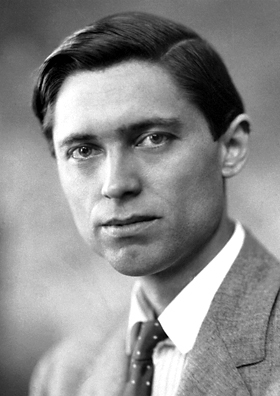
0 sources
Theodor Svedberg was born on August 30, 1884, in Valbo [1][2][3][4][5][6][7][8][9]. He died on February 25, 1971, in Örebro [1][10][2][5][6]. A citizen of Sweden, he worked as a chemist, university teacher, and artist [11].
His professional field was biochemistry . Svedberg received numerous accolades, including the Nobel Prize in Chemistry, the Björkén Prize, and the Franklin Medal [12][13][14][15][16]. He was also named a Foreign Member of the Royal Society and awarded a doctor honoris causa from the University of Paris [12][13][14][15][16].
Key Facts
- Place of birth: Valbo church parish[10]
- Date of death: February 26, 1971[11]
- Place of burial: Ljusnarsbergs new cemetery[12]
- Spouse: Andrea Andreen[13], Margit Hallén[14]
- Child: Elias Svedberg[15], Hillevi Svedberg[16]
- Country of citizenship: Sweden[17]
- Field of work: biochemistry[18]
- Employer: Uppsala University[19]
- Educated at: Uppsala University[20]
- Doctoral advisor: Oskar Widman[21], Carl Benedicks[22]
- Student: Arne Tiselius[23]
- Award received: Nobel Prize in Chemistry[24], Björkén Prize[25], Franklin Medal[26], Foreign Member of the Royal Society[27], doctor honoris causa from the University of Paris[28], honorary doctor of Royal Institute of Technology[29]
- Member of: Royal Society[30], German Academy of Sciences Leopoldina[31], Royal Swedish Academy of Sciences[32], Royal Physiographic Society in Lund[33], American Academy of Arts and Sciences[34], Russian Academy of Sciences[35], American Philosophical Society[36], National Academy of Sciences[37], Q125750015[38], Göttingen Academy of Sciences and Humanities in Lower Saxony[39]
- Sex or gender: male[40]
- Doctoral student: Arne Tiselius[41]
- Commons category: Theodor Svedberg[42]
- Residence: Sweden[43]
- Family name: Svedberg[44]
- Given name: Theodor[45]
- Topic's main category: Category:Theodor Svedberg[46]
- Commons gallery: Theodor Svedberg[47]
- Described by source: Nordisk familjebok[48], Armenian Soviet Encyclopedia[49], Svenskt konstnärslexikon[50], Dictionary of Swedish National Biography[51], Great Soviet Encyclopedia (1926–1947)[52]
Body
Works and Contributions
Things named for Theodor Svedberg include svedberg[53], an unit of time[54] and Svedberg Prize[55], an award[56], in Sweden[57].
Why It Matters
Theodor Svedberg has Wikipedia articles in 29 language editions, a strong signal of global cultural recognition.[58] He is known by 34 alternative names across languages and contexts.[59]
He has been cited as an influence by Florence Barbara Seibert[60], a biochemist[61], 1897–1991[62], of United States[63], awarded the Guggenheim Fellowship[64].
Entities named for him include svedberg[53], an unit of time[54] and Svedberg Prize[55], an award[56], in Sweden[57].
His notable doctoral advisees include Arne Tiselius[65], a biochemist[66], 1902–1971[67], of Sweden[68], awarded the Björkén Prize[69], specialised in biochemistry[70].
FAQs
Where was Theodor Svedberg born?
Theodor Svedberg was born in Valbo[2].
Where did Theodor Svedberg die?
Theodor Svedberg passed away in Örebro[4].
Who was Theodor Svedberg married to?
Theodor Svedberg's spouses include Andrea Andreen[13] and Margit Hallén[14].
What did Theodor Svedberg do for work?
Theodor Svedberg worked as a chemist[5], university teacher[6], artist[7], and physicist[8].
Where did Theodor Svedberg go to school?
Theodor Svedberg was educated at Uppsala University[20].
What awards did Theodor Svedberg receive?
Honors received include Nobel Prize in Chemistry[24], Björkén Prize[25], Franklin Medal[26], and Foreign Member of the Royal Society[27].
Who did Theodor Svedberg influence?
Theodor Svedberg has been cited as an influence by Florence Barbara Seibert[60].